Living things

Sponsored Link
plant

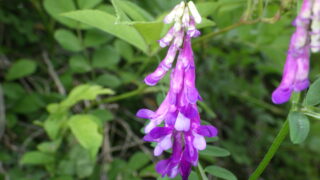
What are the differences between Vicia cracca, Hairy Vetch, Slender Vicia cracca, and Velvet Vicia? We explain how to distinguish between similar species! Was the nectar stolen from the flowers without restraint?!

Vicia cracca, hairy vetch, slender vetch, and velvet vetch all belong to the Vicia genus of the Fabaceae family. They are characterized by numerous purple, butterfly-shaped flowers (10-30 in number) arranged in racemes in spring, and by having five or more pairs of leaflets. From a distance, they are very similar...
plant

What's the difference between Japanese star anise (Illicium anisatum) and Japanese star anise (Illicium verum)? We'll explain how to distinguish between these similar species! Japanese star anise protects graves, while Japanese star anise protects life!?

Both Japanese star anise (Illicium anisatum) and Japanese star anise (Illicium verum) belong to the genus Illicium in the family Schisandraceae. They are evergreen plants with glossy leaves, and their most distinctive feature is their fruit: a follicle-like fruit consisting of eight follicles arranged radially. Both are considered very important plants both domestically and internationally...
plant

What are the differences between Deutzia, Deutzia crenata, and Deutzia gracilis? We'll explain how to distinguish between similar species! Could Deutzia be the origin of hedges?

Deutzia, Deutzia gracilis, and Deutzia crenata all belong to the Deutzia genus of the Hydrangeaceae family. It is believed that their name, "Utsugi" (hollow tree), comes from the fact that, except for the young branches, the inside of the branches is hollow. In Japan, they have a history of being planted as a guide for rice planting, and are also said to be the origin of hedges...
plant

What are the differences between Oxalis, Purple Wood Sorrel, Potato Wood Sorrel, Red Wood Sorrel, and Flower Wood Sorrel? We'll explain how to distinguish between similar species!

Purple wood sorrel, sweet wood sorrel, red wood sorrel, and flowering wood sorrel all belong to the genus Oxalis in the family Oxalidaceae. Within the vast Oxalis genus, these species are characterized by their obovate leaflets with rounded corners and red to pink flowers. They were originally cultivated as ornamental plants but have since become naturalized and introduced species...
plant

What are the differences between purslane, portulaca, and moss rose? We'll explain how to distinguish between similar species! The secret to their strength lies in the simultaneous use of two special types of photosynthesis!?

Purslane, Portulaca grandiflora, and Portulaca oleracea all belong to the Portulacaceae family and Portulaca genus. Their most distinctive feature is their glossy, succulent leaves. Due to their hardiness, they are cultivated and naturalized in urban areas, especially Portulaca grandiflora and Portulaca oleracea...
plant

What are the differences between *Ficus microcarpa*, *Ficus pumila*, and *Ficus serrata*? We explain how to distinguish between similar species! What is the special parasitic wasp that visits the "fruit-like" "syconium"?

Ficus microcarpa, Ficus serrata, and Ficus serrata all belong to the Ficus genus of the Moraceae family. They are distinguished from other Ficus species by their climbing growth habit, attaching themselves to tree trunks and rocks. Their most distinctive feature, like other Ficus species, is the formation of fruit-like structures...
plant

What are the differences between plantain, broadleaf plantain, budded plantain, and psyllium? We'll explain how to distinguish between similar species! How do they become stronger when stepped on?

Plantago major, Plantago lanceolata, and Plantago asiatica all belong to the Plantaginaceae family and Plantago genus, and are perennial herbs that grow very commonly along roadsides. They prefer compacted ground and are known as a type of "footprint plant." While these are often confused, they can be relatively distinguished by paying attention to the shape of their leaves and inflorescences...
plant

What's the difference between catmint and catnip? How does it differ from mint? We'll explain how to distinguish between similar species! Why does it intoxicate cats? And is it actually a mosquito repellent?!

Catmint and catnip belong to the genus Nepeta in the Lamiaceae family and are perennial plants widely cultivated in Japan as herbs or for ornamental purposes. While their large corolla with a protruding upper lip is a distinctive feature, their most notable characteristic is the "silver vine reaction" that intoxicates felines...
plant

What are the differences between daphne and pepper tree? What are the differences between lilac, white jasmine, gardenia, and rhododendron? We'll explain how to distinguish between similar species! Why did the fragrance of flowers evolve?

Daphne odora and pepper trees both belong to the genus Daphne in the family Thymelaeaceae, and share the characteristics of wrinkled, distorted leaves and fragrant flowers. While they may appear similar, Daphne odora is only cultivated, while pepper trees only grow wild, and morphologically they also differ...
plant

What are the differences between Menamomi, Komenamomi, and Onamomi? We explain how to distinguish between similar species! The mucus-secreting bracts are for sticking to animals!?

Both *Menamomi* and *Komenamomi* belong to the genus *Menamomi* in the Asteraceae family. Their most distinctive features are their small, yellow ray florets and the presence of stalked glandular hairs on their involucral bracts. While not particularly common, both species grow in open areas, and *Menamomi* in particular was historically used by the Japanese as a fermented food. However...
Sponsored Link