edible

Sponsored Link
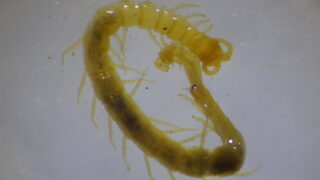
11.3529 Japanese Centipede (Adult, Full Form) animal

What is the role of the strangely enlarged final legs of the *Centipede* species? Could they be a secret weapon for aggressively defending against predators?!

The term "female centipedes" refers to a group of centipedes belonging to the genus *Scylla* in the family Scolopendridae, order Scolopendromorpha. These centipedes are burrowing and rarely seen by the average person, but their most striking feature is their strangely enlarged final gait. While there have been various theories regarding the function of this final gait,...
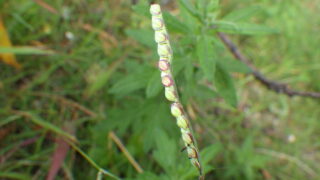
07.1053 Barnyard grass spikelets plant

What are the differences between Barnyard Grass (Paspalum erythrostictum), Striped Barnyard Grass (Paspalum erythrostictum), Upright Barnyard Grass (Paspalum erythrostictum), and American Barnyard Grass (Paspalum erythrostictum)? An explanation of how to distinguish between similar species.

Barnyard grass, striped barnyard grass, upright barnyard grass, and American barnyard grass are all perennial grasses belonging to the genus Barnyard grass in the grass family Poaceae, and are commonly found as weeds in a wide range of areas from urban areas to farmlands. Their most distinctive feature is their flat, nearly circular to oval-shaped spikelets...
07.1114 Goosegrass, spikelet 2 plant

What are the differences between Goosegrass, Digitaria sanguinalis, and Digitaria sanguinalis? An explanation of how to distinguish between similar species.

Digitaria sanguinalis, Digitaria sanguinalis, and Digitaria sanguinalis are all members of the grass family and are extremely common herbaceous plants and weeds that can be found growing everywhere from urban to rural areas from summer to autumn. Their most significant common feature is that they all produce several racemes, or inflorescences. Their names are similar...
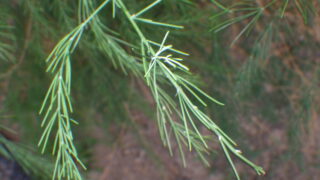
07.0582 Asparagus japonica (Leaf-shaped branch) plant

What are the differences between Asparagus, Asparagus, and Coprinus? An explanation of how to distinguish between similar species.

Asparagus, rhizome, and dwarf asparagus are all perennial herbs belonging to the genus Asparagus in the family Asparagaceae, and their most distinctive feature is the clusters of very thin, spine-like "leaf-like" structures. In reality, these are modified "branches" (called cladodes), and the true leaves are...
07.2358 Horse Chestnut (Aesculus hippocastanum) upper surface of leaf plant

What are the differences between horse chestnut trees (Aesculus hippocastanum), European horse chestnut (Aesculus turbinata), red-flowered horse chestnut (Aesculus turbinata), and red-flowered American horse chestnut (Aesculus turbinata)? We explain how to distinguish between similar species.

Horse chestnut (Aesculus hippocastanum), European horse chestnut (Aesculus turbinata), red-flowered horse chestnut (Aesculus turbinata), and red-flowered American horse chestnut (Aesculus turbinata) all belong to the Aesculus genus of the Sapindaceae family. They are characterized by their large, palmately compound leaves and are commonly seen cultivated in parks, as street trees, and garden trees in Japan. Originally, the native Japanese horse chestnut has become associated with the Japanese people...
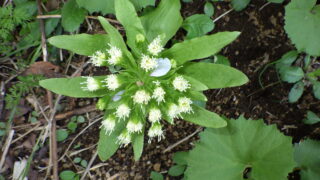
07.3977 Butterbur flower plant

What are the differences between butterbur, leopard plant, and large leopard plant? An explanation of how to distinguish between similar species.

Butterbur, Farfugium japonicum, and Large-leaved Farfugium all belong to the Asteraceae family, and are very similar in that they have heart-shaped to kidney-shaped leaves, and are also edible. Because both have been used in Japan since ancient times, some people may confuse them.
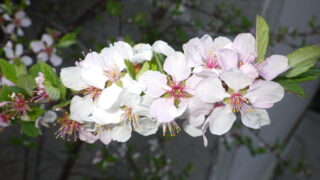
07.1637 Japanese Plum Blossom Flower plant

What are the differences between Japanese apricot (Prunus tomentosa), Japanese garden apricot (Prunus serrulata), and Japanese garden cherry (Prunus serrulata)? How do they differ from Japanese apricot (Prunus mume) and Japanese cherry (Prunus serrulata)? This article explains how to distinguish between similar species.

Japanese apricot (Prunus tomentosa), Japanese garden apricot (Prunus serrulata), and Japanese cherry (Prunus serrulata var. japonica) all belong to the genus Prunus in the family Rosaceae. Despite being shrubs, they are popular in horticulture because they produce beautiful flowers in spring, similar to plums and cherries. They are also known to be edible. However, their appearance is quite similar, leading to confusion...
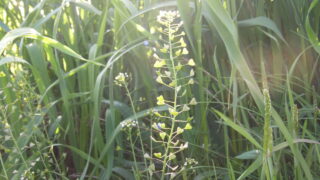
07.2573 Shepherd's Purse (Capsella bursa-pastoris) inflor plant

What are the differences between Shepherd's Purse, Lepidium virginicum, Lepidium thunbergii, and Arabidopsis thunbergii? An explanation of how to distinguish between similar species.

Shepherd's purse, lacecap shepherd's purse, dog shepherd's purse, and Arabidopsis thaliana all belong to the Brassicaceae family, and among them, the one with the name "shepherd's purse" is a representative weed of Japan. It is characterized by flowering in early spring and quickly producing flat fruits. However, despite its fame, these four species...
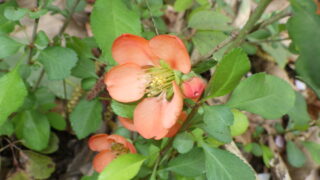
07.1692 Chaenomeles speciosa (Japanese quince) flower plant

What are the differences between Japanese quince (Chaenomeles speciosa) and Japanese quince (Chaenomeles japonica)? How do they differ from Japanese apricot (Prunus mume) and Japanese camellia (Camellia japonica)? This article explains how to distinguish between similar species.

Both the Japanese flowering quince (Chaenomeles speciosa) and the common flowering quince (Chaenomeles japonica) belong to the Chaenomeles genus of the Rosaceae family. They are deciduous shrubs characterized by the simultaneous unfolding of leaves and vibrant flowering. Perhaps for this reason, the Japanese flowering quince, in particular, is quite popular in horticulture and is frequently seen planted. Furthermore, its fruit is edible. However, the Japanese flowering quince...
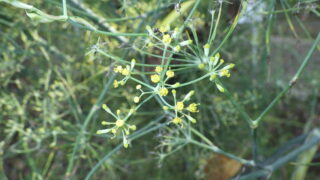
07.4274 Fennel flower plant

What's the difference between dill (yin-dill) and fennel (foeniculum vulgare)? An explanation of how to distinguish between similar species.

Dill and fennel both belong to the Apiaceae family, share a strong aroma throughout the plant, and are used both as herbs (leaves) and spices (fruits). Their leaves, in particular, are known as "fish herbs" and pair exceptionally well with fish dishes. Furthermore, they are also similar in morphology...
Sponsored Link