form

Sponsored Link
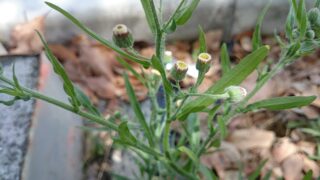
07.4067 Atractylodes japonica (flower head) plant

What are the differences between Atractylodes macrocephala (white atractylodes), Atractylodes lancea (narrow-leaved atractylodes), and Atractylodes japonica? An explanation of how to distinguish between similar species.

Atractylodes macrocephala (white atractylodes) and Atractylodes lancea (narrow atractylodes) are both perennial herbs belonging to the Asteraceae family, and are well-known as medicinal herbs. The dried rhizomes are collectively called "jutsu" (朮). Morphologically, the leaves have prominent serrations, and the flowers, typical of the Asteraceae family, are arranged in capitulum (flower heads) composed solely of tubular florets...
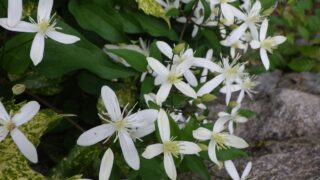
07.1295 Clematis flower plant

What are the differences between Clematis terniflora, Clematis patens, and Clematis japonica? An explanation of how to distinguish between similar species.

Clematis terniflora, Clematis patens, and Clematis japonica all belong to the genus Clematis in the Ranunculaceae family and are climbing semi-shrubs found in Japanese forests. They share several common features, including compound leaves, flowers with white sepals instead of petals, and feathery fruits, which can sometimes make them difficult to distinguish.
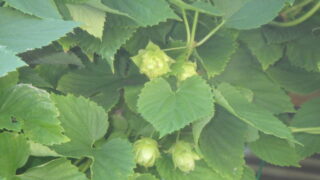
07.1884.1 European Humulus Lumbricus (Fruit cluster) 1 plant

What's the difference between hops and hummus? We'll explain how to distinguish between similar species! Which one is the real fruit?

Hops (Humulus hummus) and Humulus japonicus are both perennial herbs belonging to the genus Humulus in the family Cannabaceae, and as their scientific names suggest, they are varieties of each other. Hops are probably best known as an ingredient in beer. Both varieties have leaves that are either undivided or 3- to 5-lobed, and the female...
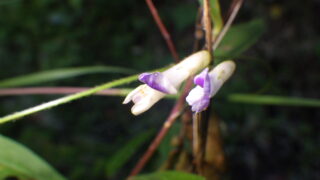
07.1610.1 *Amphicarpa sylvestris* flower plant

What are the differences between wild beans, wild beans, and soybeans? An explanation of how to distinguish between similar species.

Both wild soybean (Amphicarpaea rhynchophylla) and climbing soybean (Glycine soja) are annual vines belonging to the legume family. In Japan, they grow in very similar environments such as embankments, grasslands, and forest edges. Their trifoliate compound leaves are also similar in shape, which can lead to confusion. However, there are differences at the genus level, and these differences are clearly evident in the leaves, flowers, and fruits...
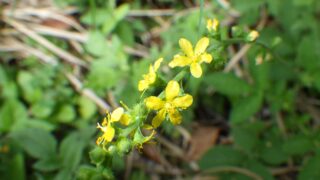
07.1789 Goldenrod (Persicaria filiformis) inflorescence plant

What are the differences between *Persicaria filiformis*, *Persicaria thunbergii*, and *Persicaria filiformis*? An explanation of how to distinguish between similar species.

*Persicaria filiformis*, *Persicaria thunbergii*, and *Persicaria filiformis* are all perennial herbs belonging to the genus *Persicaria* in the rose family, and in Japan they grow in forest edges and other similar areas. Their most distinctive features are the hook-shaped thorns beneath the calyx and their fruits, which are burrs that stick to surfaces. These two species, as their names suggest, differ primarily in their overall size...
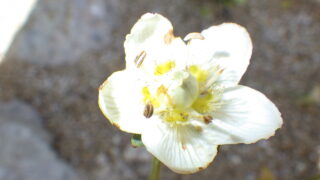
07.2060 Parnassia palustris flower plant

What are the differences between Parnassia palustris, Parnassia japonica, and Parnassia japonica? We'll explain how to distinguish between similar species! What are the structures of their flowers and fruits?

Parnassia palustris, Parnassia japonica, and Parnassia japonica are all perennial herbs belonging to the genus Parnassia in the family Celastraceae. Their names are similar, and their leaves and flowers are morphologically alike, which can sometimes make identification difficult. These three species can be distinguished primarily by the number of lobes in the staminodes of the flower...
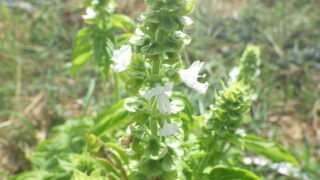
07.3568.a Ocimum basil flower plant

What are the differences between basil, sweet basil, holy basil, and lemon basil? We'll explain how to distinguish between similar varieties! What are the structures of their flowers and fruits?

Basil, sweet basil, holy basil, and lemon basil all belong to the Ocimum genus of the Lamiaceae family, are native to Asia, and share the common characteristic of having edible leaves. Therefore, many people may not know the differences in their shapes or uses. When we say "basil," we are generally referring to all members of the Ocimum genus of the Lamiaceae family...
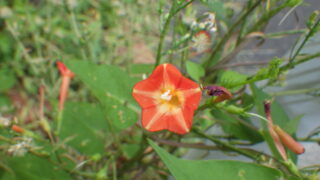
07.3290 Ipomoea quamoclit flower plant

What are the differences between Ipomoea quamoclit, Ipomoea quamoclit, Ipomoea quamoclit, and Ipomoea quamoclit? We'll explain how to distinguish between similar species! What are the structures of their flowers and fruits?

Ipomoea quamoclit, Ipomoea quamoclit, Ipomoea quamoclit, and Ipomoea quamoclit all belong to the Ipomoea genus of the Convolvulaceae family. These climbing annuals, native to tropical America, were cultivated as ornamental plants in Japan and have since become naturalized...
07.3661 Shichihenge flower plant

What are the differences between Lantana (Lantana scabrida), Lantana bicolor, and Lippia nodiflora? We'll explain how to distinguish between similar species! What are the structures of their flowers and fruits?

Lantana (Lantana camtschatica) and Lantana camtschatica var. japonica both belong to the genus Lantana in the family Verbenaceae, and are evergreen shrubs characterized above all by their colorful and showy flowers. In Japan, both are frequently planted and can also be found growing wild. Therefore, it can sometimes be confusing to distinguish between them...
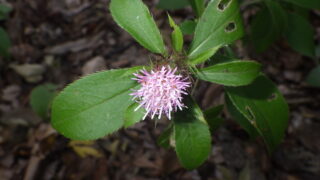
07.3818 Wild horsetail flower plant

What are the differences between Erigeron annuus, Erigeron philoxeroides, Erigeron strigosus, and Erigeron strigosus? We'll explain how to distinguish between similar species! What are the structures of their flowers and fruits?

Erigeron annuus, Erigeron strumarium, Erigeron philadelphicus, and Erigeron philadelphicus are all members of the Asteraceae family, genus Erigeron, and are annual to biennial herbs that spread from the Americas to the rest of the world. They are frequently found in Japan, from dry fields to urban areas. Distinguishing between them can be difficult at first...
Sponsored Link