classification

Sponsored Link
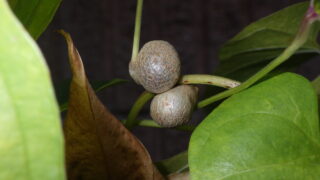
07.0282 Nagaimo (Japanese yam) yam yam plant

What are the differences between Japanese yam (Dioscorea japonica), Chinese yam (Dioscorea japonica), Japanese yam (Dioscorea tokoro), and bitter yam (Dioscorea japonica)? We explain how to distinguish between similar species! Why do they produce bulbils? Their reproductive strategies were diverse!

Japanese yam (Dioscorea japonica), Chinese yam (Dioscorea longa), Japanese yam (Dioscorea tokoro), and bitter yam (Dioscorea japonica) all belong to the genus Dioscorea in the family Dioscoreaceae. They produce edible tubers and bulbils, and are very common climbing perennial plants often seen in urban areas. The genus Dioscorea, also known as yam, is a group that includes a vast number of species...
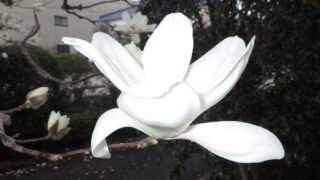
07.0120 White Magnolia Flower plant

What are the differences between white magnolia, kobushi magnolia, star magnolia, and tamushiba magnolia? We'll explain how to distinguish between similar species! Is it a myth that their flowers are primitive? What is the purpose of their conspicuous red seeds?

White magnolia, kobushi magnolia, star magnolia, and tamushiba all belong to the Magnolia genus of the Magnoliaceae family. Being deciduous trees, they shed their leaves in winter, and around April, like cherry blossoms, they produce large, white, polypetalous flowers—one per branch—before the leaves appear. A key characteristic of these trees is...
07.2024 Kikuza Pumpkin Fruit plant

What are the differences between European pumpkins, Japanese pumpkins, and pepo pumpkins? European pumpkins are eaten in Japan, and Japanese pumpkins are eaten in the West! Were the fruits eaten by extinct animals!?

European pumpkins, Japanese pumpkins, and pepo pumpkins are all annual vining plants belonging to the Cucurbitaceae family, Cucurbita genus. Originally from the Americas, they are very popular in Japan, playing an important role in both everyday meals and Halloween celebrations. However, the three species are often confused, and their differences...
Posts 8805 Featured Image Cochineal Lac Shellac Differences animal

Are you actually eating them every day? The differences and dangers of insect-derived food colorings: cochineal, lac, and shellac.

In Japan, except in some regions, eating insects is extremely rare, and it's safe to say that it's almost unheard of among younger generations, especially in urban areas. While some advocate for insect consumption as a way to prepare for food shortages, cries of "Absolutely not!" are heard, mainly on social media. Even I, who work with insects...
Posts 18742 Featured Image Ruminant Stomach Compartments animal

The differences between the four stomachs of a cow (tripe, honeycomb tripe, omasum, and abomasum) and how to remember them! Why do cows have four stomachs?

When you go to a yakiniku (Japanese barbecue) restaurant, you might see four parts of the cow's stomach (fore-stomach) listed as offal: mino, hachinosu, senmai, and giara. Because they have a distinctive taste and are internal organs, people either love them or hate them, but their chewy texture and the fact that they pair well with alcohol make them popular...
Posts 18617 Featured Image Adlerian Psychology Scientific Evidence animal

Is Adlerian psychology dubious? A thorough examination using modern science to determine the extent of its scientific basis.

If we were to summarize Adlerian psychology in one sentence, it would be: "A psychology that fosters the ability to live in cooperation with others (community feeling) by choosing one's own life (self-determination), acting in accordance with one's purpose (teleology), and letting go of unnecessary control over others (separation of tasks)." However, his psychology...
07.1492.a Broom (Cytisus scoparius) flower plant

What's the difference between broom and dwarf broom? We'll explain how to distinguish between similar species! Do the flowers "burst" to release pollen onto bees?!

Both *Cytisus scoparius* (Japanese broom) and *Cytisus scoparius* (dwarf broom) belong to the legume family and are classified under the genus *Cytisus* in Japanese classification. They are characterized by their small, trifoliate compound leaves and the yellow, butterfly-shaped flowers they produce in spring. While cultivated for ornamental purposes, *Cytisus scoparius* is sometimes sold under the name "Japanese broom"...
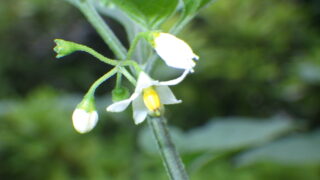
07.3319 Black Nightshade Flower plant

What are the differences between *Solanum nigrum*, *Solanum sibiricum*, *Solanum nigrum*, and *Solanum nigrum*? We'll explain how to distinguish between similar species!

Black nightshade, large black nightshade, American black nightshade, and glossy black nightshade all belong to the Solanaceae family and Solanum genus. They are very commonly seen in urban areas, and can even be found in green spaces in large cities. They are characterized by their round, black, ripening fruits, but the four species are very similar...
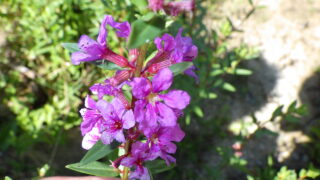
07.2281 Lythrum salicaria flower plant

What's the difference between Lythrum salicaria and Lythrum anceps? We'll explain how to distinguish between these similar species!

Both Lythrum salicaria and Lythrum sibiricum belong to the genus Lythrum in the family Lythraceae, and are perennial herbs commonly found in waterside areas and wetlands. They are often planted in biotopes, and their flower shapes are almost identical, making it difficult for some to distinguish between the two species. However, in addition to the hair-like projections on the entire plant, the shape of the leaves...
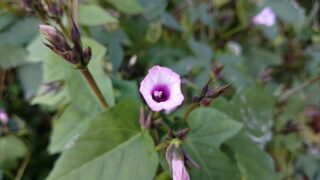
07.3293 Star morning glory flower plant

What are the differences between morning glories (Ipomoea nil) and star morning glories (Ipomoea purpurea)? We'll explain how to distinguish between these similar species!

Both Ipomoea purpurea and Ipomoea purpurea belong to the Ipomoea genus of the Convolvulaceae family and are introduced species that have naturalized in Japan. They share the characteristics of small corollas and a star shape when viewed from above. They can be seen in urban areas, but they may be confused with each other. However, there is an easy-to-understand difference in the color of the flowers...
Sponsored Link