Living things

Sponsored Link
plant

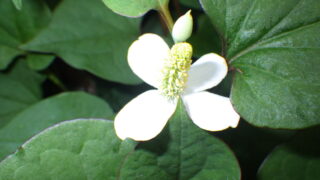
What are the differences between Houttuynia cordata, Saururus chinensis, and Polygonum multiflorum? An explanation of how to distinguish between similar species.

Houttuynia cordata and Saururus chinensis both belong to the Saururus family and are perennial herbs that prefer humid conditions. Houttuynia cordata, in particular, is commonly consumed as "Houttuynia cordata tea" and is frequently seen growing in clusters along roadsides even in urban areas. Those who have never seen them before may not know how to distinguish between them. ...
plant

What are the differences between Enkianthus perulatus, Enkianthus campanulatus, and Rhododendron molle? An explanation of how to distinguish between similar species.

Enkianthus perulatus, Enkianthus campanulatus, and Rhododendron molle all belong to the genus Enkianthus in the family Ericaceae. Enkianthus perulatus and Enkianthus campanulatus are particularly commonly seen cultivated as garden trees and park trees. Their downward-facing, urn-shaped flowers are charming. However, the shape of their leaves...
plant

What are the differences between Zelkova, Japanese elm, and Japanese elm? An explanation of how to distinguish between similar species.

Zelkova serrata, Japanese elm, and Japanese elm all belong to the elm family. In Japan, they are commonly seen growing wild in forests and are also very commonly cultivated as street trees. All three have beautiful autumn foliage, which can sometimes lead to confusion. Of the three, the zelkova belongs to the genus Zelkova...
plant

What are the differences between Japanese hackberry (Enoki), Japanese hackberry (Ezoensis), and Chinese hackberry (Mukunoki)? An explanation of how to distinguish between similar species.

Japanese hackberry (Enoki), Japanese hackberry (Ezoensis), and Chinese zelkova (Aphananthe aspera) all belong to the Cannabaceae family. Japanese hackberry and Chinese zelkova, in particular, are extremely common trees in Japan. They have been used for timber, and young trees are frequently seen along roadsides in urban areas. To distinguish them, check the shape of their leaves...
plant

What are the differences between Hirado azalea, Kurume azalea, and Satsuki azalea? An explanation of how to distinguish between similar species.

Hirado azalea, Kurume azalea, and Satsuki azalea (Satsuki rhododendron) all belong to the genus Rhododendron in the family Ericaceae, and are three species that are extremely commonly cultivated even in urban areas. However, since the shape of their flowers is almost identical, some people may have trouble distinguishing them. The three species can be distinguished by the shape of their leaves...
plant

What are the differences between Corydalis ambigua, Corydalis fumariifolia, and Corydalis ambigua? An explanation of how to distinguish between similar species.

Corydalis ambigua, Corydalis fumariifolia, and Corydalis hyemalis all belong to the Corydalis genus of the poppy family. What's interesting about them is that in the spring (April-June) flowering season in forests, their purple to bluish-purple flowers bloom in a spiral pattern facing in all directions. However, their flower shapes and habitats are similar, so they can sometimes be confused...
plant

What are the differences between butterbur, leopard plant, and large leopard plant? An explanation of how to distinguish between similar species.

Butterbur, Farfugium japonicum, and Large-leaved Farfugium all belong to the Asteraceae family, and are very similar in that they have heart-shaped to kidney-shaped leaves, and are also edible. Because both have been used in Japan since ancient times, some people may confuse them.
plant

What are the differences between Japanese kerria and white kerria? How do they differ from butterbur and Hypericum patulum? This article explains how to distinguish between similar species.

Both Japanese kerria (Yamabuki) and white kerria (Shiroyamabuki) belong to the Rosaceae family, Rosioideae subfamily. They grow wild and are also cultivated for ornamental purposes, making them trees that signal the arrival of spring. However, some people mistakenly believe that white kerria is simply "Japanese kerria with white petals"...
plant

What are the differences between Lobelia, Lobelia chinensis, and Lobelia sessilifolia? An explanation of how to distinguish between similar species.

Lobelia (also known as blue-flowered bellflower), Lobelia sessilifolia, and Lobelia sessilifolia are characterized by their blue flowers, typical of the Campanulaceae family, and their bilaterally symmetrical blossoms. They are commonly cultivated in gardens, especially in horticulture. However, image searches often lead to confusion between these species...
plant

What are the differences between Euonymus japonicus, Euonymus fortunei, and Euonymus sieboldianus? How do they differ from Aucuba japonica and Cleyera japonica? We explain how to distinguish between similar species.

Euonymus japonicus, Euonymus fortunei, and Euonymus sieboldii all belong to the Euonymus genus of the Celastraceae family and are common trees in forests throughout Japan. Furthermore, they are frequently planted in urban areas for ornamental purposes and as hedges. These three species are broadly classified into Euonymus japonicus, Euonymus fortunei, and Euonymus sieboldii based on whether they are evergreen or deciduous.
Sponsored Link