Living things

Sponsored Link
plant

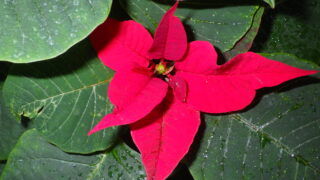
What are the differences between poinsettias, Epipactis thunbergii, and false Epipactis thunbergii? We'll explain how to distinguish between similar species! Is it a myth that poinsettias are poisonous?!

Poinsettias, Euphorbia hederacea, and Euphorbia leucocephala all belong to the Euphorbia genus of the Euphorbiaceae family. While widely cultivated for ornamental purposes, they also sometimes become naturalized. Their most striking feature is their bright red or white, conspicuous petal-like "bracts"...
plant

What's the difference between Angelica acutiloba and Angelica gigas? We'll explain how to distinguish between similar species! Is the purple color of the flowers due to wasps?!

Both Angelica dahurica and Angelica pubescens belong to the Angelica genus of the Apiaceae family. They are medium to large perennial herbs with thick stems and broad leaves, and are similar in that their leaflets are large and rounded. However, upon closer observation, there are differences in their leaves, flowers, and fruits. However, since there are many species in the Angelica genus, careful distinction is necessary...
plant

What are the differences between *Tama coral* (winter coral) and *Himeta coral*? An explanation of how to distinguish between similar species.

Both Solanum sieboldii (winter coral) and Solanum nigrum belong to the Solanaceae family and are cultivated extensively for ornamental purposes because they produce attractive, round, red, ripe fruits (berries) in winter. However, in Japan, it is not always possible to properly distinguish between the two varieties, Solanum sieboldii and Solanum nigrum...
plant

What are the differences between Ophiopogon japonicus, Ophiopogon longifolius, Ophiopogon sieboldii, and Ophiopogon orchid? An explanation of how to distinguish between similar species.

Ophiopogon japonicus, Ophiopogon longifolius, Ophiopogon sieboldii, and Ophiopogon orchid all belong to the Ophiopogon genus of the Asparagaceae family (formerly Asparagaceae), and are evergreen perennial herbs often seen growing creeping along the ground in forests. Their most distinctive feature is the dark blue seeds they produce, which are easily mistaken for fruits...
plant

What are the differences between Asparagus, Asparagus, and Coprinus? An explanation of how to distinguish between similar species.

Asparagus, rhizome, and dwarf asparagus are all perennial herbs belonging to the genus Asparagus in the family Asparagaceae, and their most distinctive feature is the clusters of very thin, spine-like "leaf-like" structures. In reality, these are modified "branches" (called cladodes), and the true leaves are...
plant

What are the differences between horse chestnut trees (Aesculus hippocastanum), European horse chestnut (Aesculus turbinata), red-flowered horse chestnut (Aesculus turbinata), and red-flowered American horse chestnut (Aesculus turbinata)? We explain how to distinguish between similar species.

Horse chestnut (Aesculus hippocastanum), European horse chestnut (Aesculus turbinata), red-flowered horse chestnut (Aesculus turbinata), and red-flowered American horse chestnut (Aesculus turbinata) all belong to the Aesculus genus of the Sapindaceae family. They are characterized by their large, palmately compound leaves and are commonly seen cultivated in parks, as street trees, and garden trees in Japan. Originally, the native Japanese horse chestnut has become associated with the Japanese people...
plant

What are the differences between Boehmeria japonica, Boehmeria nivea, Ramie, and Urtica dioica? An explanation of how to distinguish between similar species.

Boehmeria japonica, Boehmeria nivea, Ramie, and Urtica dioica all belong to the Urticaceae family and share the characteristic of having leaves with fine veins and serrations. They are common herbaceous plants that grow in mountains and fields. Boehmeria japonica and Ramie are also well-known for their use as fibers. However, the classification of the Urticaceae family is complex...
plant

What are the differences between *Pyrus pyrifolia*, *Ailanthus altissima*, and *Lucifer praecox*? An explanation of how to distinguish between similar species.

Both *Pachypodium sibiricum* and *Ailanthus altissima* belong to the Simaroubaceae family and are deciduous trees sometimes planted in Japan. *Ailanthus altissima*, in particular, is known for its rapid growth and widespread naturalization worldwide. However, they share similarities, such as having odd-pinnately compound leaves, so those unfamiliar with them might not distinguish them...
plant

What are the differences between Rhaphiolepis indica, Rhaphiolepis umbellata, and Ternstroemia gymnanthera? An explanation of how to distinguish between similar species.

Rhaphiolepis indica, Rhaphiolepis umbellata, and Rhaphiolepis ternata all belong to the genus Rhaphiolepis in the family Rosaceae. While they naturally grow on coastlines, they are frequently seen planted in urban areas. However, the classification of the genus Rhaphiolepis is complex even at the species level, and there are many other species besides the three mentioned above...
plant

What's the difference between *Hatake-nira* and *Nira-modoki*? An explanation of how to distinguish between similar species.

Both Allium spectabile and Allium sibiricum belong to the genus Allium in the Amaryllidaceae family. Although they are introduced species in Japan, they are now very common, growing in places like between concrete blocks along roadsides. However, they are extremely often confused. To distinguish between these two species, it's necessary to examine their leaves and flowers. Regarding the flowers...
Sponsored Link