plant

Sponsored Link
plant

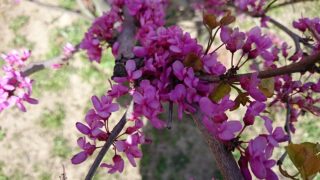
What are the differences between Japanese redbud (Cercis chinensis), American redbud (Cercis chinensis), and European redbud (Cercis rupestris)? We'll explain how to distinguish between these similar species!

The most distinctive feature of the Japanese redbud (Cercis chinensis), American redbud (Cercis rupestris), and European redbud (Cercis rupestris) is that, like cherry blossoms, they are covered in dense clusters of pink to purple, butterfly-shaped flowers characteristic of the legume family in spring before the leaves unfurl. While the Japanese redbud, cultivated for centuries, is well-known, the American redbud and European redbud have become increasingly popular in recent years...
plant

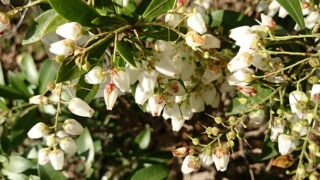
What are the differences between Pieris japonica, Pieris ryukyuensis, and Pieris japonica? We explain how to distinguish between similar species!

Japanese Andromeda, Ryukyu Andromeda, and Japanese Stewartia all belong to the Ericaceae family, have downward-facing, urn-shaped to bell-shaped flowers, and their bark can be twisted. They also all share the characteristic of being poisonous. Therefore, some people may have difficulty distinguishing them. However, Japanese Andromeda and Ryukyu Andromeda are similar...
plant

What are the differences between Glechoma hederacea and Glechoma hederacea (European Glechoma hederacea)? What are the differences between Centella asiatica, Lamium amplexicaule, and Mazus pumilus? We'll explain how to distinguish between similar species!

Both Glechoma hederacea and Glechoma erythrorhizon (European Glechoma) belong to the genus Glechoma in the Lamiaceae family. Their names, meaning "through the fence," come from the way their stems creep along the ground and pass through hedges. They are characterized by kidney-shaped leaves and labiate flowers with a large opening in the center. However, Glechoma erythrorhizon, which is recently cultivated in gardens, is...
plant

What are the differences between Manuka (Leptospermum scoparium) and waxflower? We'll explain how to distinguish between similar species! Does Manuka honey really have health benefits?

Both Leptospermum scoparium and waxflower belong to the Myrtaceae family and are cultivated for ornamental purposes or used as branches in flower arrangements, as they are part of the "native flowers" or "wildflowers" collectively known as "native flowers" or "wildflowers" native to Australia. Furthermore, in the case of Leptospermum scoparium, some varieties...
plant

What's the difference between baby's breath and perennial baby's breath? We'll explain how to distinguish between these similar species! Most people can't tell the difference!

Both baby's breath (Gypsophila sempervirens) and perennial baby's breath (Gypsophila sempervirens) belong to the Gypsophila genus of the Caryophyllaceae family. They bear numerous delicate, small flowers (mainly white or pink) and are often planted in flowerbeds, as well as being widely used as cut flowers and in flower arrangements...
plant

What are the differences between Vicia cracca, Hairy Vetch, Slender Vicia cracca, and Velvet Vicia? We explain how to distinguish between similar species! Was the nectar stolen from the flowers without restraint?!

Vicia cracca, hairy vetch, slender vetch, and velvet vetch all belong to the Vicia genus of the Fabaceae family. They are characterized by numerous purple, butterfly-shaped flowers (10-30 in number) arranged in racemes in spring, and by having five or more pairs of leaflets. From a distance, they are very similar...
plant

What's the difference between Japanese star anise (Illicium anisatum) and Japanese star anise (Illicium verum)? We'll explain how to distinguish between these similar species! Japanese star anise protects graves, while Japanese star anise protects life!?

Both Japanese star anise (Illicium anisatum) and Japanese star anise (Illicium verum) belong to the genus Illicium in the family Schisandraceae. They are evergreen plants with glossy leaves, and their most distinctive feature is their fruit: a follicle-like fruit consisting of eight follicles arranged radially. Both are considered very important plants both domestically and internationally...
plant

What are the differences between Deutzia, Deutzia crenata, and Deutzia gracilis? We'll explain how to distinguish between similar species! Could Deutzia be the origin of hedges?

Deutzia, Deutzia gracilis, and Deutzia crenata all belong to the Deutzia genus of the Hydrangeaceae family. It is believed that their name, "Utsugi" (hollow tree), comes from the fact that, except for the young branches, the inside of the branches is hollow. In Japan, they have a history of being planted as a guide for rice planting, and are also said to be the origin of hedges...
plant

What are the differences between Oxalis, Purple Wood Sorrel, Potato Wood Sorrel, Red Wood Sorrel, and Flower Wood Sorrel? We'll explain how to distinguish between similar species!

Purple wood sorrel, sweet wood sorrel, red wood sorrel, and flowering wood sorrel all belong to the genus Oxalis in the family Oxalidaceae. Within the vast Oxalis genus, these species are characterized by their obovate leaflets with rounded corners and red to pink flowers. They were originally cultivated as ornamental plants but have since become naturalized and introduced species...
plant

What are the differences between purslane, portulaca, and moss rose? We'll explain how to distinguish between similar species! The secret to their strength lies in the simultaneous use of two special types of photosynthesis!?

Purslane, Portulaca grandiflora, and Portulaca oleracea all belong to the Portulacaceae family and Portulaca genus. Their most distinctive feature is their glossy, succulent leaves. Due to their hardiness, they are cultivated and naturalized in urban areas, especially Portulaca grandiflora and Portulaca oleracea...
Sponsored Link