plant

Sponsored Link
plant

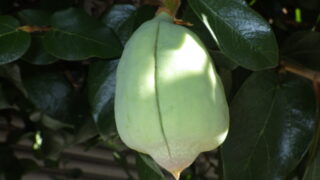
What are the differences between *Ficus microcarpa*, *Ficus pumila*, and *Ficus serrata*? We explain how to distinguish between similar species! What is the special parasitic wasp that visits the "fruit-like" "syconium"?

Ficus microcarpa, Ficus serrata, and Ficus serrata all belong to the Ficus genus of the Moraceae family. They are distinguished from other Ficus species by their climbing growth habit, attaching themselves to tree trunks and rocks. Their most distinctive feature, like other Ficus species, is the formation of fruit-like structures...
plant

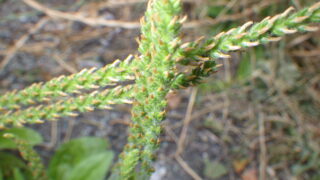
What are the differences between plantain, broadleaf plantain, budded plantain, and psyllium? We'll explain how to distinguish between similar species! How do they become stronger when stepped on?

Plantago major, Plantago lanceolata, and Plantago asiatica all belong to the Plantaginaceae family and Plantago genus, and are perennial herbs that grow very commonly along roadsides. They prefer compacted ground and are known as a type of "footprint plant." While these are often confused, they can be relatively distinguished by paying attention to the shape of their leaves and inflorescences...
plant

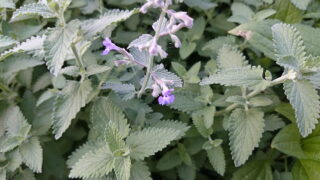
What's the difference between catmint and catnip? How does it differ from mint? We'll explain how to distinguish between similar species! Why does it intoxicate cats? And is it actually a mosquito repellent?!

Catmint and catnip belong to the genus Nepeta in the Lamiaceae family and are perennial plants widely cultivated in Japan as herbs or for ornamental purposes. While their large corolla with a protruding upper lip is a distinctive feature, their most notable characteristic is the "silver vine reaction" that intoxicates felines...
plant

What are the differences between daphne and pepper tree? What are the differences between lilac, white jasmine, gardenia, and rhododendron? We'll explain how to distinguish between similar species! Why did the fragrance of flowers evolve?

Daphne odora and pepper trees both belong to the genus Daphne in the family Thymelaeaceae, and share the characteristics of wrinkled, distorted leaves and fragrant flowers. While they may appear similar, Daphne odora is only cultivated, while pepper trees only grow wild, and morphologically they also differ...
plant

What are the differences between Menamomi, Komenamomi, and Onamomi? We explain how to distinguish between similar species! The mucus-secreting bracts are for sticking to animals!?

Both *Menamomi* and *Komenamomi* belong to the genus *Menamomi* in the Asteraceae family. Their most distinctive features are their small, yellow ray florets and the presence of stalked glandular hairs on their involucral bracts. While not particularly common, both species grow in open areas, and *Menamomi* in particular was historically used by the Japanese as a fermented food. However...
plant

What are the differences between Mahonia japonica, Narrow-leaved Mahonia japonica, and Flat-leaved Mahonia japonica? We'll explain how to distinguish between similar species!

Mahonia japonica, Narrow-leaved Mahonia japonica, and Flat-leaved Mahonia japonica all belong to the Berberidaceae family, genus Berberis. They have odd-pinnately compound leaves with coarse, needle-like serrations and are frequently cultivated as ornamental plants due to their ease of growth. However, few people may be able to properly distinguish between the three species...
plant

What are the differences between poppies, common poppies, and long-headed poppies? How do they differ from Icelandic poppies? We'll explain how to distinguish between similar species! Did humans themselves evolve the "Devil Fruit," which has both significant merits and demerits?

Poppies, including the common poppy, thick-flowered poppy, and long-headed poppy, all belong to the genus Papaver in the family Papaveraceae and are collectively known as poppies. They are very popular as ornamental plants due to their beautiful, large single flowers and are widely cultivated. However, despite being poisonous and prone to naturalization, they are difficult to identify...
plant

What are the differences between white birch (Betula platyphylla), Japanese white birch (Betula ermanii), and Japanese white birch (Betula platyphylla)? An explanation of how to distinguish between similar species.

White birch (Betula platyphylla), Japanese white birch (Betula ermanii), and Japanese white birch (Betula platyphylla) all belong to the Betulaceae family and are common deciduous trees in cold regions and high mountains. They share the characteristic of having straight, parallel lateral veins on their leaves and fine serrations, and have been widely used for various purposes by the Japanese and Ainu people...
plant

What are the differences between morning glories, round-leaved morning glories, wild morning glories, and American morning glories? We'll explain how to distinguish between similar varieties! The origins of Japanese morning glories are shrouded in mystery!?

Morning glories (Ipomoea nil), round-leaved morning glories, wild morning glories, and American morning glories all belong to the Ipomoea genus of the Convolvulaceae family. Among the varieties with "morning glory" in their name, they are particularly popular for their large corolla diameter (over 3 cm) and are widely cultivated as ornamental plants. While they are very popular, there is considerable individual variation between varieties...
plant

What are the differences between Barnyard Grass (Paspalum erythrostictum), Striped Barnyard Grass (Paspalum erythrostictum), Upright Barnyard Grass (Paspalum erythrostictum), and American Barnyard Grass (Paspalum erythrostictum)? An explanation of how to distinguish between similar species.

Barnyard grass, striped barnyard grass, upright barnyard grass, and American barnyard grass are all perennial grasses belonging to the genus Barnyard grass in the grass family Poaceae, and are commonly found as weeds in a wide range of areas from urban areas to farmlands. Their most distinctive feature is their flat, nearly circular to oval-shaped spikelets...
Sponsored Link