plant

Sponsored Link
plant

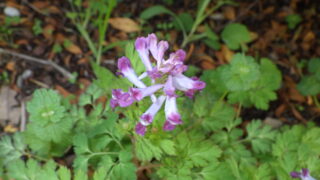
What are the differences between Lobelia, Lobelia chinensis, and Lobelia sessilifolia? An explanation of how to distinguish between similar species.

Lobelia (also known as blue-flowered bellflower), Lobelia sessilifolia, and Lobelia sessilifolia are characterized by their blue flowers, typical of the Campanulaceae family, and their bilaterally symmetrical blossoms. They are commonly cultivated in gardens, especially in horticulture. However, image searches often lead to confusion between these species...
plant

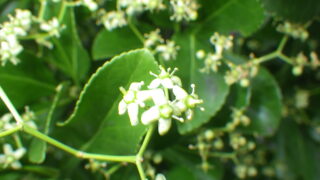
What are the differences between Euonymus japonicus, Euonymus fortunei, and Euonymus sieboldianus? How do they differ from Aucuba japonica and Cleyera japonica? We explain how to distinguish between similar species.

Euonymus japonicus, Euonymus fortunei, and Euonymus sieboldii all belong to the Euonymus genus of the Celastraceae family and are common trees in forests throughout Japan. Furthermore, they are frequently planted in urban areas for ornamental purposes and as hedges. These three species are broadly classified into Euonymus japonicus, Euonymus fortunei, and Euonymus sieboldii based on whether they are evergreen or deciduous.
plant

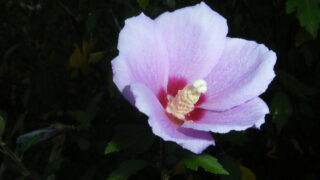
What are the differences between Hibiscus syriacus, Hibiscus mutabilis, and Confederate Rose? An explanation of how to distinguish between similar species.

Hibiscus syriacus, Hibiscus mutabilis, and Confederate rose are all members of the Hibiscus genus in the Malvaceae family and are trees frequently cultivated in horticulture for ornamental purposes. Their most distinctive feature is the large, beautiful red to white flowers they produce, but they are often confused with each other. These are primarily Hibiscus syriacus and Hibiscus mutabilis...
plant

What are the differences between Photinia serrulata, Photinia glabra, and Photinia glabra (Red Robin)? An explanation of how to distinguish between similar species.

Photinia serrulata, Photinia glabra, and Photinia glabra (Red Robin) are all members of the Photinia genus in the Rosaceae family. They are native to Japan and are also commonly cultivated as privacy screens in gardens, making them very familiar trees. Their most distinctive feature is their red young leaves. However, distinguishing between these three species can be difficult...
plant

What are the differences between Lespedeza bicolor, Lespedeza thunbergii, Lespedeza cyanea, and Lespedeza thunbergii? An explanation of how to distinguish between similar species.

Lespedeza bicolor, Lespedeza thunbergii, Lespedeza thunbergii, and Lespedeza thunbergii are all perennial herbs belonging to the genus Lespedeza in the family Fabaceae. They are particularly small, less than 10mm in length, and do not develop woody tissue. A major common feature is that their petals are primarily white with purple markings that serve as nectar guides, making them difficult to distinguish...
plant

What are the differences between *Calanthe discolor* and *Calanthe japonica*? An explanation of how to distinguish between similar species.

Both *Arabis japonica* and *Arabis humilis* belong to the genus *Arabis* in the family Brassicaceae, and are invasive weeds that can grow in urban areas with low levels of natural habitat, such as cracks in concrete. Their distinctive features that distinguish them from other species are their characteristic yellow flowers and divided leaves, typical of the Brassicaceae family. However...
plant

What are the differences between Paulownia (Paulownia) and Jacaranda (Jacaranda)? An explanation of how to distinguish between similar species.

Paulownia (Paulownia) and Jacaranda (Jacaranda jacaranda) are both deciduous trees with "paulownia" in their name, and are quite similar in that they both produce purple, tubular, bell-shaped flowers, and their flowering seasons are also close. Traditionally, the paulownia has been considered a sacred tree by the Japanese, and its flowers and wood have been highly valued, while the jacaranda...
plant

What are the differences between *Senecio japonica*, *Senecio crassipes*, and *Senecio stolonifera*? An explanation of how to distinguish between similar species.

Senecio vulgaris, Senecio rupestris, and Senecio rupestris all belong to the Senecio tribe (or Senecio tribe) of the Asteraceae family and are introduced weeds with the name "borogiku" (ragwort). A key characteristic is that their flower heads (capitulum) are composed solely of tubular florets. These three species have similar names...
plant

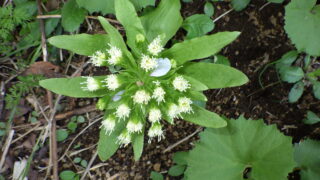
What are the differences between cucumber grass, water hyacinth, and flowering flower? How do they differ from forget-me-nots and wild purple flowers? This article explains how to distinguish between similar species.

Both *Myosotis scorpioides* and *Myosotis alpestris* belong to the genus *Myosotis* in the family Boraginaceae, and are biennial herbs characterized by entire leaves, scorpion-shaped inflorescences, blue corollas, and the presence of appendages. *Myosotis scorpioides*, in particular, is well-known and popular for its pretty blue flowers that bloom in spring. *Myosotis scorpioides* and...
plant

What are the differences between common chickweed, green chickweed, and cow chickweed? We'll explain how to distinguish between similar species! There are even differences in their survival strategies!?

Common chickweed, green chickweed, and large chickweed all belong to the genus Stellaria in the family Caryophyllaceae, and are representative Japanese weeds that can almost certainly be found if you observe roadsides. In Japan, they are one of the seven spring herbs and are familiar to people as they are eaten in seven-herb rice porridge. However, these three species are usually referred to simply as "chickweed"...
Sponsored Link