plant

Sponsored Link
plant

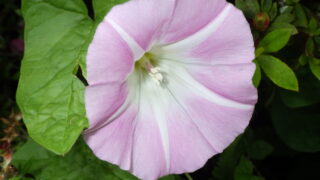
What are the differences between morning glory, small morning glory, beach morning glory, and European morning glory? An explanation of how to distinguish between similar species.

Morning glory, small morning glory, beach morning glory, and European morning glory are all climbing perennial plants belonging to the Convolvulaceae family. They are relatively small compared to other members of the Convolvulaceae family and are easy to find. Morning glory and small morning glory, in particular, twine around street trees and fences even in urban areas, blooming in countless numbers...
plant

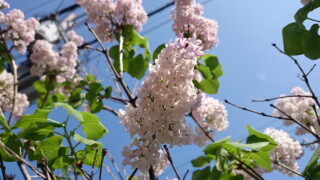
What are the differences between lilac, syringomyelia, and dwarf lilac? We'll explain how to distinguish between similar species! What exactly is a "dwarf lilac"?

Lilac, syringa, and dwarf lilac all belong to the genus Syringa in the Oleaceae family. Their flowers bloom in clusters in spring, covering the upper parts of the trees and creating a very attractive appearance, so they are often cultivated as ornamental plants in gardens. However, some people may not know the differences between them. ...
plant

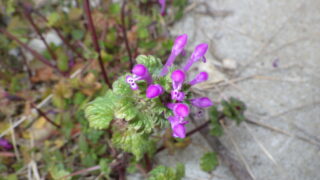
What are the differences between Lamium amplexicaule, Lamium purpureum, and Lamium album? How do they differ from Lamium album? We'll explain how to distinguish between similar species! Why are the fruits carried by ants?

Lamium amplexicaule, Lamium purpureum, and Lamium purpureum are all herbaceous plants belonging to the genus Lamium in the Lamiaceae family. Lamium amplexicaule and Lamium purpureum are particularly well-known as spring weeds, but some people may have trouble distinguishing between the three species. These three species are relatively easy to identify, and their leaves alone...
plant

What are the differences between agave and yucca? We'll explain how to distinguish between similar species! Is it a myth that they live for 100 years? Is it a myth that they're used to make tequila?

Agave, agave, Yucca, and Yucca all belong to the Asparagaceae family (formerly known as the Asparagaceae family). They are characterized by their large size, sometimes reaching the height of a child or adult, and their monocotyledonous leaves with parallel veins. Their impressive presence and drought tolerance...
plant

What are the differences between Japanese quince (Chaenomeles speciosa) and Japanese quince (Chaenomeles japonica)? How do they differ from Japanese apricot (Prunus mume) and Japanese camellia (Camellia japonica)? This article explains how to distinguish between similar species.

Both the Japanese flowering quince (Chaenomeles speciosa) and the common flowering quince (Chaenomeles japonica) belong to the Chaenomeles genus of the Rosaceae family. They are deciduous shrubs characterized by the simultaneous unfolding of leaves and vibrant flowering. Perhaps for this reason, the Japanese flowering quince, in particular, is quite popular in horticulture and is frequently seen planted. Furthermore, its fruit is edible. However, the Japanese flowering quince...
plant

What's the difference between dill (yin-dill) and fennel (foeniculum vulgare)? An explanation of how to distinguish between similar species.

Dill and fennel both belong to the Apiaceae family, share a strong aroma throughout the plant, and are used both as herbs (leaves) and spices (fruits). Their leaves, in particular, are known as "fish herbs" and pair exceptionally well with fish dishes. Furthermore, they are also similar in morphology...
plant

What are the differences between strawberries (Strawberries) and wild strawberries (Potentilla fragarioides)? What are the differences between them and mock strawberries? We'll explain how to distinguish between similar species.

Both strawberries and wild strawberries (Potentilla fragarioides) belong to the genus Fragarioides in the Rosaceae family. These perennial plants are very popular because their aggregate fruit receptacles turn red and swell, making them edible. They are widely cultivated in Japan, and the wild strawberry, in particular, is commercially available in winter in addition to its natural fruiting season of June and July...
plant

What are the differences between Dutch strawberries, wild strawberries, raspberries, and mock strawberries? This article explains how to distinguish between similar species.

Strawberry (Strawberry), Rubus parvifolius (Japanese raspberry), Rubus buergeri (wild strawberry), Raspberry (Japanese raspberry), and Strawberry (Indian strawberry) all belong to the Rosaceae family and are generally recognized as relatives of the "strawberry" with their small, red, berry-like fruits. However, among these, Strawberry and Raspberry...
plant

What are the differences between Eurya japonica, Eurya japonica, and Sakaki? We'll explain how to distinguish between similar species! Do they bloom in early spring because they rely on bees and flies for pollination?

Hisakaki, Hamahisakaki, and Sakaki all belong to the family Cleyera (or Theaceae). Hisakaki and Sakaki, in particular, have been considered "yorishiro" (objects that house divine spirits) in Shintoism since ancient times and have been traditionally cultivated in Japan. However, their similar names may often lead to confusion...
plant

What's the difference between loquat (Biwa) and wild fig (Inubiwa)? How do they differ from apricots, persimmons, and mangoes? We'll explain how to distinguish between similar species! Insects and small birds visit loquat blossoms that bloom in winter!?

The loquat (Ficus microcarpa) is an evergreen tree native to China, cultivated worldwide for its edible fruit. In Japan, it is frequently cultivated not only for food but also for ornamental purposes. A similar-sounding species, the deciduous shrub known as *Ficus erecta*, is often confused with the loquat due to its oval-shaped, fruit-like structure...
Sponsored Link