evolution

Sponsored Link
plant

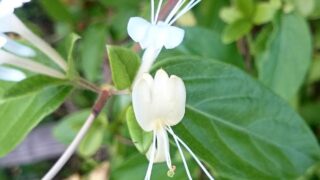
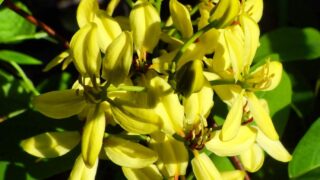
What are the differences between honeysuckle, dwarf honeysuckle, beach honeysuckle, and golden honeysuckle? We'll explain how to distinguish between similar species! Why do their flowers have different shapes? Why do some bloom in the evening?

Japanese honeysuckle (Lonicera japonica) is the most common species in Japan, frequently found both in the wild and in gardens. Several closely related species are known, and four species—Japanese honeysuckle (Lonicera japonica), Japanese honeysuckle (Lonicera japonica var.
plant

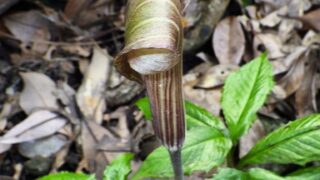
What are the differences between Arisaema ringens, Arisaema serratum, and Arisaema serratum? The flowers have a terrifying life cycle: they trap fungus gnats for pollination! Are the fruits a favorite of birds?

Arisaema ringens, Arisaema serratum, and Arisaema serratum are representative species within the Arisaema genus. The Arisaema genus is extremely similar in shape, making it a difficult group to distinguish. Frankly speaking, distinguishing between species in the Arisaema genus is extremely difficult. Even in terms of classification, regional variations...
plant

What's the difference between Enokigusa and Enoki? We'll explain how to distinguish between similar species! What are Nagaba Enokigusa and Velvet Enokigusa? These unassuming flowers are pollinated in two ways!?

While *Enokigusa* (Japanese hackberry) is a common species found along roadsides and in fields in flat areas, those unfamiliar with it may easily confuse it with the Japanese hackberry (*Enoki*), as its name suggests. Although they share some similarities, such as leaf veins, serrations, and pointed tips, their classifications are fundamentally different, with a major difference being whether they are herbaceous or woody plants...
plant

What are the differences between Monotropa uniflora, Monotropa uniflora var. alba, and Monotropa japonica? We explain how to distinguish between similar species! Why did they lose photosynthesis? What insects visit the flowers? Cockroaches are responsible for seed dispersal!?

Monotropa uniflora, Monotropa uniflora var. japonica, and Monotropa uniflora are three plant species that grow in the dark forest floor where photosynthesis has been lost. They lack normal leaves, instead having reduced scale-like leaves. They have only stems and flowers, and their entire bodies are white due to the absence of chlorophyll. They are known as mycoheterotrophic plants, but the distinction is not always clear...
plant

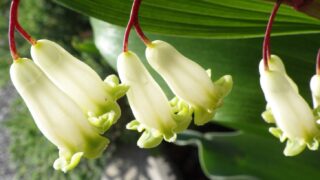
What are the differences between Polygonatum odoratum, Polygonatum sibiricum, Polygonatum humile, and Disporum sessile? What insects visit the downward-facing flowers? Polygonatum odoratum was producing flowers with only stamens due to nutrient deficiency!?

Polygonatum odoratum, Polygonatum sibiricum, Polygonatum humile, and Disporum sessile are all species that bloom in spring and are commonly found in gardens and as wildflowers, but they can be a little difficult to distinguish because they are often sold mixed together. Therefore, I have summarized the botanical distinguishing features of the Polygonatum genus. Mainly, the way the flowers grow...
plant

What's the difference between *Kintoranoo* and *Koushunkazura*? We'll explain how to distinguish between these similar species! Did their ancestors evolve to secrete oil instead of nectar, only to then "revert" back to their normal appearance?!

Malpighiinae and Kadsunokazura are two of the most popular species in Japan belonging to the Malpighiaceae family, and are often cultivated as ornamental plants in gardens, but they are also frequently confused. The biggest difference between them is that Malpighiinae is an evergreen shrub, while Kadsunokazura is a woody vine...
plant

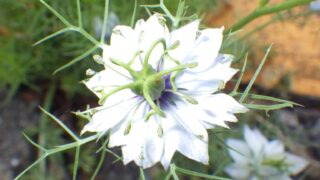
What are the differences between Nigella (Nigella fuciformis) and Black Cumin (Nigella fragrans)? What are their medicinal properties? What are their components? Did the flowers deceive insects by creating false nectar glands?!

Nigella (Ilex crenata) and black cumin (Ilex rotunda) are cultivated worldwide for ornamental and medicinal purposes, and are now common in Japan, but they are very easily confused. Even searching online will bring up many incorrect photos. However, distinguishing between them is actually quite difficult...
plant

What's the difference between a banyan tree and a fig tree? Why is it called the "strangler fig"? Where are the flowers? Only one type of insect visits the flowers!? Where are the real fruits? It's an important food source for bats!?

The Japanese banyan tree (Ficus microcarpa) and the Japanese Ficus microcarpa (Ficus sylvestris) are known as two "strangler figs" in southern Japan, both producing drooping aerial roots and forming receptacles. Ecologically, they are similar, and it can be difficult to distinguish between them. However, there are significant differences in leaf venation and leaf length between the two. Also, regarding aerial roots...
plant

What are the differences between goji berries (Lycium chinense) and Elaeagnus umbellata (Elaeagnus umbellata)? Can they be eaten raw? How are they prepared? What kinds of insects visit the flowers?

Goji berries (Lycium chinense) and Elaeagnus umbellata (Elaeagnus umbellata) share the common characteristic of producing delicious red berries in the summer. However, their botanical characteristics are quite different. While the leaves and flowers are the most reliable way to distinguish between them, there are also differences in the fruit stalks. Goji berries can be eaten raw, but they have a "fishy smell...".
plant

What are the differences between Spiraea thunbergii, Spiraea cantoniensis, and Lycaena phlaeas? We explain how to distinguish between similar species! Did you know that flies surprisingly love the flowers of Spiraea thunbergii in gardens?

Spiraea thunbergii, Spiraea cantoniensis, and Spiraea thunbergii are representative species of the Spiraea genus in Japan, blooming with white flowers in spring. They are also cultivated for ornamental purposes. Distinguishing between them is relatively easy; you can quickly tell them apart by examining the inflorescence and flower shape. Their leaf shapes are also distinctive, so if you look closely, you can identify them even when they are not in bloom...
Sponsored Link