evolution

Sponsored Link
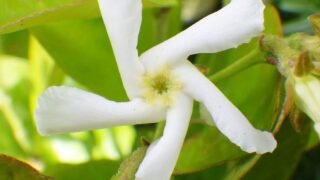
Lycium Chinense Flower plant

What are the differences between goji berries (Lycium chinense) and Elaeagnus umbellata (Elaeagnus umbellata)? Can they be eaten raw? How are they prepared? What kinds of insects visit the flowers?

Goji berries (Lycium chinense) and Elaeagnus umbellata (Elaeagnus umbellata) share the common characteristic of producing delicious red berries in the summer. However, their botanical characteristics are quite different. While the leaves and flowers are the most reliable way to distinguish between them, there are also differences in the fruit stalks. Goji berries can be eaten raw, but they have a "fishy smell...".
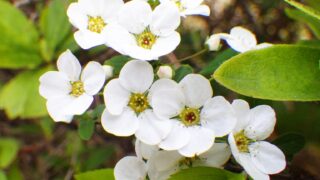
Spiraea Thunbergii Flower plant

What are the differences between Spiraea thunbergii, Spiraea cantoniensis, and Lycaena phlaeas? We explain how to distinguish between similar species! Did you know that flies surprisingly love the flowers of Spiraea thunbergii in gardens?

Spiraea thunbergii, Spiraea cantoniensis, and Spiraea thunbergii are representative species of the Spiraea genus in Japan, blooming with white flowers in spring. They are also cultivated for ornamental purposes. Distinguishing between them is relatively easy; you can quickly tell them apart by examining the inflorescence and flower shape. Their leaf shapes are also distinctive, so if you look closely, you can identify them even when they are not in bloom...
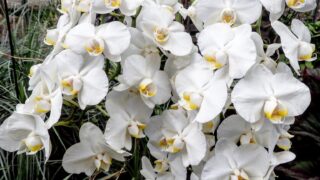
Phalaenopsis Aphrodite Subsp Formosana Flower plant

There are differences between Phalaenopsis orchids and other similar species! We'll explain how to distinguish between them! Why are they so popular? What's their history? Did the flowers attach pollen clumps to the backs of insects?! But the species is unknown?

Phalaenopsis orchids are very popular in Japan as high-end potted plants and cut flowers. They are the number one orchid species in terms of both production volume and value. However, they are also known as "Phalaenopsis," which can be confusing. Biologically, however, the terms refer to different species, with Phalaenopsis being the "Phalae..." orchid.
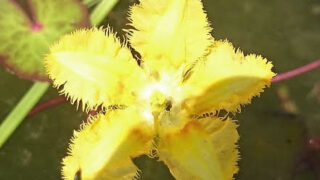
Nymphoides Peltata Flower plant

What are the differences between Nymphoides peltata, Nymphoides indica, and Nymphalis? We explain how to distinguish between similar species! Why are they endangered? Did Nymphoides peltata and Nymphoides indica survive through a strategy of pleasing everyone?

Nymphoides peltata, Nymphoides indica, and Nymphaea japonica are three species of floating-leaved plants with round leaves found in lakes and ponds in Japan. While they look very similar, Nymphoides peltata and Nymphoides indica belong to the Menyanthaceae family, while Nymphaea japonica belongs to the Nymphaeaceae family, making them completely different. They can be reliably distinguished by their flowers, but even just looking at the leaves can be quite telling...
Ternstroemia Gymnanthera Flower plant

What are the differences between Ternstroemia gymnanthera, Pittosporum tobira, Rhaphiolepis indica, and Ilex crenata? We explain how to distinguish between similar species! Did you know that Ternstroemia gymnanthera is a rare species in the biological world, possessing both male and hermaphroditic flowers on separate plants? And that its fruit deceives birds?

Ternstroemia gymnanthera is an evergreen tree that grows in relatively dry areas near the coast and is quite popular as a garden tree. However, because its leaves are entire and have no serrations, it lacks distinctive features and is often confused with completely different species such as Pittosporum tobira, Rhaphiolepis indica, and Ilex crenata. However, in many cases, the color of the leaf stalks...
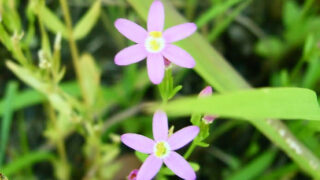
Centaurium Tenuiflorum Flower plant

What are the differences between *Gentiana scabrida* and *Gentiana scabrida*? We'll explain how to distinguish between similar species! Is it true that they have medicinal properties? *Gentiana scabrida* species change flower size and alter their pollination strategy depending on the environment!?

*Gentiana scabrida* and *Gentiana scabrida* are two species of plants native to Europe that bear pretty pink flowers, and they have become commonly seen in Japan in recent years. This has been the case since 1960. These two species can be distinguished by carefully observing their life forms, basal leaves, and corollas...
Plumbago Auriculata Flower plant

What are the differences between Plumbago auriculata and Plumbago prunifolia? We explain how to distinguish between similar species! Are there two types of stamen length? Only insects with long mouths can suck nectar from the flowers!?

Plumbago (Plumbago auriculata) and Plumbago rhododendron are two horticultural varieties of the Plumbaginaceae family that produce somewhat unusual blue flowers. In Japan, they are cultivated in gardens for ornamental purposes, and are easily confused due to their similar names, blue flowers, and similar flower shapes. However, their classification is based on their genus level...
Toxicodendron Succedaneum Flower plant

What are the differences between Japanese wax tree (Rhus sylvestris), Japanese lacquer tree (Rhus trichocarpa), and Japanese lacquer tree (Rhus trichocarpa)? We explain how to distinguish between similar species! Why do they cause rashes? Why was Japanese lacquer tree used as a raw material for Japanese candles? What birds in nature like them? Did autumn foliage play a role?

Japanese wax tree (Rhus sylvestris), Japanese lacquer tree (Rhus trichocarpa), and Japanese lacquer tree (Rhus trichocarpa) all belong to the Rhus genus and are relatively common even in urban areas. They are similar species often seen in gardens and along roadsides, characterized by their odd-pinnately compound leaves. Distinguishing between them is difficult, but careful observation of the leaves is essential. The number of leaflets and the degree of hairiness are major clues...
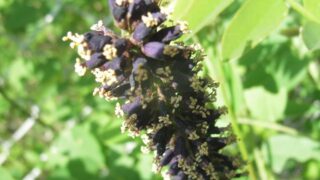
Amorpha Fruticosa Flower plant

What are the differences between *Lespedeza bicolor* and *Robinia pseudoacacia* (black locust)? We'll explain how to distinguish between these similar species! Why are they considered invasive species of concern? The two species have contrasting flowers and fruits!

Black locust and black locust are both members of the legume family, have odd-pinnately compound leaves composed of numerous leaflets, and are often confused with each other because they are used for greening and naturalize in similar environments. In Japan, both are classified as invasive alien species (formerly designated as species requiring caution) due to their potential to cause damage to ecosystems. The difference between these two species is the presence or absence of thorns...
Trachelospermum Jasminoides Var Pubescens Hatsuyukikazura Flower plant

What are the differences between Trachelospermum asiaticum, Trachelospermum asiaticum, and Trachelospermum asiaticum? We'll explain how to distinguish between similar species! Is it historically true that the name originates from "Fujiwara no Teika"? What is the ecological reason why they bloom and emit a fragrance in the evening?

Trachelospermum asiaticum and Trachelospermum asiaticum are climbing plants that can be widely found in Japan, from forests to urban areas, including cultivated varieties. They can be distinguished by the hairs on the underside of their leaves and the length of their flower tubes. They have been widely known in Japan since the time of the writing of the Kojiki, and their current names are derived from "fuji" (wisteria)...
Sponsored Link