herbaceous

Sponsored Link
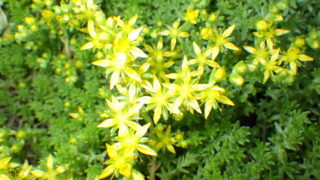
07.1400.a Morimura Sedum (flower) Seed Plant Encyclopedia

[Seed Plant Encyclopedia #143] What are the species of the Crassulaceae family? Photo list

The Crassulaceae family consists entirely of succulent herbs or shrubs, often with enlarged rhizomes or roots. The leaves are simple. The flowers are radially symmetrical, mostly hermaphroditic, but some genera are unisexual, monoecious, or dioecious. The calyx is somewhat fleshy, green (sometimes reddish)...
07.1371 Saxifraga stolonifera flower Seed Plant Encyclopedia

[Seed Plant Encyclopedia #142] What are the species of the Saxifragaceae family? Photo list

The family Saxifragaceae consists of herbaceous plants. Leaves are alternate or opposite, simple or compound. Most are deciduous, but some are evergreen. Stipules are present or absent. Inflorescences are cymose, sometimes racemes or panicles. Flowers are bisexual, dioecious, or dioecious, and radially symmetrical...
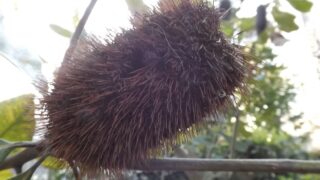
07.1323.c Swamp Banksia Flower Seed Plant Encyclopedia

[Seed Plant Encyclopedia #128] What are the species of the Proteaceae family? Photo list

The Proteaceae family consists entirely of evergreen plants, mostly woody, with some herbaceous. The flowers are bisexual, with a tubular perianth (without distinction between sepals and petals) that is four-lobed at the tip, each bearing a single stamen. The pistil is single, with a superior ovary, and develops into fruits such as nuts. The inflorescence is a raceme or spike...
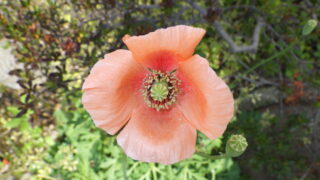
07.1132.b Long-headed poppy flower Seed Plant Encyclopedia

[Seed Plant Encyclopedia #119] What are the species of the poppy family? Photo list

The Papaveraceae family consists of herbaceous plants whose stems and leaves are often covered in a powdery white substance. Breaking the stem releases a milky white or orange-yellow sap. The leaves are alternate, pinnately lobed or pinnately compound, sometimes simple, and lack stipules. The flowers are bisexual, radially symmetrical, or bilaterally symmetrical. The sepals are 2-4 in number and separate...
07.1126 Waterweed (Ceratophyllum demersum) - Whole Form (Scaled) Seed Plant Encyclopedia

[Seed Plant Encyclopedia #117] What are the species of the Ceratophyllum family? Photo list

The family Ceratophyllaceae consists of brittle, hard, freshwater submerged herbs. They lack roots, instead anchoring themselves with modified rhizoids (root systems) formed from branches. Stems are elongated and branched, and leaves are whorled and branch several times. Stipules are absent. The flowers are monoecious or dioecious, with approximately 10 perianth segments (also called involucral bracts), and male...
07.0656 Cattail spikelet Seed Plant Encyclopedia

[Seed Plant Encyclopedia #103] What are the species of the Typha family? Photo list

The Typhaceae family are perennial herbs that grow in ponds and wetlands. Their rhizomes are thick and creeping. The leaves are linear, erect, or float on the water's surface. The flowers are unisexual and monoecious. The inflorescence is terminal, bearing cylindrical or spherical clusters, with male inflorescences at the top and female inflorescences at the bottom. The perianth is thread-like or...
07.0644.b Spiral Ginger Flower Seed Plant Encyclopedia

[Seed Plant Encyclopedia #101] What are the species of the Iridaceae family? Photo list

The family Costaceae is a pantropical monocotyledonous plant. The leaves are arranged spirally, and the leaves at the base of the stem are usually wingless. The base of the leaves has a closed leaf sheath, and a projection called a ligule is located at the top of the leaf sheath. Unlike other plants in the Zingiberales order, it has 2-3 stamens...
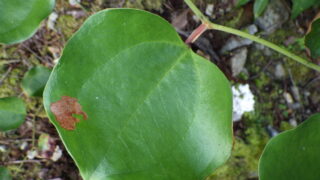
07.0318 Smilax china, upper surface of the leaf Seed Plant Encyclopedia

[Seed Plant Encyclopedia #072] What are the species of the Smilax family? Photo list

The family Smilacaceae, also known as the Smilax family, is a perennial herb or subshrub, mostly climbing plants. They typically have short rhizomes. Leaves are alternate, with tendrils on the petioles. Inflorescences are usually umbels. Perianth segments are usually free, with three of each being identical in shape and texture to the outer and inner segments. The ovary is...
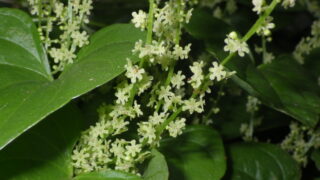
07.0284 Dioscorea tokoro (male inflorescence) Seed Plant Encyclopedia

[Seed Plant Encyclopedia #058] What are the species of the Dioscoreaceae family? Photo list

The family Dioscoreaceae consists of herbaceous or climbing plants, comprising over 630 species across three genera distributed worldwide, primarily in tropical and subtropical regions. In Japan, only the genus Dioscorea is found. This article provides a comprehensive, field-guide-style introduction to plants of the Dioscoreaceae family. Basic information is available from the Kanagawa Prefectural Botanical Garden...
07.0218 Water chestnut (Arrowhead) upper surface of the leaf Seed Plant Encyclopedia

[Seed Plant Encyclopedia #043] What are the species of the Alismataceae family? Photo list

The Alismataceae family consists of submerged or wetland herbs. All leaves are basal, with parallel and reticulate venation. Flowers are bisexual or unisexual. Inflorescences are racemes or panicles, with three flowers or branches arranged in whorls at each node. The sepals and petals are three in number and white; the calyx is persistent...
Sponsored Link