classification

Sponsored Link
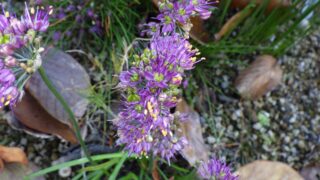
07.0534 Wild Garlic Flower plant

What are the differences between Japanese shallots (rakkyo), wild shallots (yamarakkyo), and thread shallots? How do they differ from yellow thread shallots (kii-itorakkyo)? This article explains how to distinguish between similar species.

Japanese shallots (rakkyo), wild shallots (yamarakkyo), and thread shallots (itorakkyo) all belong to the genus Allium in the Amaryllidaceae family and share the common characteristic of having the word "rakkyo" in their Japanese names. Japanese shallots are eaten as pickled shallots, while wild shallots and thread shallots are wild species native to Japan...
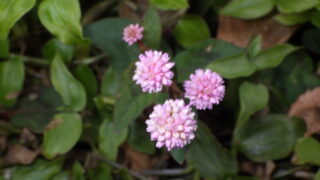
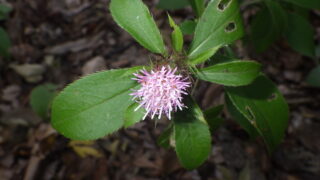
07.2679.a Polygonum capitatum flower plant

What are the differences between Polygonum capitatum and Polygonum capitatum? An explanation of how to distinguish between similar species.

Both Polygonum capitatum and Polygonum persicaria belong to the genus Polygonum in the family Polygonaceae. They are among the most common perennial herbs in the genus Polygonum, and Polygonum persicaria in particular can be found very commonly on the stone walls of houses in urban areas. While the genus Polygonum contains a vast number of species, these two species share morphological similarities...
07.1609 Wild cowpea flower plant

What are the differences between Rhynchospora tetrandra, Rhynchospora tokiri, and Vigna angularis? An explanation of how to distinguish between similar species.

Tankirimame, Tokirimame, and Nosasage all belong to the legume family and are common climbing perennial herbs found in the forest edges of Japan. They share several characteristics, including trifoliate compound leaves, butterfly-shaped flowers that bloom from summer to autumn, and yellow flowers, which can sometimes make them difficult to distinguish. However, these three...
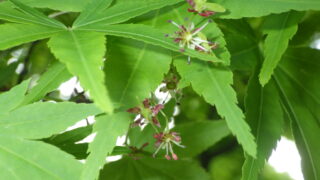
07.2366 Japanese maple flower plant

What are the differences between Japanese maple (Acer palmatum), large-leaved maple (Acer palmatum), mountain maple (Acer japonicum), fan maple (Acer japonicum), and small fan maple (Acer japonicum)? An explanation of how to distinguish between similar species.

Japanese maple, large-leaved maple, mountain maple, fan maple, and small fan maple all belong to the Acer genus of the Sapindaceae family. They change color and shed their leaves in late autumn, making them representative deciduous trees of the Japanese autumn landscape. Their distinguishing features include samaras (winged fruits) with a pair of "wings" and palmate leaves...
07.2788 Hinatainokozuchi flower plant

What are the differences between *Achyranthes japonica* and *Achyranthes bidentata*? An explanation of how to distinguish between similar species.

Both *Achyranthes japonica* (also known as *Achyranthes japonica var. spp.*) and *Achyranthes japonica* belong to the genus *Achyranthes* in the family Amaranthaceae, and are fairly common perennial herbs in Japan. Their most distinctive feature, and one that affects humans the most, is that their fruits are "burrs." Walking along the edge of a forest, they can easily snag your clothes...
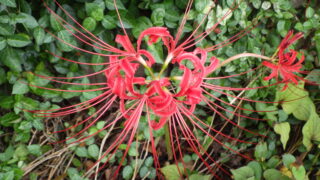
07.0543 Red Spider Lily Flower plant

What are the differences between Lycoris radiata (Red Spider Lily), Lycoris radiata var. alba, Lycoris radiata var. alba, and Lycoris radiata var. alba? An explanation of how to distinguish between similar species.

Lycoris radiata (red spider lily), Lycoris radiata var. alba, Lycoris radiata var. alba, and Lycoris aurea are all perennial plants belonging to the Lycoris genus of the Amaryllidaceae family. They are very familiar to Japanese people due to their toxicity and the clusters of flowers they produce in autumn. However, there are many varieties...
07.3881 Giant ragweed (male flower) plant

What are the differences between ragweed and giant ragweed? What are the differences between goldenrod, goldenrod, and hawkweed? We'll explain how to distinguish between similar species.

Ragweed and giant ragweed are both annual weeds belonging to the genus Ragweed in the Asteraceae family, and are best known for causing "ragweed pollen allergy" in humans. This is because ragweed flowers are wind-pollinated, and to achieve this, the male and female flower heads are elongated...
07.4067 Atractylodes japonica (flower head) plant

What are the differences between Atractylodes macrocephala (white atractylodes), Atractylodes lancea (narrow-leaved atractylodes), and Atractylodes japonica? An explanation of how to distinguish between similar species.

Atractylodes macrocephala (white atractylodes) and Atractylodes lancea (narrow atractylodes) are both perennial herbs belonging to the Asteraceae family, and are well-known as medicinal herbs. The dried rhizomes are collectively called "jutsu" (朮). Morphologically, the leaves have prominent serrations, and the flowers, typical of the Asteraceae family, are arranged in capitulum (flower heads) composed solely of tubular florets...
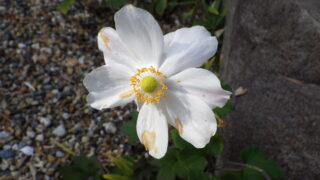
07.1268.a Botan Kibunegiku flower plant

What are the differences between Japanese anemone and aster? We'll explain how to distinguish between similar species! Were you mostly misidentifying Japanese anemones?

Japanese anemone (Anemone hupehensis), Taiwanese anemone, and button-leaved.
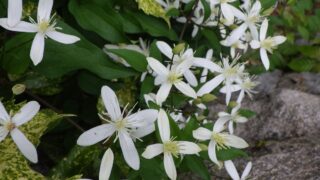
07.1295 Clematis flower plant

What are the differences between Clematis terniflora, Clematis patens, and Clematis japonica? An explanation of how to distinguish between similar species.

Clematis terniflora, Clematis patens, and Clematis japonica all belong to the genus Clematis in the Ranunculaceae family and are climbing semi-shrubs found in Japanese forests. They share several common features, including compound leaves, flowers with white sepals instead of petals, and feathery fruits, which can sometimes make them difficult to distinguish.
Sponsored Link