ecology

Sponsored Link
plant

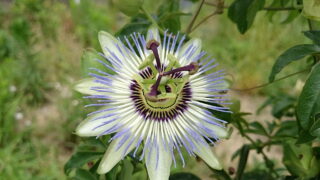
What's the difference between passionflower and passion fruit (passionflower)? We explain how to distinguish between similar species! Did you know that bumblebees are attracted to the "clock-like" flowers? And that birds actually eat the fruit?

Passionflower and passion fruit (Passionflower) are both climbing evergreen perennial plants belonging to the Passifloraceae family, native to South America. In Japan, they can be found in urban areas as ornamental plants. However, the differences between them may not be well known. Passionflower...
plant

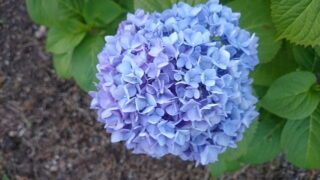
What are the differences between hydrangeas, lacecap hydrangeas, mountain hydrangeas, oakleaf hydrangeas, and American hydrangea (Annabelle)? We explain how to distinguish between similar varieties! Most of the flowers are just "decorations"!? What do the fruits, which are rarely seen, look like?

Hydrangeas, lacecap hydrangeas, mountain hydrangeas, oakleaf hydrangeas, and American hydrangeas (Annabelle) all belong to the genus Hydrangea in the family Hydrangeaceae, and are commonly cultivated and found in urban areas. Hydrangeas, in particular, are arguably representative of Japan. All of them develop large calyxes around the rainy season...
plant

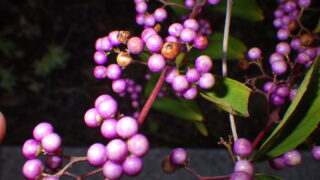
What are the differences between *Callicarpa japonica*, *Callicarpa dichotoma*, and *Callicarpa japonica*? We explain how to distinguish between similar species! Did the flowers deceive the bees? Who likes purple berries?

Callicarpa japonica, Callicarpa dichotoma, and Callicarpa japonica are all deciduous shrubs belonging to the Callicarpa genus of the Lamiaceae family, growing in forests and forest edges. Their flowers and fruits are purple and their morphology is very similar, so they are often confused and sold as garden plants, making it difficult to distinguish between them. However, these are all plants that grow on the same plant body...
plant

What are the differences between Leucothoe japonica, Leucothoe axillaris, and Leucothoe axillaris? An explanation of how to distinguish between similar species.

Leucothoe, American Leucothoe (European Leucothoe), and Axillaris Leucothoe are representative evergreen shrubs of the Leucothoe genus in the Ericaceae family in Japan. They share similarities, such as pointed leaf tips and fine serrations, and Google search results often show these species mixed together...
plant

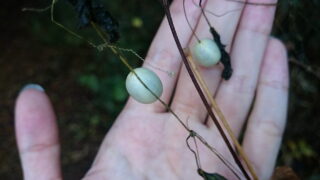
What are the differences between *Melophyllum uliginosum* and *Melophyllum okinawaense*? How do they differ from *Tricholoma cucumeroides* species? We'll explain how to distinguish between similar species! Is the pollination method unknown? Do birds like these cute fruits? Are they edible for humans?

Both *Melo serrulata* and *Melo okinawaensis* belong to the Cucurbitaceae family and are climbing annuals. Morphologically, they share similarities, including small flowers and smooth, hairless fruit surfaces. Furthermore, Google search suggestions are sometimes incorrect, making it difficult to distinguish between them without prior observation...
plant

What are the differences between Fraxinus lanuginosa, Fraxinus sieboldiana, and Fraxinus japonica? How do they differ from Fraxinus sieboldiana and Fraxinus japonica? We'll explain how to distinguish between similar species! Did the flowers use both wind and insects for pollination? What is the purpose of the wings on the fruit?

Fraxinus lanuginosa, Fraxinus sieboldiana, and Fraxinus japonica all belong to the genus Fraxinus in the family Oleaceae. They are very similar in that they have odd-pinnately compound leaves, and their leaf and flower shapes are particularly similar compared to other species in the Fraxinus genus. Therefore, it can sometimes be difficult to distinguish between them. What are Fraxinus lanuginosa and Fraxinus japonica...?.
plant

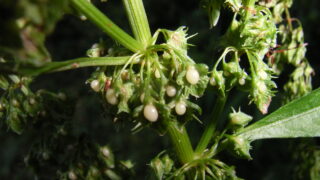
What are the differences between dock, long-leaved dock, rough dock, and Ezo dock? How do you distinguish them from sorrel? We'll explain how to tell similar species apart! Did they rely on wind for pollination? Seed dispersal methods were more diverse than you might imagine!

Rumex japonicus, Rumex longifolius, Rumex crispus, and Rumex japonicus all belong to the genus Rumex in the family Polygonaceae. Originally, only Rumex japonicus was found in Japan, but multiple species have invaded and become extremely common weeds. They also share a common preference for disturbed soil, and are often found growing together...
plant

What are the differences between *Tatsunamisou*, *Kobano-tatsunamisou*, *Okata-tatsunamisou*, and *Namikisou*? We explain how to distinguish between similar species! Do bees like the flowers? And are raindrops important for the fruit?!

Scutellaria indica, Scutellaria baicalensis, Scutellaria japonica, and Scutellaria verna all belong to the genus Scutellaria in the Lamiaceae family. They are often confused in horticulture, and because they frequently grow in forest edges and on the forest floor, their large, swollen corollas are similar in shape, making them difficult to distinguish by observation alone. The genus Scutellaria includes...
plant

What's the difference between okra and tororo aoi (flower okra)? How to distinguish between similar species! What are the uses? Bees love the flowers! What happens to unripe okra if left unattended?

Okra and Abelmoschus manihot both belong to the Malvaceae family, and are used by humans due to the viscous nature of parts of their bodies. Morphologically, they share similarities: their leaves are palmate with 3-9 lobes, their flowers have a protruding "column" (a fused structure of stamens and pistils), and their corollas are white...
plant

What are the differences between gardenias and small gardenias? What are the varieties? How can you distinguish between similar species? What are the uses? Is the sweet scent due to hawk moths? What is the role of the fruit's pigments in nature?

Gardenias are indispensable plants to the Japanese people, both as wild plants, ornamental plants, and food additives. While there is a known variety called *Gardenia jasminoides* (small gardenia), both share similar flower shapes, opposite or whorled leaves, and are evergreen, with glossy leaves, entire margins, and typically pointed tips.
Sponsored Link