How to use

Sponsored Link
plant

What are the differences between goji berries (Lycium chinense) and Elaeagnus umbellata (Elaeagnus umbellata)? Can they be eaten raw? How are they prepared? What kinds of insects visit the flowers?

Goji berries (Lycium chinense) and Elaeagnus umbellata (Elaeagnus umbellata) share the common characteristic of producing delicious red berries in the summer. However, their botanical characteristics are quite different. While the leaves and flowers are the most reliable way to distinguish between them, there are also differences in the fruit stalks. Goji berries can be eaten raw, but they have a "fishy smell...".
plant

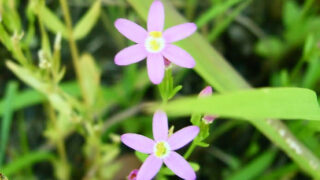
What are the differences between *Gentiana scabrida* and *Gentiana scabrida*? We'll explain how to distinguish between similar species! Is it true that they have medicinal properties? *Gentiana scabrida* species change flower size and alter their pollination strategy depending on the environment!?

*Gentiana scabrida* and *Gentiana scabrida* are two species of plants native to Europe that bear pretty pink flowers, and they have become commonly seen in Japan in recent years. This has been the case since 1960. These two species can be distinguished by carefully observing their life forms, basal leaves, and corollas...
plant

What are the differences between Japanese wax tree (Rhus sylvestris), Japanese lacquer tree (Rhus trichocarpa), and Japanese lacquer tree (Rhus trichocarpa)? We explain how to distinguish between similar species! Why do they cause rashes? Why was Japanese lacquer tree used as a raw material for Japanese candles? What birds in nature like them? Did autumn foliage play a role?

Japanese wax tree (Rhus sylvestris), Japanese lacquer tree (Rhus trichocarpa), and Japanese lacquer tree (Rhus trichocarpa) all belong to the Rhus genus and are relatively common even in urban areas. They are similar species often seen in gardens and along roadsides, characterized by their odd-pinnately compound leaves. Distinguishing between them is difficult, but careful observation of the leaves is essential. The number of leaflets and the degree of hairiness are major clues...
plant

What are the differences between *Syzygium rufinerve*, *Syzygium rufinerve* (Javan syrup), and *Syzygium rufinerve*? We'll explain how to distinguish between similar species! Do birds visit the bushy flowers? And can they even form fruit without pollination?!

Myrtus communis, also known as rose apple or adek, is a plant belonging to the Myrtaceae family, genus Myrtus, and is well-known for its entire leaves and edible fruit. While you might see it in botanical gardens or in Okinawa, it's a tropical plant, so it's rarely seen in mainland Japan, and many people don't know how to distinguish it from other plants...
plant

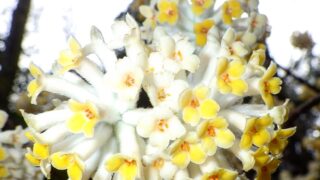
What are the differences between Mitsumata and Ganpi? We'll explain how to distinguish between these similar species! Why is Mitsumata used as the raw material for Japanese banknotes? Do flowers require insects with long mouths to thrive?

Both Mitsumata and Ganpi belong to the Thymelaeaceae family and are used to make washi (Japanese paper). Their flowers are quite similar in shape. However, despite being in the same family, Mitsumata and Ganpi belong to different genera, and a closer examination of their flowering periods and inflorescence shapes reveals various differences. Ganpi was the first to be used for washi...
plant

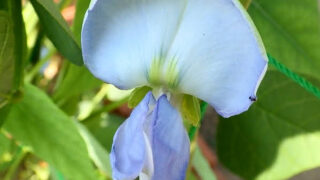
What are some species similar to the winged bean (Psopogon pedunculosa)? What are its nutritional benefits? Is it poisonous? Is it true that its origin is unknown? Does the flower cleverly utilize both self-pollination and cross-pollination?

While winged beans are not very familiar to Japanese people, they are widely cultivated in equatorial countries with high temperatures and humidity, and can also be found in Okinawa and the Ogasawara Islands. Similar species are found only in Africa, and there are basically no species in Japan that are confused with winged beans. They are primarily used for food and are rich in nutrients...
plant

What are the differences between Aburachan, Kuromoji, Yamakoubashi, Dankoubai, and Shiromoji? Do beetles come to the flowers in early spring seeking a mate? Surprising ecological findings revealed by the latest research!

Lindera obtusiloba, Lindera umbellata, Lindera japonica, Lindera umbellata, and Lindera umbellata are representative species of the Lindera genus, five deciduous shrubs with entire leaves that commonly grow in Japanese forests. Identifying them requires considerable practice, but they can be distinguished by carefully examining the leaves, phyllotaxy, and buds. They are primarily used for their fragrances and oils...
plant

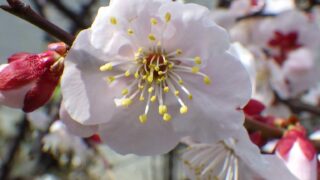
There's a difference between apricots and plums! What are the differences between plums, cherries, and Japanese apricots? We'll explain how to distinguish between similar species! Why do they bloom between plums and cherries? The fruit's toxicity didn't affect birds!?

Apricots and apricots are familiar foods because their fruits are often eaten as dried fruit. They are often treated as the same thing, and "apricot" is commonly used as the English name for "apricot." However, this is not always correct. Biologically, they are very closely related...
Sponsored Link