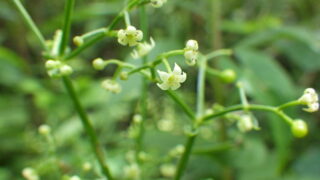
form

Sponsored Link
plant

What are the differences between Japanese madder, European madder, and Indian madder? An explanation of how to distinguish between similar species.

Japanese madder (Akane), European madder (Akane serrata), and Indian madder (Akane serrata) all belong to the genus Rubiaceae, and are well-known for their roots being used primarily for red dyeing. The color "akane-iro" (madder red) is derived from the plant "akane," and is also frequently used in personal names, even though its use has declined...
plant

What's the difference between Tibouchina japonica and Tibouchina urvilleana? An explanation of how to distinguish between similar species.

Both Tibouchina urvilleana and Tibouchina urvilleana belong to the Melastomataceae family. Tibouchina urvilleana, in particular, is well-known and, although a southern species, is relatively cold-hardy and commonly cultivated in Honshu. In horticulture, Tibouchina urvilleana is sometimes simply called "Tibouchina," which can cause confusion...
plant

What are the differences between shiso (perilla), egoma (perilla), and lemon egoma? An explanation of how to distinguish between similar varieties.

Shiso, egoma, and lemon egoma are all annual plants belonging to the Lamiaceae family, genus Perilla, and possess a unique aroma and taste. Shiso and egoma, in particular, have been cultivated since ancient times and are now used primarily in pickled plums and dressings, making them extremely familiar plants to Japanese people. However, shiso and egoma...
plant

What are the differences between Cassia obtusifolia (Ketsumeishi), Cassia occidentalis (Habuso), and Cassia tomentosa? We explain how to distinguish between similar species! And "Habu tea" isn't actually made from Cassia occidentalis!?

Cassia obtusifolia, Cassia japonica, and Cassia nomame are all annual plants belonging to the legume family, and were formerly classified in the same genus. Their common characteristics include once-pinnately compound leaves with opposite leaflets, and flowers with five yellow petals of almost identical shape...
plant

What are the differences between snake gourd, yellow snake gourd, and wild gourd? We explain how to distinguish between similar species! Is the "creepy" appearance of the flowers a result of evolution?!

Trichosanthes cucumeroides, Trichosanthes cucumeroides, and Trichosanthes spp. all belong to the Trichosanthes genus of the Cucurbitaceae family. They are herbaceous plants that share several common characteristics: they produce large, fused-petal flowers with a finely divided corolla resembling lace, and they bear fairly large, yellow to red fruits for wild species. Trichosanthes cucumeroides and Trichosanthes spp....
plant

What are the differences between goldenrod, autumn goldenrod, and mountain goldenrod? How do they differ from other goldenrod species? This article explains how to distinguish between similar species.

Goldenrod (Solidago altissima), autumn goldenrod (Solidago virgaurea), and mountain goldenrod (Solidago virgaurea var. japonica) all belong to the genus Solidago in the Asteraceae family, and are representative perennial plants that bloom with small yellow flowers (more accurately, flower heads) in autumn. Goldenrod, in particular, is well-known because it proliferates rapidly in some regions...
plant

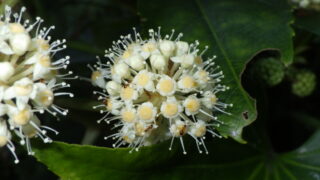
What's the difference between Fatsia japonica and Fatsia japonica? We'll explain how to distinguish between similar species! The glossy leaves are actually a sunbathing spot for insects!?

Both Fatsia japonica and Fatsia japonica belong to the Araliaceae family and are evergreen trees most characterized by their large, palmately lobed leaves. Both can be observed both outdoors and in gardens. They share many other similarities, which can sometimes lead to confusion. However, distinguishing between them is relatively easy, based on leaf size, hairiness, etc.
plant

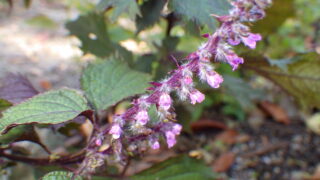
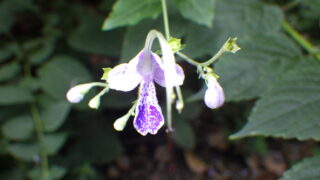
What are the differences between Clerodendrum trichotomum and Clerodendrum frequens? An explanation of how to distinguish between similar species.

Both Clerodendrum trichotomum and Clerodendrum sibiricum belong to the mint family and are sometimes cultivated for ornamental purposes. Their most significant commonality is the similar shape of their flowers. Specifically, both have very long stamens and pistils that curve downwards (curl) and protrude far from the flower. Therefore...
plant

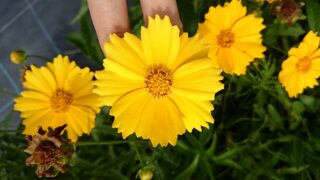
What are the differences between Coreopsis lanceolata, Coreopsis grandiflora, Coreopsis radicans, and Coreopsis lanceolata? How do they differ from Cosmos sulphureus? This article explains how to distinguish between similar species.

Coreopsis lanceolata, Coreopsis grandiflora, Coreopsis humilis, and Coreopsis radicans all belong to the genus Coreopsis in the Asteraceae family. While they have few distinguishing features, they are annual or biennial plants that give the impression of being "very showy yellow chrysanthemums with single to double flowers." Coreopsis grandiflora, in particular, is an exception...
plant

What are the differences between cosmos, yellow cosmos, chocolate cosmos, and marigolds? We explain how to distinguish between similar varieties.

Cosmos, yellow cosmos, and chocolate cosmos all belong to the Cosmos genus of the Asteraceae family. Although they are introduced species in Japan, they have become representative autumn landscape plants, as evidenced by their alternative name, "autumn cherry blossom," and are widely cultivated. They are characterized by their large, beautiful ray florets and achenes...
Sponsored Link