form

Sponsored Link
plant

What are the differences between Fraxinus lanuginosa, Fraxinus sieboldiana, and Fraxinus japonica? How do they differ from Fraxinus sieboldiana and Fraxinus japonica? We'll explain how to distinguish between similar species! Did the flowers use both wind and insects for pollination? What is the purpose of the wings on the fruit?

Fraxinus lanuginosa, Fraxinus sieboldiana, and Fraxinus japonica all belong to the genus Fraxinus in the family Oleaceae. They are very similar in that they have odd-pinnately compound leaves, and their leaf and flower shapes are particularly similar compared to other species in the Fraxinus genus. Therefore, it can sometimes be difficult to distinguish between them. What are Fraxinus lanuginosa and Fraxinus japonica...?.
plant

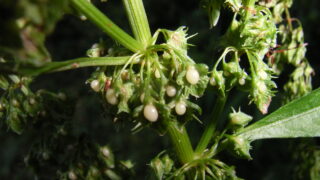
What are the differences between dock, long-leaved dock, rough dock, and Ezo dock? How do you distinguish them from sorrel? We'll explain how to tell similar species apart! Did they rely on wind for pollination? Seed dispersal methods were more diverse than you might imagine!

Rumex japonicus, Rumex longifolius, Rumex crispus, and Rumex japonicus all belong to the genus Rumex in the family Polygonaceae. Originally, only Rumex japonicus was found in Japan, but multiple species have invaded and become extremely common weeds. They also share a common preference for disturbed soil, and are often found growing together...
plant

What are the differences between *Tatsunamisou*, *Kobano-tatsunamisou*, *Okata-tatsunamisou*, and *Namikisou*? We explain how to distinguish between similar species! Do bees like the flowers? And are raindrops important for the fruit?!

Scutellaria indica, Scutellaria baicalensis, Scutellaria japonica, and Scutellaria verna all belong to the genus Scutellaria in the Lamiaceae family. They are often confused in horticulture, and because they frequently grow in forest edges and on the forest floor, their large, swollen corollas are similar in shape, making them difficult to distinguish by observation alone. The genus Scutellaria includes...
plant

What's the difference between okra and tororo aoi (flower okra)? How to distinguish between similar species! What are the uses? Bees love the flowers! What happens to unripe okra if left unattended?

Okra and Abelmoschus manihot both belong to the Malvaceae family, and are used by humans due to the viscous nature of parts of their bodies. Morphologically, they share similarities: their leaves are palmate with 3-9 lobes, their flowers have a protruding "column" (a fused structure of stamens and pistils), and their corollas are white...
plant

What are the differences between gardenias and small gardenias? What are the varieties? How can you distinguish between similar species? What are the uses? Is the sweet scent due to hawk moths? What is the role of the fruit's pigments in nature?

Gardenias are indispensable plants to the Japanese people, both as wild plants, ornamental plants, and food additives. While there is a known variety called *Gardenia jasminoides* (small gardenia), both share similar flower shapes, opposite or whorled leaves, and are evergreen, with glossy leaves, entire margins, and typically pointed tips.
plant

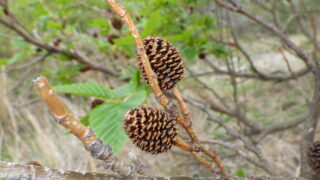
What are the differences between Alnus japonica, Alnus sieboldiana, and Alnus sieboldiana? How do they differ from other Alnus species? We'll explain how to distinguish between similar species! Why can they grow in poor soil? Did they rely on wind for both their flowers and fruits?

Alnus japonica, Alnus sieboldiana, and Alnus sieboldiana are all species belonging to the Alnus genus of the Betulaceae family and are endemic to Japan. Because they have symbiotic relationships with both ectomycorrhizal fungi and nitrogen-fixing actinomycetes that can utilize atmospheric nitrogen, they are well-suited to living in poor soil and are used not only in the wild but also for greening purposes...
animal

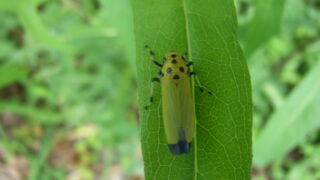
What are the different species of leafhoppers? How do they differ from planthoppers? Are they harmful? What do they eat? Did they communicate through "vibrations"? What is the role of their body color?

Leafhoppers are a general term for the family Cicadellaceae, a group of insects distributed worldwide that primarily inhabit the stems and leaves of herbaceous plants. At least 20,000 species have been described globally, and currently, 190 genera and 576 species are known in Japan, making them a highly diverse and thriving group. A close relative is the planthopper...
plant

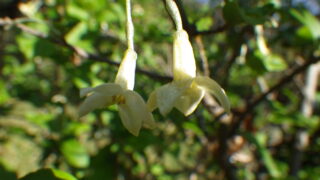
What are the differences between autumn olive, summer olive, Chinese olive, and white olive? Can they be eaten raw? Is the "sparkle" on the leaves to prevent drying? What insects visit the flowers? Are the sweet and sour fruits very popular in nature?

Autumn olive, summer olive, Chinese olive, and white olive are all members of the Elaeagnus genus in the Elaeagnaceae family. They can be found in various locations throughout Japan, including rivers, coastlines, and forests. Their leaves are covered in shimmering stellate or scale-like hairs, and they produce pale yellow flowers consisting only of a cylindrical calyx tube, lacking petals.
animal

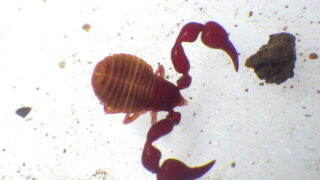
What are the species of pseudoscorpion? Are they found in Japan? How are they collected? What do they eat? What is the purpose of their crab-like "claws"?

Pseudoscorpions are a small species of arachnid that inhabit inconspicuous places such as crevices in leaves and rocks, under stones and tree bark, and in decaying trunks. They are distinguished from scorpions by the absence of a long, spiny section on the metathorax (the tail of a scorpion). As of 2023, approximately 3,400 species have been identified worldwide, and they are also widespread in Japan...
animal

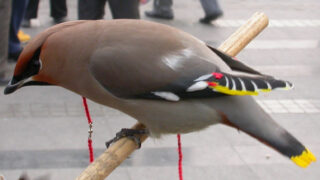
What are the differences between Bohemian waxwings and Japanese waxwings? What is their distribution? What are their summer and winter habits? What is the role of their crest feathers and red waxy substance? Can you tell their age from the waxy substance?!

The Bohemian Waxwing and the Japanese Waxwing are both brightly colored winter birds belonging to the Waxwing genus, possessing crests and often appearing in red or yellow. They are very similar, and it can be difficult to distinguish between them. However, checking the tips of their tail feathers will allow for reliable identification, and there are subtle differences in their coloration. Their distributions differ significantly; the Bohemian Waxwing...
Sponsored Link