classification

Sponsored Link
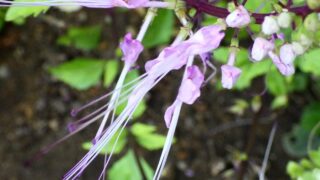
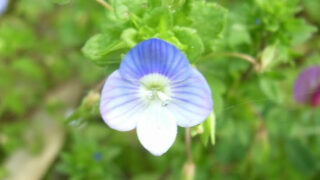
07.3273 Lithospermum erythrorhizon flower plant

What are the differences between *Lithospermum erythrorhizon* and *Lithospermum erythrorhizon*? We explain how to distinguish between similar species! Do the flowers have a secret that allows them to be pollinated even in the shade?

While *Lithospermum erythrorhizon* and *Lithospermum erythrorhizon* have similar names and may be confused, there is a significant difference: *Lithospermum erythrorhizon* is a native species, while *Lithospermum erythrorhizon* is a cultivated variety. The shape of the leaves and flowers are also distinctly different. *Lithospermum erythrorhizon*...
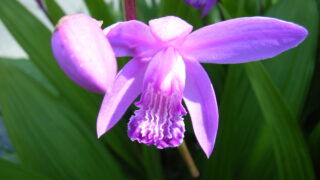
07.0442 Bletilla striata flower plant

What species resembles the Bletilla striata (purple orchid)? Recent research has revealed that the flowers not only deceive bees, but also utilize male bees for courtship!

Bletilla striata is a perennial plant naturally distributed from Honshu to Okinawa in Japan, but wild specimens are classified as near-threatened. On the other hand, it's also a popular ornamental plant, and can be seen in almost every town. While it was once thought that the wild population in Japan consisted of escaped cultivated plants, it is now believed that the wild population is...
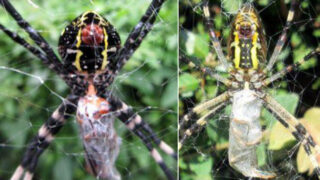
Wasp Captured by Wizard animal

Research has revealed that "intraguild predation" occurs universally between spiders and wasps, potentially contributing to ecosystem stability! [Press Release]

In the "Ecological Information" section, at the request of the lead author, Mr. Daisuke Noguchi, I assisted with the introduction, discussion, and literature review on a paid basis. This research revealed that intraguild predation between spiders and wasps occurs universally, and that there is a possibility of "symmetrical intraguild predation" between spiders and wasps...
07.0149 Japanese evergreen oak (Quercus acutissima) flower trimming plant

What are the differences between *Neolitsea sericea* and *Quercus acuta*? We'll explain how to distinguish between these similar species! What are their uses? Does the difference in flower color affect their ecology?

Both *Neolitsea sericea* and *Quercus acuta* are evergreen trees belonging to the *Neolitsea* genus that are naturally distributed in Japan. Therefore, you may often see them in the wild, but their leaves are very similar in shape, which can lead to confusion. However, you can reliably distinguish them by examining the whiteness of the underside of the leaves and the color of their fruits...
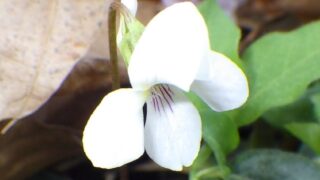
Viola Chaerophylloides Var Sieboldiana Flower plant

What are the differences between Viola higoensis and Viola enzanensis? Both species skillfully utilize "open flowers" and "closed flowers" depending on the environment!

Viola higoensis and Viola enzanensis are members of the Viola genus that inhabit relatively natural areas. They differ significantly from other Viola species in their finely divided leaves, but their flower shapes are almost identical, making them somewhat difficult to distinguish. Morphologically, Viola higoensis has leaves divided into five lobes...
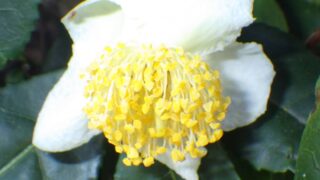
Camellia Sinensis Var Sinensis Flower plant

Why did Britain love black tea instead of green tea? The surprising life cycle of tea plants, including their flowers and flies.

Tea plants contain essential nutrients like catechins and caffeine, making them an indispensable beverage in Japan, enjoyed both at home and on the go. As you may know, its origin lies in China, and it's a species not native to Japan. However, even in China, wild varieties haven't been confirmed, which is puzzling...
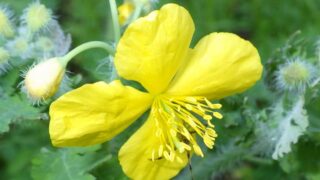
Chelidonium Majus Subsp Asiaticum Flower plant

What are the differences between Greater Celandine and Japanese Kerria? We'll explain how to distinguish between similar species! Are they poisonous? Why do Greater Celandine flowers bloom at an angle?

Both *Chelidonium majus* and *Cornus kousa* are wild species of the poppy family, composed of four yellow petals, so it can be difficult to distinguish between them. Their leaves can be differentiated by the presence or absence of serrations on the leaflets, and their flowers are almost identical, but there are differences in the arrangement of the inflorescence and the shape of the stamens and pistils...
Aucuba Japonica Var Japonica Flower plant

What are the differences between Aucuba japonica, Aucuba japonica var. serrata, and Aucuba japonica var. japonica? We explain how to distinguish between similar species! Only fungus gnats were visiting the inconspicuous flowers!? Only bulbuls were eating the fruit!?

Aucuba japonica is distributed in evergreen broad-leaved forests of East Asia and is a very common plant in Japan, even in urban areas, where it's rare to go a day without seeing it. Several varieties of Aucuba japonica are known, and they are often classified into Aucuba japonica (in the narrow sense), Aucuba japonica var. nangokuensis, and Aucuba japonica var. dwarf. The differences between them are not easily discernible from their names alone...
Orthosiphon Aristatus Var Aristatus Flower plant

What species resembles *Cat's Whiskers* (Kumiskuching)? We'll explain how to distinguish them, and reveal that butterflies specialize in visiting the flowers! What are the effects of Kumiskuching tea?

*Cat's Whiskers* (Kumiskuching) is a popular ornamental horticultural plant in Japan, known for its long stamens. In Okinawa, it's called *Kumiskuching* and is sometimes used to make *Kumiskuching* tea. Several closely related species exist within the same genus, but they don't resemble each other very much. Japan...
Veronica Persica Flower plant

What are the differences between Veronica persica, Veronica polifolia, Veronica undulata, and Veronica polifolia? We'll explain how to distinguish between similar species! Has Veronica persica been displacing Veronica polifolia?

Veronica persica, Veronica polifolia, Veronica undulata, and Veronica polifolia are four blue wild species found in fields and roadsides around the world. They are representative early spring flowers in Japan, and may be among the first plants whose names you learn when you become interested in weeds. However, all of them have blue to purple flowers, and their leaves...
Sponsored Link