chemistry

Sponsored Link
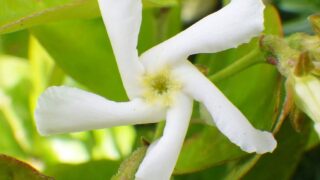
07.3250 Indian Jasmine Flower plant

There are differences between plumeria and Indian jasmine! We'll explain how to distinguish between similar species! When did it arrive in Hawaii? Is it poisonous? Were the flower's flashy colors and scent an evolutionary adaptation to deceive moths?!

Plumeria is a popular garden plant known for its vibrant, large flowers and fragrance, symbolizing the tropics. However, it is also known as Indian jasmine. The terms "plumeria" and "Indian jasmine" may have different meanings. In Japan, "Indian jasmine" often refers to a single, common variety...
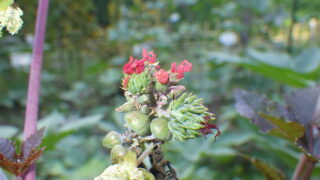
07.2088 Castor bean (female flower) plant

How toxic is castor bean? What are its components? What are the uses of castor oil? Why is it considered safe despite being toxic? Its flowers are pollinated by both wind and insects! Its seeds are dispersed automatically and by ants!

Castor bean is a perennial plant said to originate from northeastern Africa, cultivated worldwide for commercial and ornamental purposes, and sometimes naturalized. It's almost impossible to mistake it for anything else. Its seeds, called "himashi," are rich in oil, and the extracted "castor oil" is used in cosmetics, shampoos, soaps, and more...
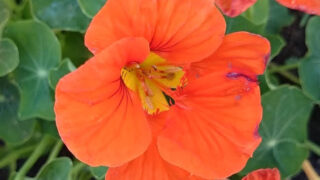
Tropaeolum Majus Flower plant

What are some species similar to nasturtiums (nasturtiums)? Are they edible? What are their nutritional values? What is their history? Were the flower's depressions used as resting places for beetles?

Nasturtiums (also known as nasturtiums or trumpet japonica) are native to Peru and are cultivated in Japan primarily as ornamental plants, either annuals or perennials. They are popular for their distinctive flowers and unusual leaves. While they have many Japanese names, I personally don't recommend calling them simply "nasturtiums" as it can be confusing...
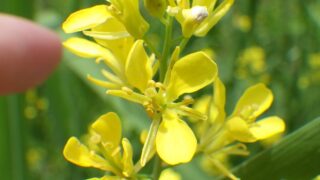
Brassica Juncea Flower plant

What are the differences between mustard greens, rapeseed, European rapeseed, and black mustard? How do their uses differ? Why did they evolve to be spicy? Brassica plants, essential for Japanese mustard and salad oil, have increased fruit production thanks to insect visits!

Brassica napus, rapeseed, European rapeseed, and black mustard are four species of yellow flowers that bloom in spring and belong to the Brassicaceae family. Their flower shapes are almost identical, and their habitats are also nearly the same. Furthermore, there are many closely related species, making identification extremely confusing. This complexity is such that even researchers sometimes misidentify them. Recent research has revealed...
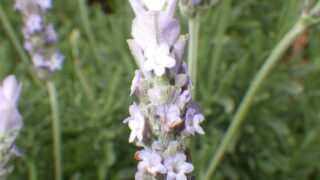
Lavandula Dentata Flower plant

What are the differences between English lavender, French lavender, and Dentata lavender? How to distinguish between similar varieties! What are the effects of their essential oils? Why are there buds mixed in with the flowers? Were the seeds dispersed by sheep?!

Lavender is extremely popular in gardening, known for its purple flowers and renowned for its medicinal properties. However, few articles properly explain the differences between various types of lavender. The visual differences in lavender are not simply variations in "cultivar," but rather entirely different species. Here are three representative types...
Digitalis Purple Flower plant

What are the differences between foxglove (Digitalis) and comfrey? We'll explain how to distinguish between similar species! Are they poisonous? Did foxglove flowers undergo unique evolution in America?

Digitalis (foxglove) and comfrey are two well-known poisonous horticultural species native to Europe. Their leaves are very similar; the upper leaves lack petioles, while the lower leaves have petioles and wings (where the leaf blade extends onto the stem). Comfrey, once edible, was often mistaken for digitalis...
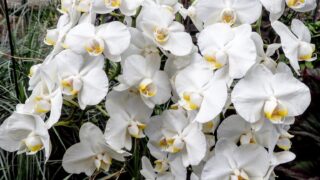
Phalaenopsis Aphrodite Subsp Formosana Flower plant

There are differences between Phalaenopsis orchids and other similar species! We'll explain how to distinguish between them! Why are they so popular? What's their history? Did the flowers attach pollen clumps to the backs of insects?! But the species is unknown?

Phalaenopsis orchids are very popular in Japan as high-end potted plants and cut flowers. They are the number one orchid species in terms of both production volume and value. However, they are also known as "Phalaenopsis," which can be confusing. Biologically, however, the terms refer to different species, with Phalaenopsis being the "Phalae..." orchid.
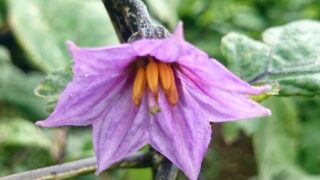
Solanum melongena Flower plant

What are the differences between eggplant and nightshade? What is the origin and evolution of eggplant? Why is nightshade disliked? Does its flower pollinate by vibration? Why are nightshade fruits poisonous?

Both eggplant (Nasu) and nightshade (Nightshade japonica) share the name "eggplant" and have similar flower shapes, so those unfamiliar with them might confuse them. However, eggplant and nightshade are completely different species. Eggplant is a cultivated plant that does not grow wild and has no thorns, while nightshade is a wild plant...
Ternstroemia Gymnanthera Flower plant

What are the differences between Ternstroemia gymnanthera, Pittosporum tobira, Rhaphiolepis indica, and Ilex crenata? We explain how to distinguish between similar species! Did you know that Ternstroemia gymnanthera is a rare species in the biological world, possessing both male and hermaphroditic flowers on separate plants? And that its fruit deceives birds?

Ternstroemia gymnanthera is an evergreen tree that grows in relatively dry areas near the coast and is quite popular as a garden tree. However, because its leaves are entire and have no serrations, it lacks distinctive features and is often confused with completely different species such as Pittosporum tobira, Rhaphiolepis indica, and Ilex crenata. However, in many cases, the color of the leaf stalks...
Trachelospermum Jasminoides Var Pubescens Hatsuyukikazura Flower plant

What are the differences between Trachelospermum asiaticum, Trachelospermum asiaticum, and Trachelospermum asiaticum? We'll explain how to distinguish between similar species! Is it historically true that the name originates from "Fujiwara no Teika"? What is the ecological reason why they bloom and emit a fragrance in the evening?

Trachelospermum asiaticum and Trachelospermum asiaticum are climbing plants that can be widely found in Japan, from forests to urban areas, including cultivated varieties. They can be distinguished by the hairs on the underside of their leaves and the length of their flower tubes. They have been widely known in Japan since the time of the writing of the Kojiki, and their current names are derived from "fuji" (wisteria)...
Sponsored Link