chemistry

Sponsored Link
plant

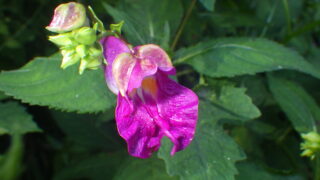
What are the differences between Impatiens textorii, Impatiens noli-tangere, and Balsam? We explain how to distinguish between similar species! While the flowers are supposed to be exclusively for bumblebees, many other insects also sneak onto them! The competition between Impatiens textorii and Impatiens noli-tangere was fierce!

Impatiens textorii, Impatiens noli-tangere, and Balsam are three species with boat-shaped flowers. At first glance, all three flowers look similar, and Impatiens textorii and Impatiens noli-tangere are particularly alike, as they sometimes inhabit the same wetlands. However, they can be distinguished by carefully observing the overall hairs and the color and shape of the flowers. Also, just looking at the leaves...
plant

What are the differences between *Lithospermum erythrorhizon* and *Lithospermum erythrorhizon*? We explain how to distinguish between similar species! Do the flowers have a secret that allows them to be pollinated even in the shade?

While *Lithospermum erythrorhizon* and *Lithospermum erythrorhizon* have similar names and may be confused, there is a significant difference: *Lithospermum erythrorhizon* is a native species, while *Lithospermum erythrorhizon* is a cultivated variety. The shape of the leaves and flowers are also distinctly different. *Lithospermum erythrorhizon*...
animal

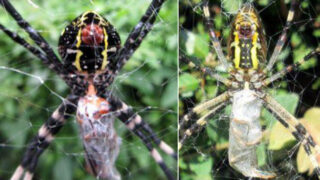
Research has revealed that "intraguild predation" occurs universally between spiders and wasps, potentially contributing to ecosystem stability! [Press Release]

In the "Ecological Information" section, at the request of the lead author, Mr. Daisuke Noguchi, I assisted with the introduction, discussion, and literature review on a paid basis. This research revealed that intraguild predation between spiders and wasps occurs universally, and that there is a possibility of "symmetrical intraguild predation" between spiders and wasps...
plant

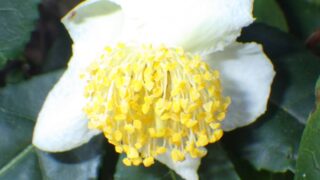
Why is black tea preferred over green tea in the UK? Are flies the only ones that visit tea plant flowers?

Tea plants contain essential nutrients like catechins and caffeine, making them an indispensable beverage in Japan, enjoyed both at home and on the go. As you may know, its origin lies in China, and it's a species not native to Japan. However, even in China, wild varieties haven't been confirmed, which is puzzling...
plant

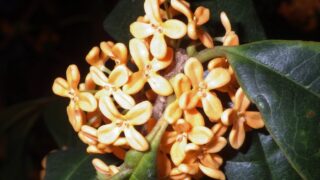
Is it a lie that only male osmanthus plants were introduced to Japan? Are there insects that dislike its unique scent?

Osmanthus fragrans is a dioecious evergreen small tree generally said to be native to China. It is frequently stated that only male plants were brought to Japan. However, in recent years, it has been thought that this is likely not true, and that the trees are actually a clonal population selected in Japan...
plant

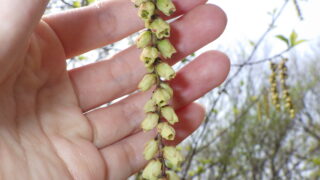
What are the differences between *Kibushi* and *Hachijo-kibushi*? What are the different species in the *Kibushi* genus? We'll explain how to distinguish between similar species! Do the fruits turn your teeth black? Did the flowers have a strategy to attract different insects during the day and night?

Stachyurus praecox, once considered endemic to Japan, is now widely distributed throughout the country. Although there are only two distinct species, their varieties are quite diverse, making identification difficult. While some argue that these variations exhibit continuity and should not be distinguished, this article will deliberately avoid making distinctions...
plant

There are differences between plumeria and Indian jasmine! We'll explain how to distinguish between similar species! When did it arrive in Hawaii? Is it poisonous? Were the flower's flashy colors and scent an evolutionary adaptation to deceive moths?!

Plumeria is a popular garden plant known for its vibrant, large flowers and fragrance, symbolizing the tropics. However, it is also known as Indian jasmine. The terms "plumeria" and "Indian jasmine" may have different meanings. In Japan, "Indian jasmine" often refers to a single, common variety...
plant

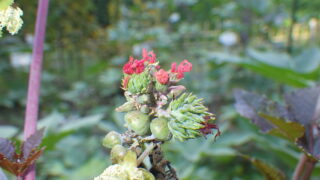
How toxic is castor bean? What are its components? What are the uses of castor oil? Why is it considered safe despite being toxic? Its flowers are pollinated by both wind and insects! Its seeds are dispersed automatically and by ants!

Castor bean is a perennial plant said to originate from northeastern Africa, cultivated worldwide for commercial and ornamental purposes, and sometimes naturalized. It's almost impossible to mistake it for anything else. Its seeds, called "himashi," are rich in oil, and the extracted "castor oil" is used in cosmetics, shampoos, soaps, and more...
plant

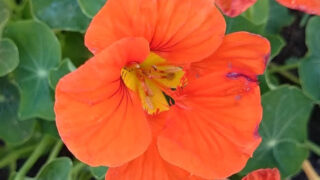
What are some species similar to nasturtiums (nasturtiums)? Are they edible? What are their nutritional values? What is their history? Were the flower's depressions used as resting places for beetles?

Nasturtiums (also known as nasturtiums or trumpet japonica) are native to Peru and are cultivated in Japan primarily as ornamental plants, either annuals or perennials. They are popular for their distinctive flowers and unusual leaves. While they have many Japanese names, I personally don't recommend calling them simply "nasturtiums" as it can be confusing...
plant

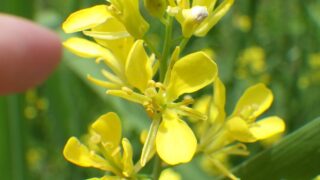
What are the differences between mustard greens, rapeseed, European rapeseed, and black mustard? How do their uses differ? Why did they evolve to be spicy? Brassica plants, essential for Japanese mustard and salad oil, have increased fruit production thanks to insect visits!

Brassica napus, rapeseed, European rapeseed, and black mustard are four species of yellow flowers that bloom in spring and belong to the Brassicaceae family. Their flower shapes are almost identical, and their habitats are also nearly the same. Furthermore, there are many closely related species, making identification extremely confusing. This complexity is such that even researchers sometimes misidentify them. Recent research has revealed...
Sponsored Link