How to use

Sponsored Link
plant

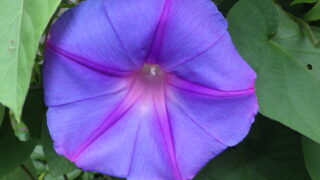
What are the differences between morning glories, round-leaved morning glories, wild morning glories, and American morning glories? We'll explain how to distinguish between similar varieties! The origins of Japanese morning glories are shrouded in mystery!?

Morning glories (Ipomoea nil), round-leaved morning glories, wild morning glories, and American morning glories all belong to the Ipomoea genus of the Convolvulaceae family. Among the varieties with "morning glory" in their name, they are particularly popular for their large corolla diameter (over 3 cm) and are widely cultivated as ornamental plants. While they are very popular, there is considerable individual variation between varieties...
plant

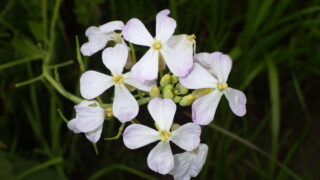
What are the differences between sea radish, flower radish, and large-flowered wallflower? An explanation of how to distinguish between similar species.

Sea radish, flower radish (Raphanus sativus), and large-flowered radish (Raphanus erythrosora) all belong to the Brassicaceae family, and their names sometimes include "radish." They are herbaceous plants that are cultivated for either ornamental or edible purposes and have also become naturalized. They are characterized by their purple, cross-shaped flowers...
plant

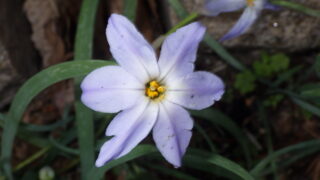
What are the differences between Ipheion uniflorum, Ipheion leek, and Ipheion japonica? We'll explain how to distinguish between similar species! Are they edible?

All three species—Ipheion uniflorum, Allium sibiricum, and Allium sibiricum—belong to the Amaryllidaceae family, Allioideae subfamily, and share the name "nira" (leek). They are common perennial plants found in fields and urban areas. However, their confusing names can make it difficult for those unfamiliar with these three species to distinguish between them...
plant

What are the differences between agave and yucca? We'll explain how to distinguish between similar species! Is it a myth that they live for 100 years? Is it a myth that they're used to make tequila?

Agave, agave, Yucca, and Yucca all belong to the Asparagaceae family (formerly known as the Asparagaceae family). They are characterized by their large size, sometimes reaching the height of a child or adult, and their monocotyledonous leaves with parallel veins. Their impressive presence and drought tolerance...
plant

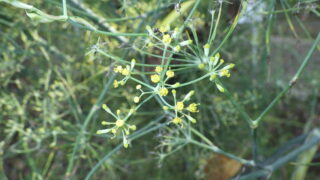
What's the difference between dill (yin-dill) and fennel (foeniculum vulgare)? An explanation of how to distinguish between similar species.

Dill and fennel both belong to the Apiaceae family, share a strong aroma throughout the plant, and are used both as herbs (leaves) and spices (fruits). Their leaves, in particular, are known as "fish herbs" and pair exceptionally well with fish dishes. Furthermore, they are also similar in morphology...
plant

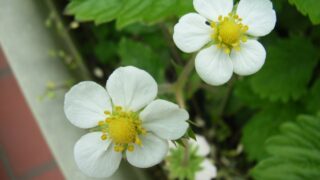
What are the differences between strawberries (Strawberries) and wild strawberries (Potentilla fragarioides)? What are the differences between them and mock strawberries? We'll explain how to distinguish between similar species.

Both strawberries and wild strawberries (Potentilla fragarioides) belong to the genus Fragarioides in the Rosaceae family. These perennial plants are very popular because their aggregate fruit receptacles turn red and swell, making them edible. They are widely cultivated in Japan, and the wild strawberry, in particular, is commercially available in winter in addition to its natural fruiting season of June and July...
plant

What are the differences between Japanese madder, European madder, and Indian madder? An explanation of how to distinguish between similar species.

Japanese madder (Akane), European madder (Akane serrata), and Indian madder (Akane serrata) all belong to the genus Rubiaceae, and are well-known for their roots being used primarily for red dyeing. The color "akane-iro" (madder red) is derived from the plant "akane," and is also frequently used in personal names, even though its use has declined...
plant

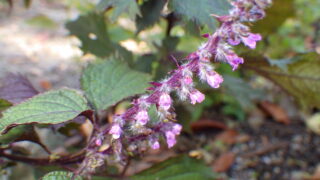
What are the differences between shiso (perilla), egoma (perilla), and lemon egoma? An explanation of how to distinguish between similar varieties.

Shiso, egoma, and lemon egoma are all annual plants belonging to the Lamiaceae family, genus Perilla, and possess a unique aroma and taste. Shiso and egoma, in particular, have been cultivated since ancient times and are now used primarily in pickled plums and dressings, making them extremely familiar plants to Japanese people. However, shiso and egoma...
plant

What are the differences between Cassia obtusifolia (Ketsumeishi), Cassia occidentalis (Habuso), and Cassia tomentosa? We explain how to distinguish between similar species! And "Habu tea" isn't actually made from Cassia occidentalis!?

Cassia obtusifolia, Cassia japonica, and Cassia nomame are all annual plants belonging to the legume family, and were formerly classified in the same genus. Their common characteristics include once-pinnately compound leaves with opposite leaflets, and flowers with five yellow petals of almost identical shape...
plant

What are the differences between Japanese shallots (rakkyo), wild shallots (yamarakkyo), and thread shallots? How do they differ from yellow thread shallots (kii-itorakkyo)? This article explains how to distinguish between similar species.

Japanese shallots (rakkyo), wild shallots (yamarakkyo), and thread shallots (itorakkyo) all belong to the genus Allium in the Amaryllidaceae family and share the common characteristic of having the word "rakkyo" in their Japanese names. Japanese shallots are eaten as pickled shallots, while wild shallots and thread shallots are wild species native to Japan...
Sponsored Link