classification

Sponsored Link
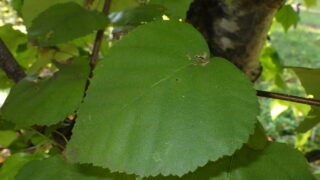
07.1984 White birch leaf upper surface plant

What are the differences between white birch (Betula platyphylla), Japanese white birch (Betula ermanii), and Japanese white birch (Betula platyphylla)? An explanation of how to distinguish between similar species.

White birch (Betula platyphylla), Japanese white birch (Betula ermanii), and Japanese white birch (Betula platyphylla) all belong to the Betulaceae family and are common deciduous trees in cold regions and high mountains. They share the characteristic of having straight, parallel lateral veins on their leaves and fine serrations, and have been widely used for various purposes by the Japanese and Ainu people...
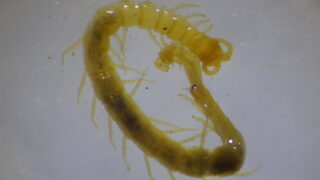
11.3529 Japanese Centipede (Adult, Full Form) animal

What is the role of the strangely enlarged final legs of the *Centipede* species? Could they be a secret weapon for aggressively defending against predators?!

The term "female centipedes" refers to a group of centipedes belonging to the genus *Scylla* in the family Scolopendridae, order Scolopendromorpha. These centipedes are burrowing and rarely seen by the average person, but their most striking feature is their strangely enlarged final gait. While there have been various theories regarding the function of this final gait,...
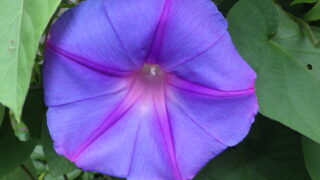
07.3288 Wild morning glory flower plant

What are the differences between morning glories, round-leaved morning glories, wild morning glories, and American morning glories? We'll explain how to distinguish between similar varieties! The origins of Japanese morning glories are shrouded in mystery!?

Morning glories (Ipomoea nil), round-leaved morning glories, wild morning glories, and American morning glories all belong to the Ipomoea genus of the Convolvulaceae family. Among the varieties with "morning glory" in their name, they are particularly popular for their large corolla diameter (over 3 cm) and are widely cultivated as ornamental plants. While they are very popular, there is considerable individual variation between varieties...
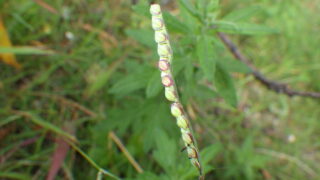
07.1053 Barnyard grass spikelets plant

What are the differences between Barnyard Grass (Paspalum erythrostictum), Striped Barnyard Grass (Paspalum erythrostictum), Upright Barnyard Grass (Paspalum erythrostictum), and American Barnyard Grass (Paspalum erythrostictum)? An explanation of how to distinguish between similar species.

Barnyard grass, striped barnyard grass, upright barnyard grass, and American barnyard grass are all perennial grasses belonging to the genus Barnyard grass in the grass family Poaceae, and are commonly found as weeds in a wide range of areas from urban areas to farmlands. Their most distinctive feature is their flat, nearly circular to oval-shaped spikelets...
07.0991 Barnyard grass spikelet plant

What are the differences between Barnyard Grass and Sea Barnyard Grass? An explanation of how to distinguish between similar species.

Both Barnyard grass (Barnyard grass) and sea barnyard grass (Barnyard grass) are weeds belonging to the genus Barnyard grass in the family Poaceae. They are unassuming weeds that generally prefer watery areas, but can also be found along roadsides. They are characterized by their conical inflorescences and the awns on their spikelets, but some people may have difficulty distinguishing between the two species...
07.1114 Goosegrass, spikelet 2 plant

What are the differences between Goosegrass, Digitaria sanguinalis, and Digitaria sanguinalis? An explanation of how to distinguish between similar species.

Digitaria sanguinalis, Digitaria sanguinalis, and Digitaria sanguinalis are all members of the grass family and are extremely common herbaceous plants and weeds that can be found growing everywhere from urban to rural areas from summer to autumn. Their most significant common feature is that they all produce several racemes, or inflorescences. Their names are similar...
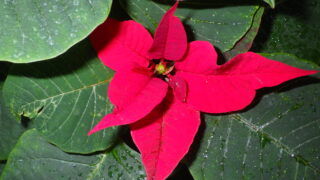
07.2106 Deutzia crenata (Red bract type) Bracts plant

What are the differences between poinsettias, Epipactis thunbergii, and false Epipactis thunbergii? We'll explain how to distinguish between similar species! Is it a myth that poinsettias are poisonous?!

Poinsettias, Euphorbia hederacea, and Euphorbia leucocephala all belong to the Euphorbia genus of the Euphorbiaceae family. While widely cultivated for ornamental purposes, they also sometimes become naturalized. Their most striking feature is their bright red or white, conspicuous petal-like "bracts"...
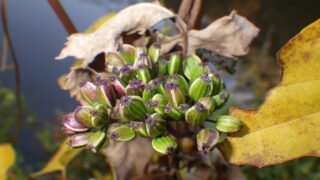
07.4303 Nodake fruit plant

What's the difference between Angelica acutiloba and Angelica gigas? We'll explain how to distinguish between similar species! Is the purple color of the flowers due to wasps?!

Both Angelica dahurica and Angelica pubescens belong to the Angelica genus of the Apiaceae family. They are medium to large perennial herbs with thick stems and broad leaves, and are similar in that their leaflets are large and rounded. However, upon closer observation, there are differences in their leaves, flowers, and fruits. However, since there are many species in the Angelica genus, careful distinction is necessary...
07.3327.1 Himetamasango flower plant

What are the differences between *Tama coral* (winter coral) and *Himeta coral*? An explanation of how to distinguish between similar species.

Both Solanum sieboldii (winter coral) and Solanum nigrum belong to the Solanaceae family and are cultivated extensively for ornamental purposes because they produce attractive, round, red, ripe fruits (berries) in winter. However, in Japan, it is not always possible to properly distinguish between the two varieties, Solanum sieboldii and Solanum nigrum...
07.0593.3 White Banana Ophiopogon Flower plant

What are the differences between Ophiopogon japonicus, Ophiopogon longifolius, Ophiopogon sieboldii, and Ophiopogon orchid? An explanation of how to distinguish between similar species.

Ophiopogon japonicus, Ophiopogon longifolius, Ophiopogon sieboldii, and Ophiopogon orchid all belong to the Ophiopogon genus of the Asparagaceae family (formerly Asparagaceae), and are evergreen perennial herbs often seen growing creeping along the ground in forests. Their most distinctive feature is the dark blue seeds they produce, which are easily mistaken for fruits...
Sponsored Link