herbaceous

Sponsored Link
07.1886 Hackberry (Celtis sinensis) Male flower plant

What are the differences between Japanese hackberry (Enoki), Japanese hackberry (Ezoensis), and Chinese hackberry (Mukunoki)? An explanation of how to distinguish between similar species.

Japanese hackberry (Enoki), Japanese hackberry (Ezoensis), and Chinese zelkova (Aphananthe aspera) all belong to the Cannabaceae family. Japanese hackberry and Chinese zelkova, in particular, are extremely common trees in Japan. They have been used for timber, and young trees are frequently seen along roadsides in urban areas. To distinguish them, check the shape of their leaves...
07.1553.1 Haimed Hagi flower plant

What are the differences between Lespedeza bicolor, Lespedeza thunbergii, Lespedeza cyanea, and Lespedeza thunbergii? An explanation of how to distinguish between similar species.

Lespedeza bicolor, Lespedeza thunbergii, Lespedeza thunbergii, and Lespedeza thunbergii are all perennial herbs belonging to the genus Lespedeza in the family Fabaceae. They are particularly small, less than 10mm in length, and do not develop woody tissue. A major common feature is that their petals are primarily white with purple markings that serve as nectar guides, making them difficult to distinguish...
07.1844.1 Dutch Strawberry Amaou Strawberry-like Fruit plant

What are the differences between Dutch strawberries, wild strawberries, raspberries, and mock strawberries? This article explains how to distinguish between similar species.

Strawberry (Strawberry), Rubus parvifolius (Japanese raspberry), Rubus buergeri (wild strawberry), Raspberry (Japanese raspberry), and Strawberry (Indian strawberry) all belong to the Rosaceae family and are generally recognized as relatives of the "strawberry" with their small, red, berry-like fruits. However, among these, Strawberry and Raspberry...
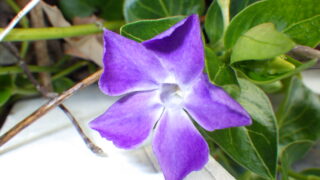
07.3244 Periwinkle flower plant

What are the differences between periwinkle, climbing periwinkle (Vinca), and dwarf climbing periwinkle? An explanation of how to distinguish between similar species.

Periwinkle, climbing periwinkle, and dwarf periwinkle all belong to the Apocynaceae family and are cultivated in Japan for ornamental purposes, frequently seen even in urban areas. They are popular for their interesting features, such as their fused petals with five propeller-shaped lobes at the tip, but their names are similar, especially the climbing periwinkle...
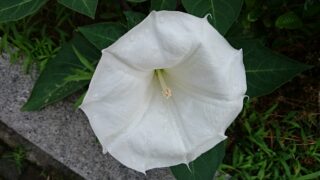
07.3336.a Datura stramonium (flower) plant

What are the differences between Datura, Datura stramonium, Datura stramonium, and Datura arborescens? An explanation of how to distinguish between similar species.

Datura stramonium, Datura stramonium, and Datura arborescens all belong to the Solanaceae family and are cultivated as ornamental plants, as well as being well-known as poisonous and medicinal plants. They are also collectively called "Datura" or "Datura" from their genus name. However, these...
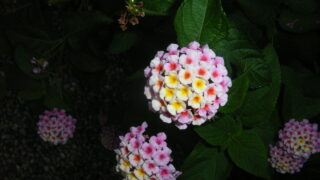
07.3661 Shichihenge flower plant

What are the differences between Lantana (Lantana scabrida), Lantana bicolor, and Lippia nodiflora? We'll explain how to distinguish between similar species! What are the structures of their flowers and fruits?

Lantana (Lantana camtschatica) and Lantana camtschatica var. japonica both belong to the genus Lantana in the family Verbenaceae, and are evergreen shrubs characterized above all by their colorful and showy flowers. In Japan, both are frequently planted and can also be found growing wild. Therefore, it can sometimes be confusing to distinguish between them...
07.2253 Red-flowered Geranium (Geranium thunbergii) flower plant

What are the differences between Geranium thunbergii, Geranium carolinianum, Geranium thunbergii, and Geranium erianthum? We'll explain how to distinguish between similar species! What are the structures of their flowers and fruits?

Geranium thunbergii, American cranesbill, three-leaved cranesbill, and common cranesbill all belong to the Geranium genus of the Geraniaceae family. Their flowers and leaves are very similar, making identification difficult. More than 18 species have been confirmed in Japan, so it's impossible to introduce them all here, but those found in lowland areas...
07.1617 Polygala japonica flower Seed Plant Encyclopedia

[Seed Plant Encyclopedia #155] What are the species of the Polygalaceae family? Photo list

All species of the Polygalaceae family found in Japan are herbaceous. The leaves are simple, alternate, and lack stipules. The flowers are bisexual and bilaterally symmetrical. There are 5 sepals. The petals are 5 in number, partially reduced or fused. There are 4 or 8 stamens, fused at the base. The ovary is superior and 2-chambered. The fruit is a capsule or drupe. [...].
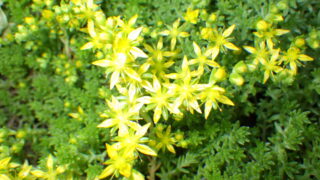
07.1400.a Morimura Sedum (flower) Seed Plant Encyclopedia

[Seed Plant Encyclopedia #143] What are the species of the Crassulaceae family? Photo list

The Crassulaceae family consists entirely of succulent herbs or shrubs, often with enlarged rhizomes or roots. The leaves are simple. The flowers are radially symmetrical, mostly hermaphroditic, but some genera are unisexual, monoecious, or dioecious. The calyx is somewhat fleshy, green (sometimes reddish)...
07.1371 Saxifraga stolonifera flower Seed Plant Encyclopedia

[Seed Plant Encyclopedia #142] What are the species of the Saxifragaceae family? Photo list

The family Saxifragaceae consists of herbaceous plants. Leaves are alternate or opposite, simple or compound. Most are deciduous, but some are evergreen. Stipules are present or absent. Inflorescences are cymose, sometimes racemes or panicles. Flowers are bisexual, dioecious, or dioecious, and radially symmetrical...
Sponsored Link