In Japan, except in some regions, eating insects is extremely rare, and it can be said that it is almost unheard of among the younger generation, especially in urban areas.
While some advocate for eating insects to prepare for food shortages, cries of "Absolutely not!" are heard, mainly on social media. Even though I work with insects, I also feel a sense of pity for them and have reservations about eating them.
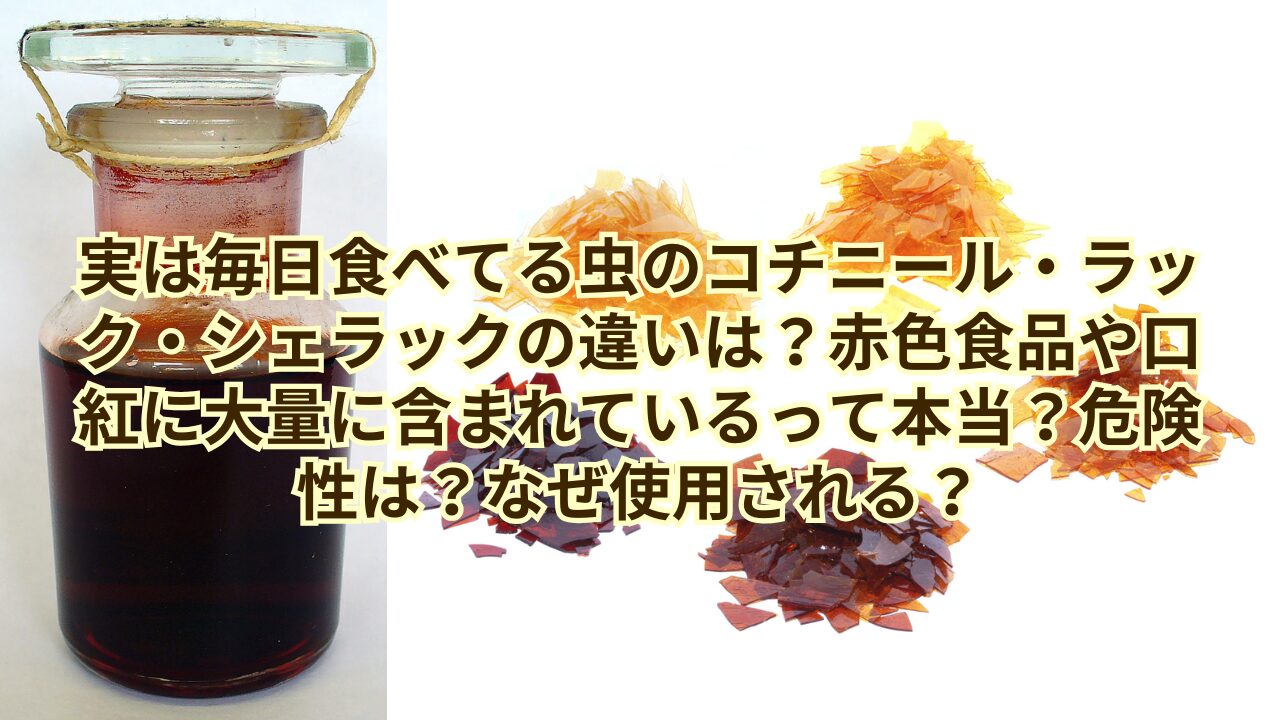
That being said, the truth is that, unintentionally, Japanese people eat insects (or components extracted from them) every day. Representative examples include cochineal, which contains carminic acid produced by the cochineal insect, and shellac, which is made by heat treatment or solvent extraction of lac, produced by the lac insect.
To put it simply, cochineal is used as a pure dye in food and cosmetics, lac is used as a dye in food, and shellac is used as a wax in many applications such as adhesives, food polishing agents, wood finishes, and SP records.
Cochineal is generally safe, but it's important to be aware that in rare cases, people who regularly use cosmetics containing cochineal may experience allergic reactions.
The reason cochineal continues to be used despite containing insects is likely because safe and inexpensive artificial colorings have yet to be found.
This article will explain cochineal insects and lac insects, as well as the components they produce.
- What is the difference between cochineal insects and lac insects?
- Why did the cochineal insect evolve to produce carminic acid?
- What are the differences in the uses of cochineal lac and shellac?
- Do Japanese people really eat cochineal insects? From the cultivation of cochineal insects to their eventual appearance on the dinner table as a food coloring agent.
- Are cochineal scale insects disgusting?
- What are the dangers of cochineal? Does it cause allergies?
- Why is cochineal still being used?
- References
What is the difference between cochineal insects and lac insects?
First, let's clarify the differences between cochineal insects and lac insects, which are often confused.
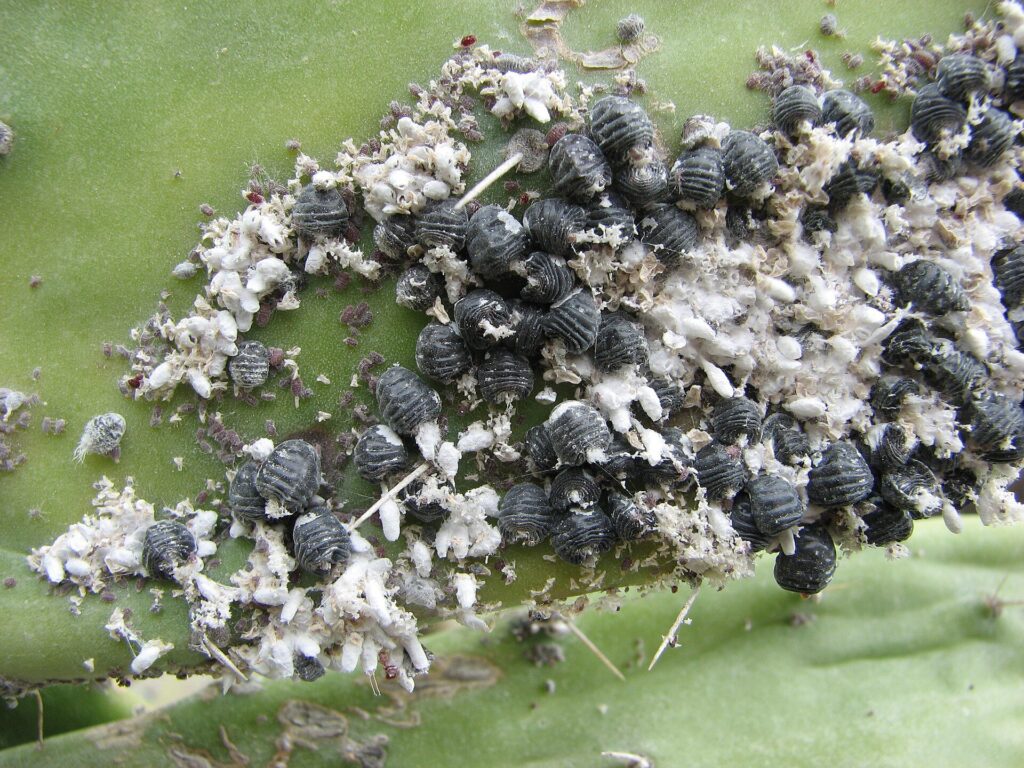
Cochineal insect (also known as cochineal insect) Dactylopius coccus It belongs to the family Dactylopiidae within the superfamily Coccoidea and is distributed from the southwestern United States through Mexico to the temperate regions of South America (Schowalter, 2025). It is now sometimes cultivated in China. It uses prickly pear cacti (Cactaceae) as its host, inserting its stylets into the phloem tubes (tubes that transport sugars produced by photosynthesis throughout the plant) and feeding on the phloem sap.
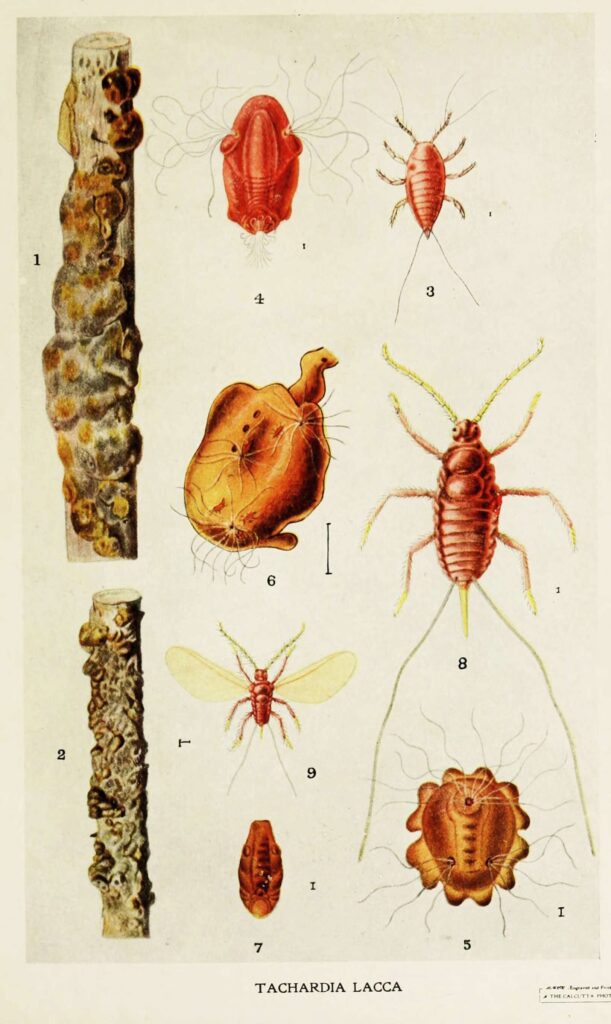
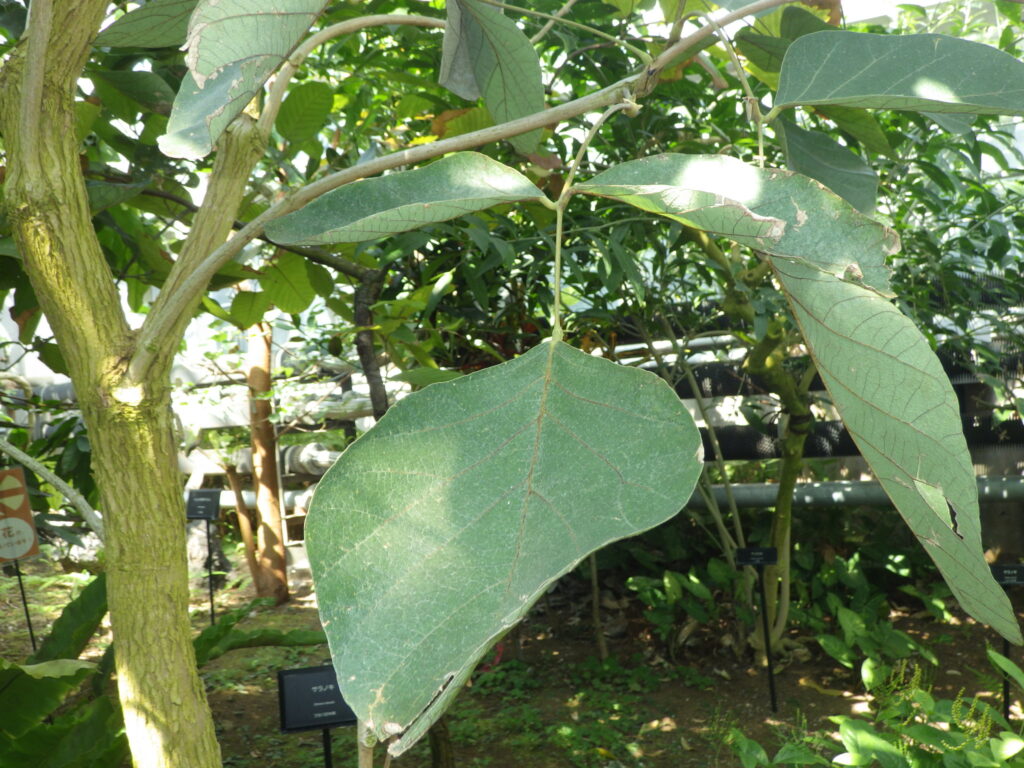
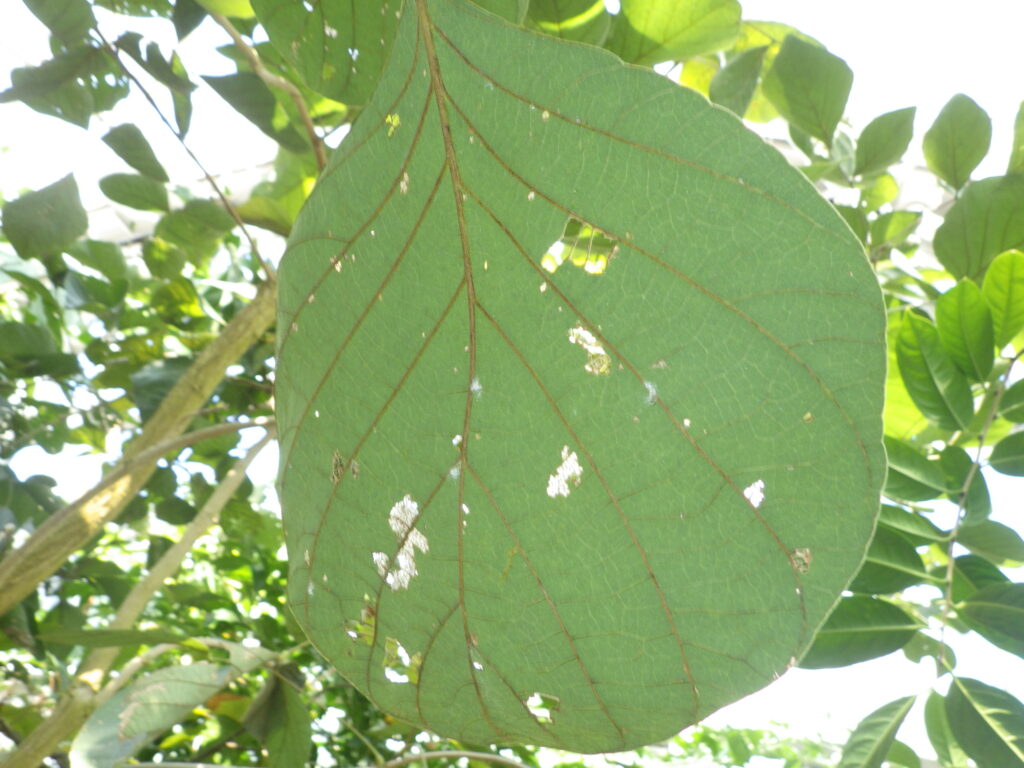
Meanwhile, lac insects Kerria lacca (Laccifer lacca (A synonym is) is classified in the family Kerriidae within the superfamily Coccoidea and is distributed in China, South Asia (India, Pakistan, Bangladesh), and Southeast Asia (Indonesia, Vietnam, Laos, Myanmar) (Watanabe, 2003; Takekawa, 2010; Bashir et al., 2022). Its host is extremely broad, with over 400 plant species reported worldwide, but commercially it is mainly known as *Hypochaeris erythrosora*. Butea monosperma(Fabaceae family) - Ceylon oak Schleichera oleosa(Sapindaceae family) - Indian jujube Ziziphus mauritianaThey utilize three species from the Rhamnaceae family. They also live by inserting their stylets into the sieve tubes and feeding on the sieve sap.
Although they both cling to plants in a similar way, cochineal insects are originally from the Americas, while lac insects are found in Eurasia. You can see that the plants they utilize and their habitats are completely different.
The components produced are also different.
Cochineal insects produce carminic acid, which is both a defensive substance and a pigment, while lac insects produce a waxy substance called lac, which contains laccaic acid as a pigment.

Why did the cochineal insect evolve to produce carminic acid?
It is believed that carminic acid was originally secreted by the cochineal insect to protect itself from carnivorous insects such as ants, ladybugs, and lacewings, as well as microorganisms (Schowalter, 2025). The defense provided by carminic acid is strong, and very few species prey on it.
However, some insects are known to still prey on cochineal insects. These include the larvae of carnivorous moths of the Pyralidae family. Laetilia coccidiv Ora It is known that this insect preys on cochineal scale insects by spitting out a sac containing carminic acid. However, even in this case, its survival rate, development rate, and reproduction rate are significantly worse than when it feeds on scale insects that do not contain carminic acid.
While carminic acid is merely a pigment for humans, it is actually an important component for cochineal insects.
The fact that cochineal insects themselves can turn red is thought to be due to carminic acid, and it is possible that this is an "honest signal" warning color, intended to convey "the redder, the more poisonous!" by possessing both pigment and defense properties, but this has not been thoroughly investigated. Examples of warning colors that serve as honest signals by combining pigment and antioxidant properties are well known (Blount et al., 2009).
What are the differences in the uses of cochineal lac and shellac?
Cochineal insects are killed with boiling water and dried to produce "black cochineal," and crushing black cochineal yields "cochineal," which contains carminic acid. For dyeing purposes, carminic acid is further chemically reacted to synthesize "carmine" (Akiyama & Sugimoto, 2014; Schowalter, 2025).
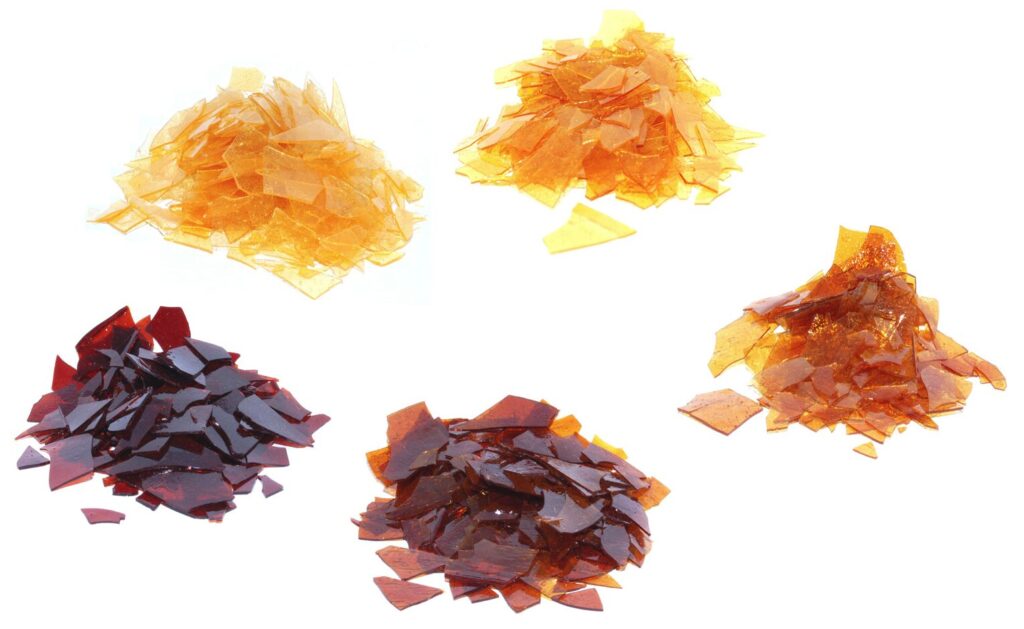
On the other hand, the lac produced by the lac insect initially clumps together on the branches of the host plant, but the lac removed from the branch is called "stick lac" (Toko and Komashiro, 2007). This stick lac can be washed and dried to produce what is called "seed lac," and further heat treatment or solvent extraction can produce "shellac," a pure wax that does not contain insect remains and has reduced or eliminated laccaic acid.
It's important to note that rack and shellac are different things.
How do these ultimately produced ingredients differ in their uses?
To put it simply, cochineal is used as a pure dye in food and cosmetics, lac is used as a dye in food, and shellac is used as a wax in many applications such as adhesives, food polishing agents, wood finishes, and SP records.
Because cochineal produces a vibrant red color, it was originally used for dyeing cloth, and there are records of its use in Central and South America from at least 600 AD (Schowalter, 2025). When Columbus visited the Americas during the Age of Discovery, it was highly valued by European nobility because of its superior strength and durability compared to older dyes, and it eventually became inexpensive and spread throughout the world. It was also introduced to Japan through trade with the West during the Momoyama and Edo periods, and was used by Sengoku warlords (Toko and Komashiro, 2007). However, with the advent of aniline dyes, its use for dyeing cloth declined, and other uses were developed.
In Japan today, cochineal is used as a food coloring agent in soft drinks, strawberry milk, alcohol, shaved ice syrup, confectionery, ham, sausages, and fish cakes, as well as in cosmetics such as lipstick, lip balm, blush, eyeshadow, and nail polish, and in art supplies. Note that in Japan, the cochineal used in food products is carminic acid, while in cosmetics it is carmine (Inomata, 2025).
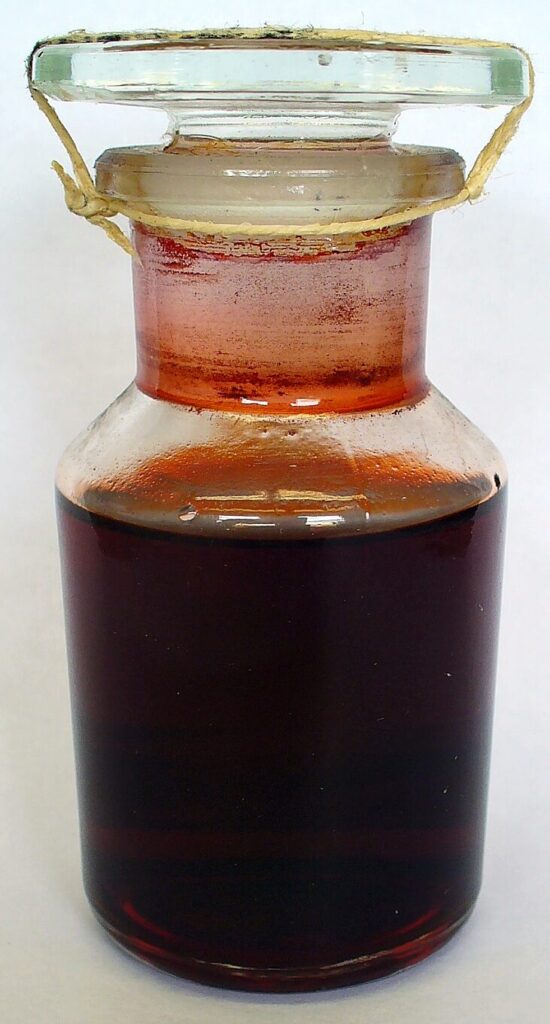
Lac still contains a lot of laccaic acid, so it is used as a fabric dye and is known as lac dyeing (purple mineral dyeing) (Takekawa, 2010). Around 2000 BC, it was used in China and India as a dye and as a medicine called myrrh (traditional Chinese medicine). It had already been introduced to Japan during the Nara period and has been found in the Shōsōin Treasury (Toko and Komashiro, 2007). However, its use declined with the advent of aniline dyes and Western medicine.
In modern Japan, lac is added to food products and used to color sweets, bean paste, bacon, sausages, noodles, processed seafood, and jams.
Shellac was originally used as a finishing material because of its excellent properties for protecting and polishing wood. However, in the early 20th century, the developing electrical industry recognized its excellent properties as an electrical insulator, leading to increased demand. However, in 1907, when American Leo Baekeland invented Bakelite as a substitute, its use in that application declined (Le Couteur & Burreson, 2003).
However, shellac's other uses have expanded in many directions, and in Japan today it is used in countless ways, including paints, adhesives, varnishes for stringed instruments and wooden furniture, granular chocolates and gums that don't stain hands, pharmaceutical tablets, a coating agent for roasted chestnuts, and SP records (Takekawa, 2010).
These insects have truly been supporting society from ancient times to the present day, constantly changing their form along the way.
Do Japanese people really eat cochineal insects? From the cultivation of cochineal insects to their eventual appearance on the dinner table as a food coloring agent.
Some people might wonder, "Do Japanese people actually eat cochineal insects?"
In other words, regardless of whether cochineal is used, the point is that it's merely an extracted chemical component, and not the cochineal insect itself. (Some people might find that off-putting, though...)
Unfortunately (?), we can proudly say that the Japanese eat scale insects (Akiyama & Sugimoto, 2014; Schowalter, 2025).
Cochineal insects harvested from prickly pear cacti are killed by soaking them in hot water or exposing them to sunlight or heat, and then dried for preservation until they reach approximately 301 TP3T of their raw weight. This is "black cochineal."
The powder produced by crushing black cochineal is called "cochineal." Approximately 70,000 insects are needed to produce one pound (0.45 kilograms) of cochineal dye (Miller, 2022).
When cochineal is boiled in ammonia water or sodium carbonate solution and alum is added, a red aluminum carminate precipitate forms. This aluminum carminate is "carmine."
Furthermore, by adding other ingredients such as tin chloride, citric acid, borax, and lime, you can create a variety of colors ranging from pink to purple.
In other words, it's almost certain that whole insects are being crushed and then applied to or incorporated into food and cosmetics.
On the other hand, while lac insect lacs also contain insect bodies, shellac consists almost entirely of its chemical components.
Are cochineal scale insects disgusting?
Whether or not cochineal insects are considered disgusting is, of course, subjective, but there are several factors that contribute to that perception.
First, scale insects typically infest leaves in dense clusters and produce a cottony waxy substance. This is thought to protect against moisture loss, excessive sunlight exposure, and predators such as ants, but it is what makes the leaves look unsightly.
Furthermore, in order to excrete the excess sugar absorbed through the phloem (and also as a reward for ants guarding them), the plant "urinates" (diabetes), which gets on the leaves, creating a sticky, viscous substance, and weakening the plant itself, resulting in an even dirtier appearance.
But eccentric people like me think, "It's so small and cute!"
Furthermore, you could say that it's thanks to scale insects that you can put on makeup while enjoying red drinks and sweets like macarons, and then take and post sparkling, "Instagrammable" photos on social media like Instagram.
Therefore, rather than simply dismissing them as "disgusting," I think it's not a bad idea to show gratitude and respect to those who provide us with food. It's certainly not a pleasant experience for the cochineal insects themselves, who are the ones being eaten. (Although, there's also the perspective that they are being bred and thus the species is surviving as a result.)
You might feel a physiological aversion, but historically in Japan, the sumac aphid was used for teeth blackening. Schlechtendalia chinensis Surprisingly, there is a close relationship between cosmetics and insects, such as the use of insect galls (gallnuts, sumac galls) (Ezure et al., 1987).
What are the dangers of cochineal? Does it cause allergies?
However, there is also the practical problem of cochineal insects: the existence of allergies (Akiyama & Sugimoto, 2014; Inomata, 2025).
There are multiple patterns of cochineal allergies.
The first type is occupational inhalation exposure, where workers who are routinely exposed to cochineal dye or carmine through inhalation, such as those engaged in extracting dye from cochineal insects or handling carmine in cosmetics factories, develop allergies.
The second type is those who exhibit skin symptoms caused by cosmetics containing cochineal.
The third type is caused by oral ingestion of foods containing cochineal.
The worst-case scenario is a combination of the second and third types, where applying cosmetics containing cochineal to the face causes the immune system to mistakenly perceive the cosmetic as a "foreign substance that attacks the human body!" and memorize its molecular structure (immunological memory). The next time food containing cochineal is consumed, the immune system overreacts and attacks the body itself. This is called "anaphylactic shock."
Many researchers believe that the cause of this reaction is not carmine from cochineal, but rather residual proteins derived from the body fluids of the cochineal insect that are involved in the manifestation of IgE-mediated allergic symptoms. However, there are also reports of reactions to carmine, so there are various theories.
It is believed that this system originally evolved to react to parasites (Palm et al, 2012). In other words, if a protein is the cause, then this can be rephrased as a reaction that occurs because our bodies mistakenly identify cosmetics containing cochineal insect fluid as "parasites!"
While this may sound quite frightening, despite its widespread use, only 22 cases have been reported in Japan since it began to be documented in academic papers in Japan until 2018, and there have been no deaths (Takeo et al., 2018).
However, it's possible that the lack of awareness is the reason why this condition is occurring more frequently than it actually is, so if you feel anything unusual, be sure to consult a doctor.
Why is cochineal still being used?
Why is cochineal, which is considered "disgusting" and potentially causes allergic reactions, still being used?
In fact, there was a period when artificial red coloring was used, but from around the 1970s, reports on the relationship between coloring and hyperactivity in children, as well as cell and animal studies suggesting that certain dyes may increase the risk of cancer, began to emerge, and health concerns about these synthetic dyes started to grow (Miller, 2022).
These concerns ultimately led to the banning of some dyes, such as Red No. 2 and Red No. 4. However, some of these harmful effects were later revoked.
As a result, naturally derived colorants such as carminic acid have begun to gain popularity.
Natural colorants have a very long history, which can be considered to guarantee their safety to some extent. Furthermore, because the manufacturing process is already established, it is possible to produce them at a lower cost, both in terms of time and money.
However, in addition to the reasons mentioned above, there is a growing number of vegans, vegetarians, and animal rights activists in the United States who do not want to accidentally consume insect-derived products.
Furthermore, using large quantities of prickly pear cacti does not necessarily result in good production efficiency.
Therefore, methods for artificial synthesis are being researched, but practical application is still some time away.
References
Akiyama, Hiroshi & Sugimoto, Naoki. 2014. Food allergies caused by cochineal dye and carmine intake. Pharmacia 50(6): 522-527. https://doi.org/10.14894/faruawpsj.50.6_522
Bashir, NH, Chen, H., Munir, S., Wang, W., Chen, H., Sima, YK, & An, J. 2022. Unraveling the role of lac insects in providing natural industrial products. Insects 13(12): 1117. https://doi.org/10.3390/insects13121117
Blount, JD, Speed, MP, Ruxton, GD, & Stephens, PA 2009. Warning displays may function as honest signals of toxicity. Proceedings of the Royal Society B: Biological Sciences 276(1658): 871-877. https://doi.org/10.1098/rspb.2008.1407
Ezure, T., Katsura, K., Ten, M., Taguchi, H., Ikeda, M., Matsuzaki, A., & Suzuki, T. 1987. Concept and Case Reports of Ohaguro (Teeth Blackening). Iwate Medical University Dental Journal 12(2): 217-221. https://doi.org/10.20663/iwateshigakukaishi.12.2_217
Inomata, Naoko. 2025. Cochineal dye allergy. Allergy 74(3): 174-176. https://doi.org/10.15036/arerugi.74.174
Le Couteur, PC, & Burreson, J. 2003. Napoleon's buttons: How 17 molecules changed history. Tarcher, 384pp. ISBN: 9781585422203 [=2011. Spices, explosives, pharmaceuticals—17 chemical substances that changed world history. Chuokoron-Shinsha, Tokyo. 368pp. ISBN: 9784120043079]
Miller, BJ 2022. Cochineal, a red dye from bugs, moves to the lab. Knowable Magazine. ISSN: 2575-4459, https://doi.org/10.1146/knowable-032522-1
Palm, NW, Rosenstein, RK, & Medzhitov, R. 2012. Allergic host defences. Nature 484(7395): 465-472. https://doi.org/10.1038/nature11047
Schowalter, TD 2025. Ecology, use, and management of cochineal insects (Hemiptera: Dactylopiidae). Journal of Integrated Pest Management 16(1): pmaf033. https://doi.org/10.1093/jipm/pmaf033
Takekawa, Yukiko. 2010. The Use of Shellac, a Natural Resinous Substance: Focusing on Shōsōin Treasures and Medicinal Properties. Bulletin of the Osaka Science Museum 20: 65-70. https://www.sci-museum.jp/wp-content/themes/scimuseum2021/pdf/study/research/2010/pb20_065-070.pdf
Takeo, N., Nakamura, M., Nakayama, S., Okamoto, O., Sugimoto, N., Sugiura, S., … & Matsunaga, K. 2018. Cochineal dye-induced immediate allergy: review of Japanese cases and proposed new diagnostic chart. Allergology International 67(4): 496-505. https://doi.org/10.1016/j.alit.2018.02.012
Toko, Yukiko & Komashiro, Motoko. 2007. Red-based natural dyes. Journal of Life Engineering Research 9(1): 136-139. http://hdl.handle.net/10083/3267
Watanabe, Hiroyuki. 2003. Scale insects save tropical forests. Tokai University Press, Hadano. 136pp. ISBN: 9784486016182