plant

Sponsored Link
plant

What are the differences between Cassia obtusifolia (Ketsumeishi), Cassia occidentalis (Habuso), and Cassia tomentosa? We explain how to distinguish between similar species! And "Habu tea" isn't actually made from Cassia occidentalis!?

Cassia obtusifolia, Cassia japonica, and Cassia nomame are all annual plants belonging to the legume family, and were formerly classified in the same genus. Their common characteristics include once-pinnately compound leaves with opposite leaflets, and flowers with five yellow petals of almost identical shape...
plant

What are the differences between snake gourd, yellow snake gourd, and wild gourd? We explain how to distinguish between similar species! Is the "creepy" appearance of the flowers a result of evolution?!

Trichosanthes cucumeroides, Trichosanthes cucumeroides, and Trichosanthes spp. all belong to the Trichosanthes genus of the Cucurbitaceae family. They are herbaceous plants that share several common characteristics: they produce large, fused-petal flowers with a finely divided corolla resembling lace, and they bear fairly large, yellow to red fruits for wild species. Trichosanthes cucumeroides and Trichosanthes spp....
plant

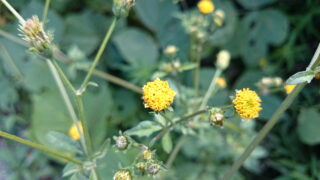
What are the differences between Bidens pilosa, Bidens frondosa, Bidens pilosa, and Bidens serrata? An explanation of how to distinguish between similar species.

Bidens pilosa, Bidens frondosa, Bidens pilosa, and Bidens serrata are all annual plants belonging to the Bidens genus of the Asteraceae family. Their most distinctive feature in relation to humans is that their fruits are "burrs." They grow along roadsides and around bodies of water, clinging to animal fur and human clothing...
plant

What are the differences between goldenrod, autumn goldenrod, and mountain goldenrod? How do they differ from other goldenrod species? This article explains how to distinguish between similar species.

Goldenrod (Solidago altissima), autumn goldenrod (Solidago virgaurea), and mountain goldenrod (Solidago virgaurea var. japonica) all belong to the genus Solidago in the Asteraceae family, and are representative perennial plants that bloom with small yellow flowers (more accurately, flower heads) in autumn. Goldenrod, in particular, is well-known because it proliferates rapidly in some regions...
plant

What are the differences between periwinkle, climbing periwinkle (Vinca), and dwarf climbing periwinkle? An explanation of how to distinguish between similar species.

Periwinkle, climbing periwinkle, and dwarf periwinkle all belong to the Apocynaceae family and are cultivated in Japan for ornamental purposes, frequently seen even in urban areas. They are popular for their interesting features, such as their fused petals with five propeller-shaped lobes at the tip, but their names are similar, especially the climbing periwinkle...
plant

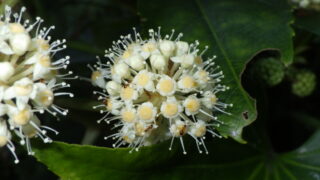
What's the difference between Fatsia japonica and Fatsia japonica? We'll explain how to distinguish between similar species! The glossy leaves are actually a sunbathing spot for insects!?

Both Fatsia japonica and Fatsia japonica belong to the Araliaceae family and are evergreen trees most characterized by their large, palmately lobed leaves. Both can be observed both outdoors and in gardens. They share many other similarities, which can sometimes lead to confusion. However, distinguishing between them is relatively easy, based on leaf size, hairiness, etc.
plant

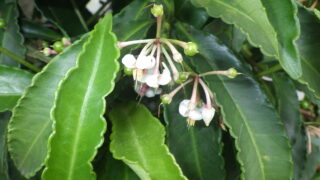
What are the differences between Ardisia japonica, Ardisia crenata, Ardisia crenata, and Citrus tachibana? We explain how to distinguish between similar species! Is the idea that they "fix nitrogen with their leaves" a myth?!

Ardisia japonica, Ardisia crenata, Ardisia japonica, and Ardisia trifoliata all belong to the genus Ardisia in the family Primulaceae. They grow wild in evergreen forests, but because they bear red, spherical fruits in autumn and winter, they are widely cultivated as ornamental shrubs, along with plants like Ardisia crenata (a member of the Chloranthaceae family). In Japan...
plant

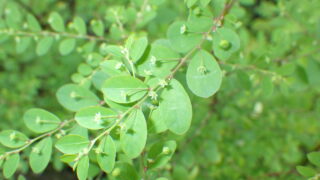
What are the differences between *Phyllanthus urinaria*, *Phyllanthus urinaria*, and *Phyllanthus longifolius*? An explanation of how to distinguish between similar species.

Phyllanthus urinaria, Phyllanthus sempervirens, and Phyllanthus longifolius all belong to the Phyllanthus genus of the Phyllanthaceae family. These annual plants grow in fields and roadsides, and are notable for their numerous small, orange-like green to red fruits rather than their flowers. These three species are among the most frequently found in the Phyllanthus genus...
plant

What are the differences between Clerodendrum trichotomum and Clerodendrum frequens? An explanation of how to distinguish between similar species.

Both Clerodendrum trichotomum and Clerodendrum sibiricum belong to the mint family and are sometimes cultivated for ornamental purposes. Their most significant commonality is the similar shape of their flowers. Specifically, both have very long stamens and pistils that curve downwards (curl) and protrude far from the flower. Therefore...
plant

What are the differences between Coreopsis lanceolata, Coreopsis grandiflora, Coreopsis radicans, and Coreopsis lanceolata? How do they differ from Cosmos sulphureus? This article explains how to distinguish between similar species.

Coreopsis lanceolata, Coreopsis grandiflora, Coreopsis humilis, and Coreopsis radicans all belong to the genus Coreopsis in the Asteraceae family. While they have few distinguishing features, they are annual or biennial plants that give the impression of being "very showy yellow chrysanthemums with single to double flowers." Coreopsis grandiflora, in particular, is an exception...
Sponsored Link