plant

Sponsored Link
plant

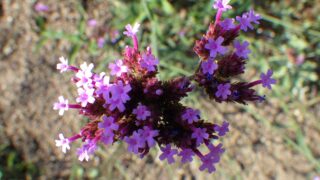
What are the differences between Verbena bonariensis, Verbena bonariensis, Verbena bonariensis, and Verbena serrata? We explain how to distinguish between similar species! The length of the flower tube attracts different insects! Are the fruits dispersed by gravity?

Verbena bonariensis, Verbena bonariensis, Verbena bonariensis, and Verbena serrata all belong to the genus Verbena in the family Verbenaceae, and are a group within the genus Verbena that have undivided leaves. They generally have a stiff texture, ridged stems, and form dense inflorescences, and are commonly found along roadsides in urban areas...
plant

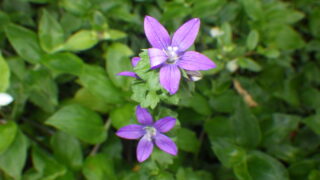
What are the differences between Campanula punctata, Campanula punctata, and Campanula punctata? We'll explain how to distinguish between similar species! What role do "cleistogamous flowers" play? Did the fruit release seeds through holes?

Both Campanula punctata and Campanula punctata are annual plants native to North America, belonging to the Campanulaceae family and Campanula genus. In present-day Japan, they are naturalized species and frequently seen in urban areas. Because they grow in almost the same locations, and both have purple, five-lobed flowers at the top, distinguishing them in the wild can be difficult...
plant

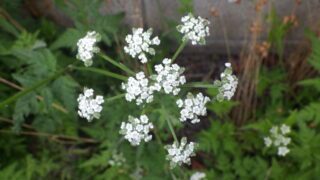
What's the difference between *Torilis japonica* and *Torilis japonica*? We explain how to distinguish between similar species! The flowers are a favorite of tiny bees! The "burr-like" fruits are even carried by ocean currents!

Both *Torilis japonica* and *Torilis japonica* are biennial herbs belonging to the genus *Torilis* in the family Apiaceae, and are extremely common in Japan, growing in grasslands, thickets, and roadsides. These two species grow in similar environments, their flowers and fruits are very similar, and both have leaves that are 2-3 times pinnately compound. Therefore, distinguishing between them can be confusing...
plant

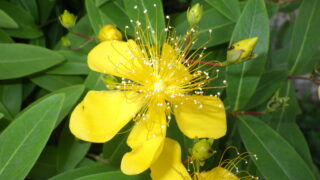
What are the differences between Hypericum patulum, Hypericum patulum, Hypericum humile (Hidcote), and Hypericum patulum? An explanation of how to distinguish between similar species.

Hypericum patulum, Hypericum patulum, Hypericum humile (Hidcote), and Hypericum patulum are all evergreen shrubs belonging to the Hypericaceae family, genus Hypericum, and are cultivated in Japan for ornamental purposes. They are frequently seen in urban areas and are very popular for their yellow flowers, but their characteristics...
plant

What are the differences between Campanula punctata and Campanula punctata? How do they differ from Adenophora triphylla? We'll explain how to distinguish between similar species! Only bumblebees visit the flowers long enough for fireflies to enter!? Do the seeds even cross the ocean!?

Both Campanula punctata and Campanula punctata are perennial herbs belonging to the Campanulaceae family, and are very common in Japan, both as wildflowers and cultivated plants. They are classified as the same species, differing only at the variety level. Their flower corollas are identical, urn-shaped, and their color ranges from white to reddish-purple, making them difficult to distinguish...
plant

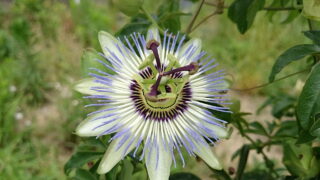
What's the difference between passionflower and passion fruit (passionflower)? We explain how to distinguish between similar species! Did you know that bumblebees are attracted to the "clock-like" flowers? And that birds actually eat the fruit?

Passionflower and passion fruit (Passionflower) are both climbing evergreen perennial plants belonging to the Passifloraceae family, native to South America. In Japan, they can be found in urban areas as ornamental plants. However, the differences between them may not be well known. Passionflower...
plant

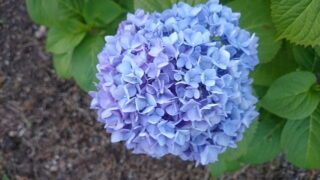
What are the differences between hydrangeas, lacecap hydrangeas, mountain hydrangeas, oakleaf hydrangeas, and American hydrangea (Annabelle)? We explain how to distinguish between similar varieties! Most of the flowers are just "decorations"!? What do the fruits, which are rarely seen, look like?

Hydrangeas, lacecap hydrangeas, mountain hydrangeas, oakleaf hydrangeas, and American hydrangeas (Annabelle) all belong to the genus Hydrangea in the family Hydrangeaceae, and are commonly cultivated and found in urban areas. Hydrangeas, in particular, are arguably representative of Japan. All of them develop large calyxes around the rainy season...
plant

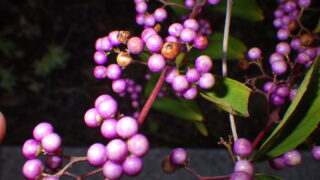
What are the differences between *Callicarpa japonica*, *Callicarpa dichotoma*, and *Callicarpa japonica*? We explain how to distinguish between similar species! Did the flowers deceive the bees? Who likes purple berries?

Callicarpa japonica, Callicarpa dichotoma, and Callicarpa japonica are all deciduous shrubs belonging to the Callicarpa genus of the Lamiaceae family, growing in forests and forest edges. Their flowers and fruits are purple and their morphology is very similar, so they are often confused and sold as garden plants, making it difficult to distinguish between them. However, these are all plants that grow on the same plant body...
plant

What are the differences between Leucothoe japonica, Leucothoe axillaris, and Leucothoe axillaris? An explanation of how to distinguish between similar species.

Leucothoe, American Leucothoe (European Leucothoe), and Axillaris Leucothoe are representative evergreen shrubs of the Leucothoe genus in the Ericaceae family in Japan. They share similarities, such as pointed leaf tips and fine serrations, and Google search results often show these species mixed together...
plant

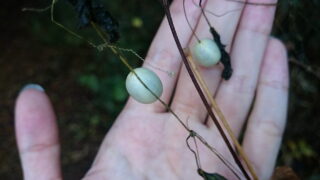
What are the differences between *Melophyllum uliginosum* and *Melophyllum okinawaense*? How do they differ from *Tricholoma cucumeroides* species? We'll explain how to distinguish between similar species! Is the pollination method unknown? Do birds like these cute fruits? Are they edible for humans?

Both *Melo serrulata* and *Melo okinawaensis* belong to the Cucurbitaceae family and are climbing annuals. Morphologically, they share similarities, including small flowers and smooth, hairless fruit surfaces. Furthermore, Google search suggestions are sometimes incorrect, making it difficult to distinguish between them without prior observation...
Sponsored Link