Sponsored Link
plant

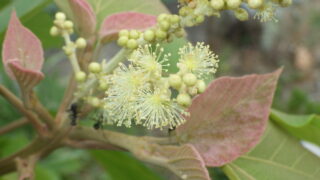
What are the differences between the Japanese linden (Tilia japonica) and the large-leaved linden (Tilia japonica)? What are the differences between the Japanese linden (Tilia japonica) and the Indian linden (Tilia japonica)? We'll explain how to distinguish between similar species! What is the secret to attracting so many bees? Is it the scent? What is the role of the bracts on the fruit?

Both the Japanese linden (Tilia japonica) and the large-leaved linden (Tilia japonica) are deciduous trees belonging to the genus Tilia in the Malvaceae family. Although they have different origins, they are both cultivated in cities throughout Japan, and their leaf shapes are very similar, so someone who has never seen them might not be able to distinguish between them. However, the size of the leaves, as well as the petioles...
plant

What are the differences between *Lampranthus erythrosora* and *Lampranthus sanguineus* (cold-hardy *Lampranthus sanguineus*)? We'll explain how to distinguish between similar species! Why are the leaves "squishy"? What insects visit the pink flowers? Do the fruits swell when humidity increases?

The ice plant *Lampranthus* and the hardy ice plant *Lampranthus 'Hanaranzan'* are native to South Africa and are two extremely popular ornamental plants in Japan. You'll see them everywhere you go. These succulents, with their plump leaves and showy pink flowers, are quite unusual for Japan...
plant

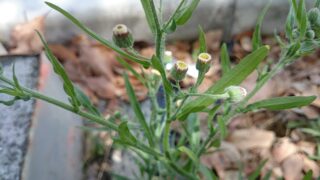
What's the difference between Galinsoga parviflora and Galinsoga stolonifera? We explain how to distinguish between similar species! Only hoverflies were visiting the flowers!? The seeds not only travel on the wind, but they also stick to surfaces!?

Both Galinsoga parviflora and Galinsoga stolonifera belong to the genus Galinsoga in the Asteraceae family. Although native to the Americas, they are now extremely common weeds in disturbed areas of Japan. The differences in the shape of their flowers are subtle from a distance, and it may be difficult to distinguish them if you only vaguely remember them. However...
plant

What are the differences between Verbena bonariensis, Verbena bonariensis, Verbena bonariensis, and Verbena serrata? We explain how to distinguish between similar species! The length of the flower tube attracts different insects! Are the fruits dispersed by gravity?

Verbena bonariensis, Verbena bonariensis, Verbena bonariensis, and Verbena serrata all belong to the genus Verbena in the family Verbenaceae, and are a group within the genus Verbena that have undivided leaves. They generally have a stiff texture, ridged stems, and form dense inflorescences, and are commonly found along roadsides in urban areas...
plant

What are the differences between Campanula punctata, Campanula punctata, and Campanula punctata? We'll explain how to distinguish between similar species! What role do "cleistogamous flowers" play? Did the fruit release seeds through holes?

Both Campanula punctata and Campanula punctata are annual plants native to North America, belonging to the Campanulaceae family and Campanula genus. In present-day Japan, they are naturalized species and frequently seen in urban areas. Because they grow in almost the same locations, and both have purple, five-lobed flowers at the top, distinguishing them in the wild can be difficult...
plant

What's the difference between *Torilis japonica* and *Torilis japonica*? We explain how to distinguish between similar species! The flowers are a favorite of tiny bees! The "burr-like" fruits are even carried by ocean currents!

Both *Torilis japonica* and *Torilis japonica* are biennial herbs belonging to the genus *Torilis* in the family Apiaceae, and are extremely common in Japan, growing in grasslands, thickets, and roadsides. These two species grow in similar environments, their flowers and fruits are very similar, and both have leaves that are 2-3 times pinnately compound. Therefore, distinguishing between them can be confusing...
plant

What are the differences between Hypericum patulum, Hypericum patulum, Hypericum humile (Hidcote), and Hypericum patulum? An explanation of how to distinguish between similar species.

Hypericum patulum, Hypericum patulum, Hypericum humile (Hidcote), and Hypericum patulum are all evergreen shrubs belonging to the Hypericaceae family, genus Hypericum, and are cultivated in Japan for ornamental purposes. They are frequently seen in urban areas and are very popular for their yellow flowers, but their characteristics...
plant

What are the differences between Campanula punctata and Campanula punctata? How do they differ from Adenophora triphylla? We'll explain how to distinguish between similar species! Only bumblebees visit the flowers long enough for fireflies to enter!? Do the seeds even cross the ocean!?

Both Campanula punctata and Campanula punctata are perennial herbs belonging to the Campanulaceae family, and are very common in Japan, both as wildflowers and cultivated plants. They are classified as the same species, differing only at the variety level. Their flower corollas are identical, urn-shaped, and their color ranges from white to reddish-purple, making them difficult to distinguish...
plant

What's the difference between passionflower and passion fruit (passionflower)? We explain how to distinguish between similar species! Did you know that bumblebees are attracted to the "clock-like" flowers? And that birds actually eat the fruit?

Passionflower and passion fruit (Passionflower) are both climbing evergreen perennial plants belonging to the Passifloraceae family, native to South America. In Japan, they can be found in urban areas as ornamental plants. However, the differences between them may not be well known. Passionflower...
plant

What are the differences between hydrangeas, lacecap hydrangeas, mountain hydrangeas, oakleaf hydrangeas, and American hydrangea (Annabelle)? We explain how to distinguish between similar varieties! Most of the flowers are just "decorations"!? What do the fruits, which are rarely seen, look like?

Hydrangeas, lacecap hydrangeas, mountain hydrangeas, oakleaf hydrangeas, and American hydrangeas (Annabelle) all belong to the genus Hydrangea in the family Hydrangeaceae, and are commonly cultivated and found in urban areas. Hydrangeas, in particular, are arguably representative of Japan. All of them develop large calyxes around the rainy season...
Sponsored Link