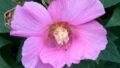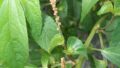
Wild grapes and Japanese knotweed are among the most familiar climbing plants in the grape family.Although they belong to the same family and are both climbing plants, you might get confused about the differences between them, but you can easily distinguish them by the shape of their leaves and flowers.Japanese knotweed (Cayratia japonica) is sometimes targeted for eradication due to its strong reproductive capacity, impact on the landscape, and its ability to attract bees. However, its ecology is fascinating; its saucer-shaped flowers are specifically designed to attract bees, relying on Japanese honeybees for pollination and hornets to remove pests from its leaves—a surprising benefit. While it rarely produces berries in some regions, when it does, the fruit is used by birds and mammals. This article will explain the classification, relationship with humans, pollination ecology, and seed dispersal of Japanese knotweed and wild grape (Vitis coignetiae).
- Two species representative of the wild grape family
- What is the difference between Cayratia japonica and Vitis coignetiae?
- Why is the Japanese bush vine (Cayratia japonica) being eradicated?
- The honey dish was exclusively for Japanese honeybees!?
- Did the Japanese knotweed plant hire a hornet as a bodyguard?!
- Are the fruits similar to grapes? Are they edible?
- References
- Source
Two species representative of the wild grape family
Japanese knotweed (Cayratia japonica) Cayratia japonica It is also known as Binboukazura (poor man's vine). It is a climbing perennial herb that is widely distributed in Korea, China, India, Malaysia, and Japan (southwestern Hokkaido, Honshu, Shikoku, Kyushu, and Ryukyu) and grows in thickets and cultivated fields (Kakutani, 1994). It is sometimes called "Yabugarashi," but the botanical Japanese name is "Yabukarashi" without the voiced consonant mark.
On the other hand, wild grapes Ampelopsis glandulosa var. phylla saturates This plant is distributed in Korea, China, the Kuril Islands, and Ussuri, and is a deciduous climbing woody plant that inhabits mountainous and open areas (Kanagawa Prefecture Flora Survey Association, 2018). It twines around other objects with its bifurcated tendrils, and its stems are dark grayish-brown with swollen nodes. The stems die back every year, and the base becomes woody, reaching a diameter of about 4 cm (Hayashi et al., 2013).
These two species are both climbing plants belonging to the grape family, and they share the common characteristic of producing saucer-shaped flowers. They can be frequently seen in urban plantings and the gardens of private homes.
What is the difference between Cayratia japonica and Vitis coignetiae?
Although these two species belong to the Vitaceae family, they belong to different genera, so there is a taxonomic gap and they are easy to distinguish (Kanagawa Prefecture Flora Survey Association, 2018).
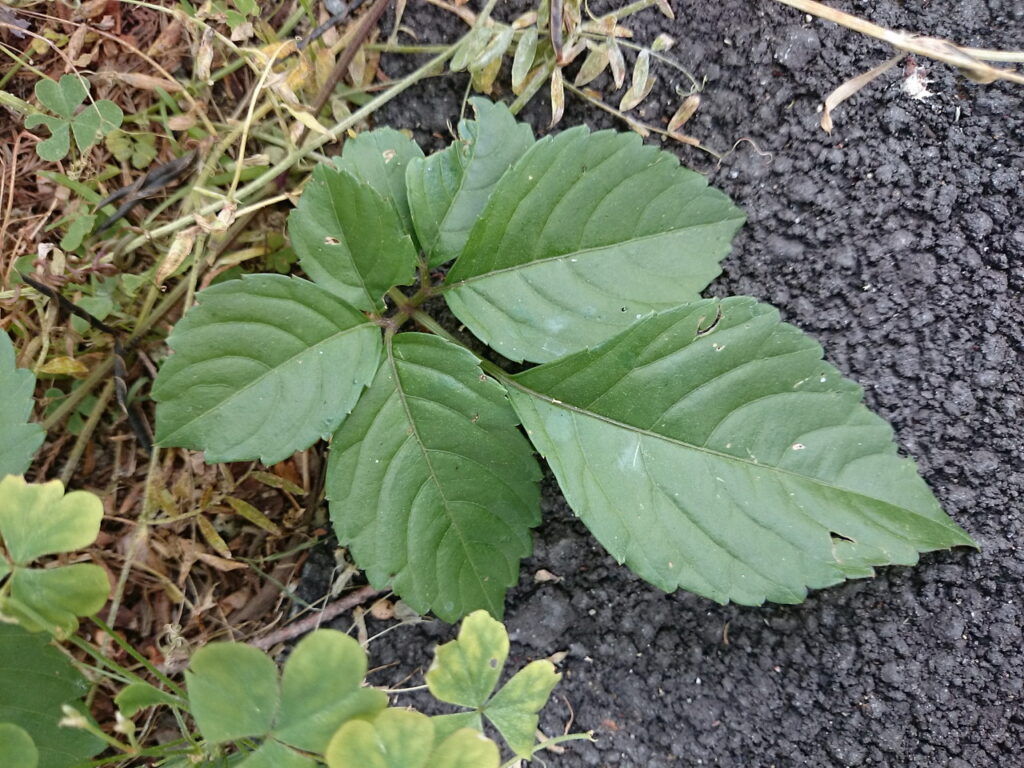
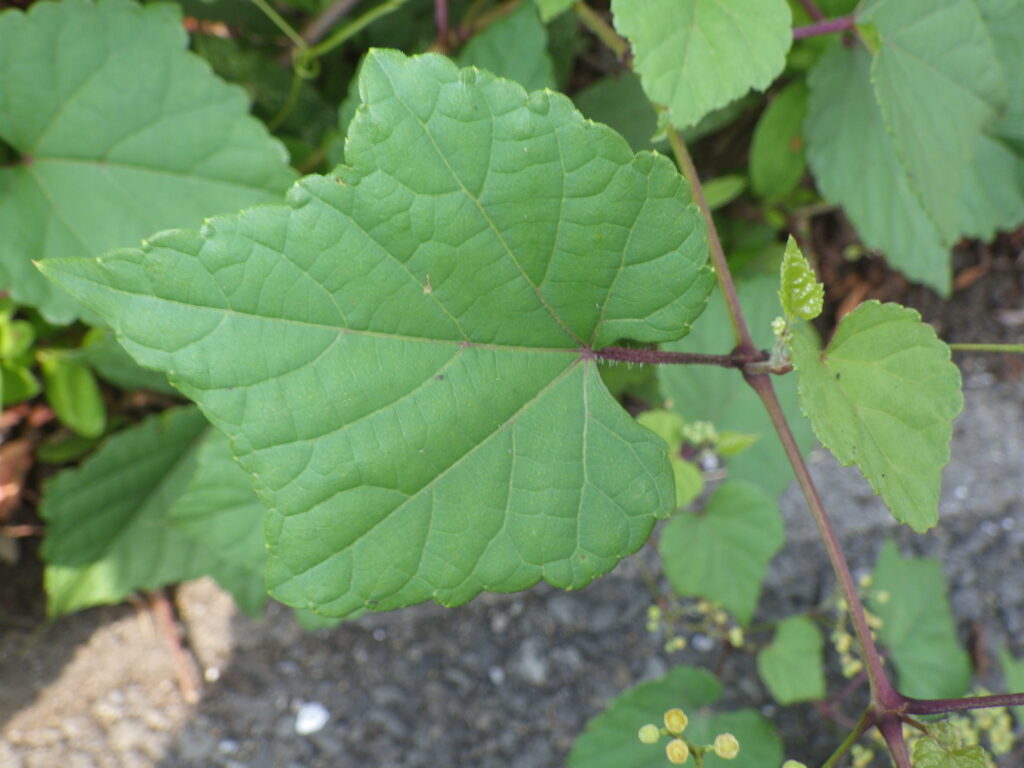
The most obvious difference is that the leaves of Cayratia japonica are "palf-foot compound leaves," meaning each leaf is divided into 3 to 9 leaflets, while the leaves of Vitis coignetiae are "simple leaves," that is, the shape of a typical, ordinary leaf.
The term "bird's foot-shaped" in "bird's foot compound leaf" refers to the way the leaf is divided, which is likened to a bird's foot (more precisely, its toenail).
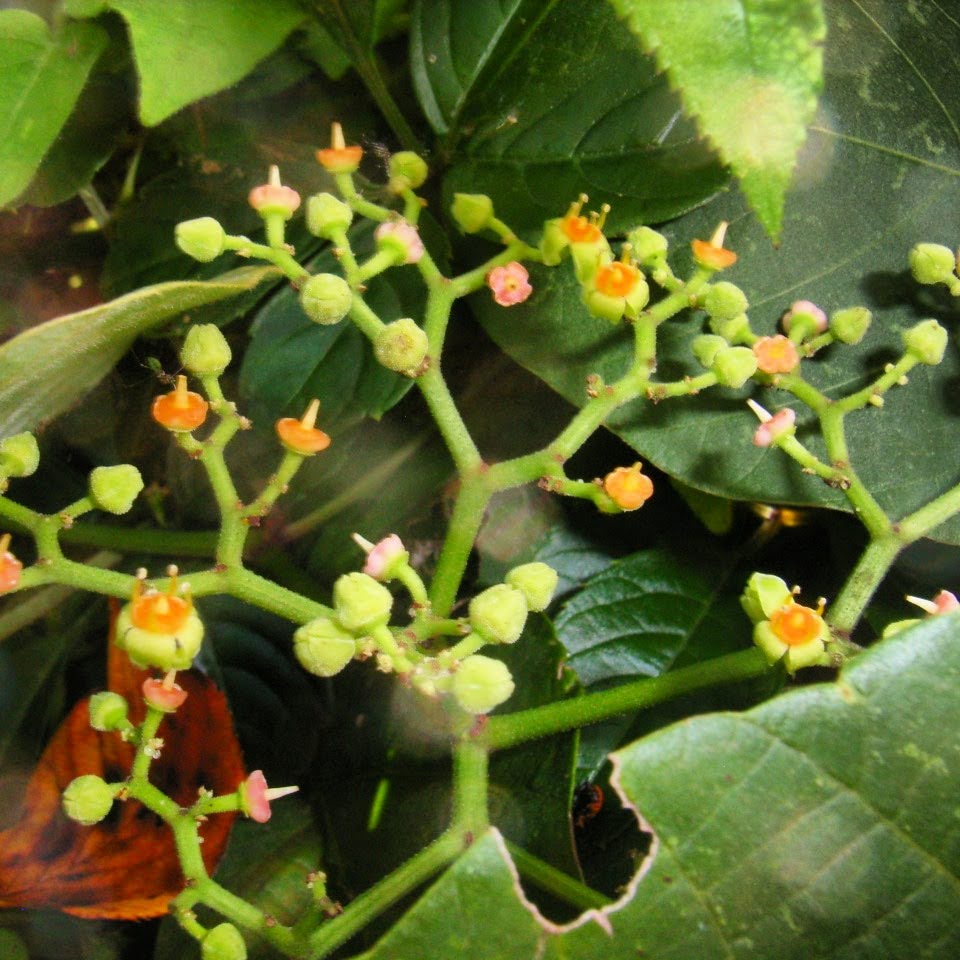
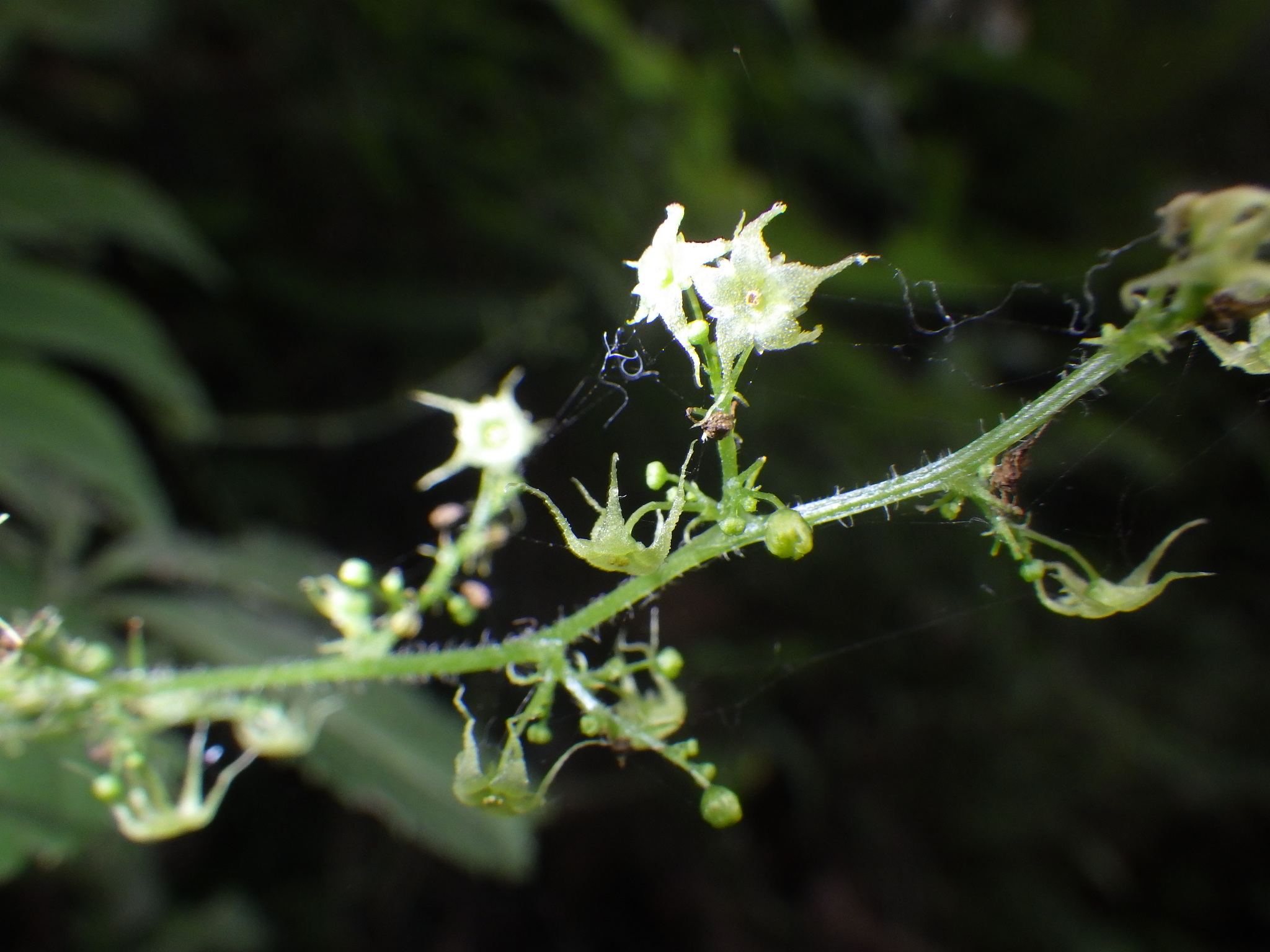
Furthermore, in Cayratia japonica, the orange part called the floral disc is prominent, while in Vitis coignetiae, it is pale green and not particularly noticeable. Therefore, they can be clearly distinguished by looking at their flowers.
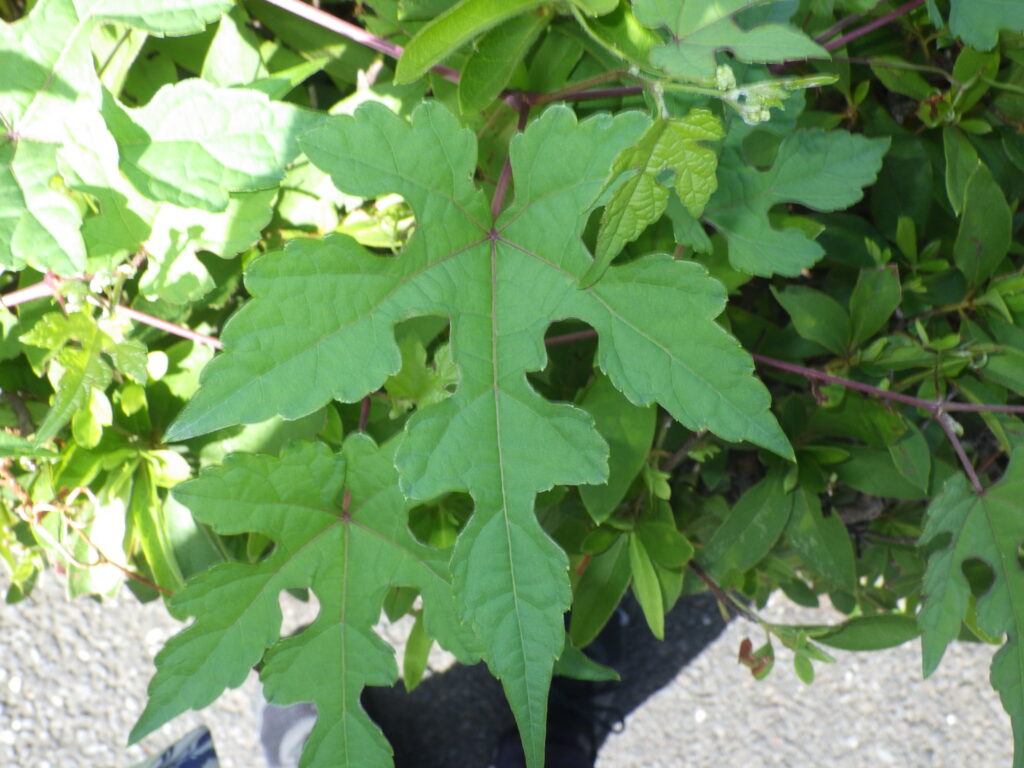
Note that wild grapes include *Vitis coignetiae* f. citrulloides There are also known varieties of wild grapes whose leaves are deeply lobed, with the lobes having indentations similar to those of a watermelon leaf. However, the leaves remain simple.
For the differences between *Cayratia japonica* and *Gynostemma pentaphyllum*, which are very similar, please see our other article.



Why is the Japanese bush vine (Cayratia japonica) being eradicated?
Japanese knotweed (Cayratia japonica) is disliked and sometimes targeted for eradication. This is due to its vigorous growth, and its Japanese name is said to originate from the fact that it "grows so much that it covers and kills bushes."
It is also called "poor man's vine," a name that is said to originate from the fact that it is often found in neglected gardens. Perhaps it is because, as a climbing plant, its tendency to twine around things is not well-liked.
While it may be an exaggeration to say that it actually kills bushes, given its nature as a climbing plant, it is highly likely that it is depriving other plants of the opportunity to perform photosynthesis.
Eradication is difficult; even if the above-ground parts are removed, the rhizomes left in the soil will sprout again from spring to summer, and the underground stems spread horizontally, making it difficult to completely remove them from the land once they have spread.
Furthermore, as will be discussed later, it attracts wasps and hornets, which may be its greatest danger. However, it is becoming clear that there are reasons related to the Japanese knotweed (Cayratia japonica) that contribute to this.
However, since it is a very common plant, it seems that we should avoid prejudice and find a way to coexist with it through appropriate measures.
On the other hand, wild grapes don't have such a bad reputation; in fact, perhaps because their fruit is interesting, they are sometimes used for horticulture. It's a strange division in opinion.
The honey dish was exclusively for Japanese honeybees!?
Both Cayratia japonica and Vitis coignetiae produce cymose inflorescences with saucer-shaped flowers. However, their colors and structures differ subtly.
While Cayratia japonica can reproduce asexually through its rhizomes, it also flowers from June to August. Its flowers are open and saucer-shaped, and it produces nectar from an orange part called the floral disc (Kakutani, 1994; Hayashi et al., 2013). The flowers are initially reddish and later change to orange. They are 5 mm in diameter and have four pale green petals, four stamens, and one pistil. After initially producing stamens, the plant undergoes a sex change and produces a pistil, a process called "protandry" to prevent self-pollination (Kakutani, 1994; Fukuhara, 2014).
Wild grapes also bloom with saucer-shaped flowers in July and August, but the flowers are 3-5 mm in diameter and have one pistil, just like the Japanese knotweed, but they differ in that they have five petals and five stamens (Hayashi et al., 2013). Also, the floral disc remains pale green.
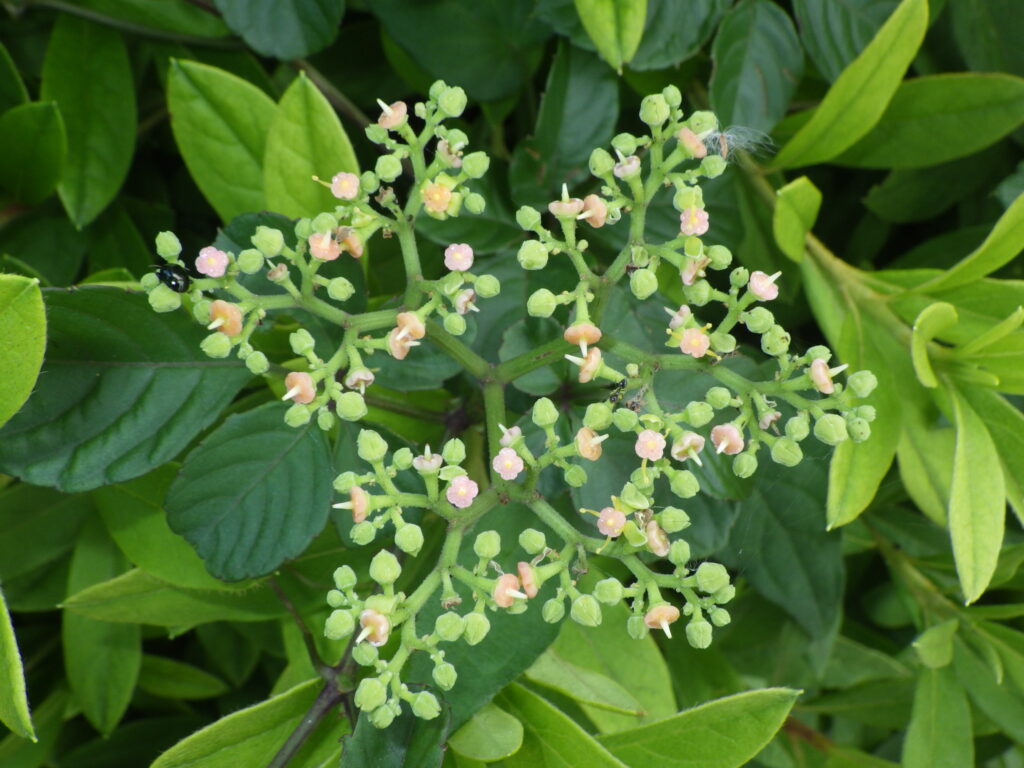

These saucer-shaped flowers appear to be specifically designed to attract certain insects. The saucer structure is not suitable for insects with straw-like mouths to lick the nectar, and even if they do, it would be far less efficient than flowers where the nectar is abundant deep inside the tube. Conversely, they would be very beneficial for insects with short mouths.
Of the two species, research has been conducted on *Cayratia japonica*, which is actually visited by insects in Japan.the resultAccording to the report, while a few insects with straw-like mouths, such as swallowtail butterflies and blue swallowtail butterflies, were observed, moths and bumblebees with long mouths were not seen at all. The majority of the insects were bees with relatively short mouths.(Kakutani et al., 1989; Kakutani, 1992; 1994)。Aside from that, only a few beetles and flies were observed.
Aside from ants, which are not considered to contribute much to pollination, the most common bee species observed was the Japanese honeybee. However, not only honeybees, but also hornets and paper wasps were the next most common.
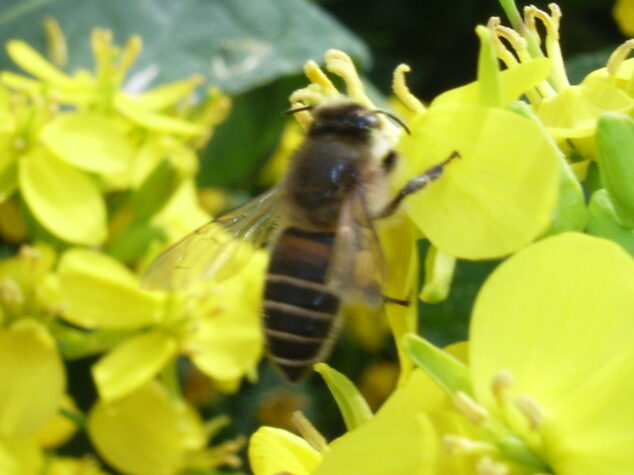
Common sense might lead one to believe that these wasps and hornets also contribute to pollination.
However, observations revealed that among all insects, only the Japanese honeybee was found to have pollen attached to it.
Furthermore, it is said that the Japanese knotweed (Cayratia japonica) also regulates the sugar content and timing of nectar secretion for the benefit of honeybees.Japanese honeybees achieve maximum nectar collection efficiency when the sugar content is 60%, and the nectar of Cayratia japonica also has a sugar content of 60%. Nectar secretion occurs only during the day, with peaks in the morning and afternoon, after which the bees reabsorb the nectar at night to prevent it from being stolen. This can be considered a highly advanced adaptation of Cayratia japonica to Japanese honeybees.
In other words, other insects are simply stealing the nectar for free (nectar robbing), and the bush vine gains nothing from them; these insects are merely there by chance.
Also, although there are no papers on wild grapes,According to Mr. Kakutani, who conducted research on this Japanese knotweed, the diurnal pattern of nectar production matched the diurnal pattern of flower visits by a bee called the rainbow bee, which is thought to be an effective pollinator (Kakutani, 2001).It is currently unknown whether the rainbow bee is a common species, but it's possible that smaller bees, similar to those that visit the wild grape, visit the flowers of the Japanese knotweed.
Did the Japanese knotweed plant hire a hornet as a bodyguard?!
However, it may be very well known to people who are familiar with the Japanese knotweed that hornets and paper wasps frequently visit it.
The bees that usually visit flowers belong to a group called honeybees, which are relatively small and often non-carnivorous. Does this unusual phenomenon of carnivorous bees visiting truly have no significance for the Japanese knotweed?
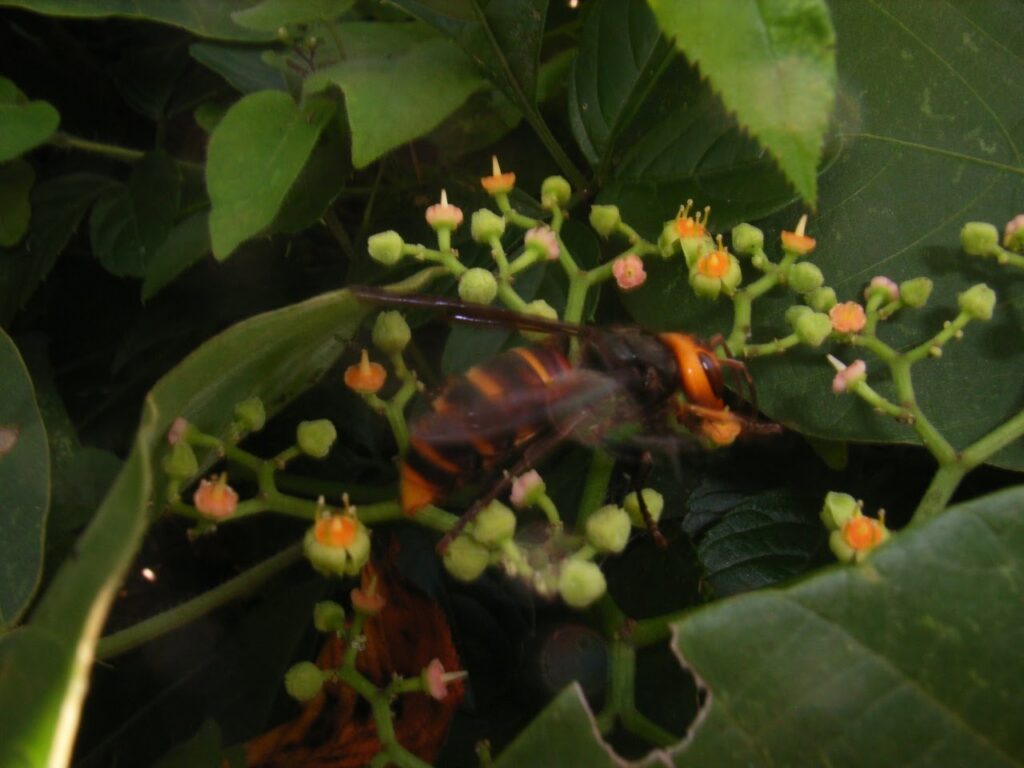
Gifu University is conducting research on this matter.According to the study, the number of carnivorous wasps on Cayratia japonica increases in August and September, but the number of lepidopteran larvae tends to decrease during that period (Kawabe et al., 2015).
This could mean that the Japanese knotweed deliberately provides nectar from its flowers to wasps, regardless of pollination, by allowing the wasps to eat caterpillars or hairy insects that feed on its leaves.This is a relationship of mutualism.
It is known that the larvae of moths such as the striped hawk moth, grape hawk moth, and small hawk moth can parasitize the Japanese bush vine (Cayratia japonica). The Japanese bush vine may be protecting itself from these moths.

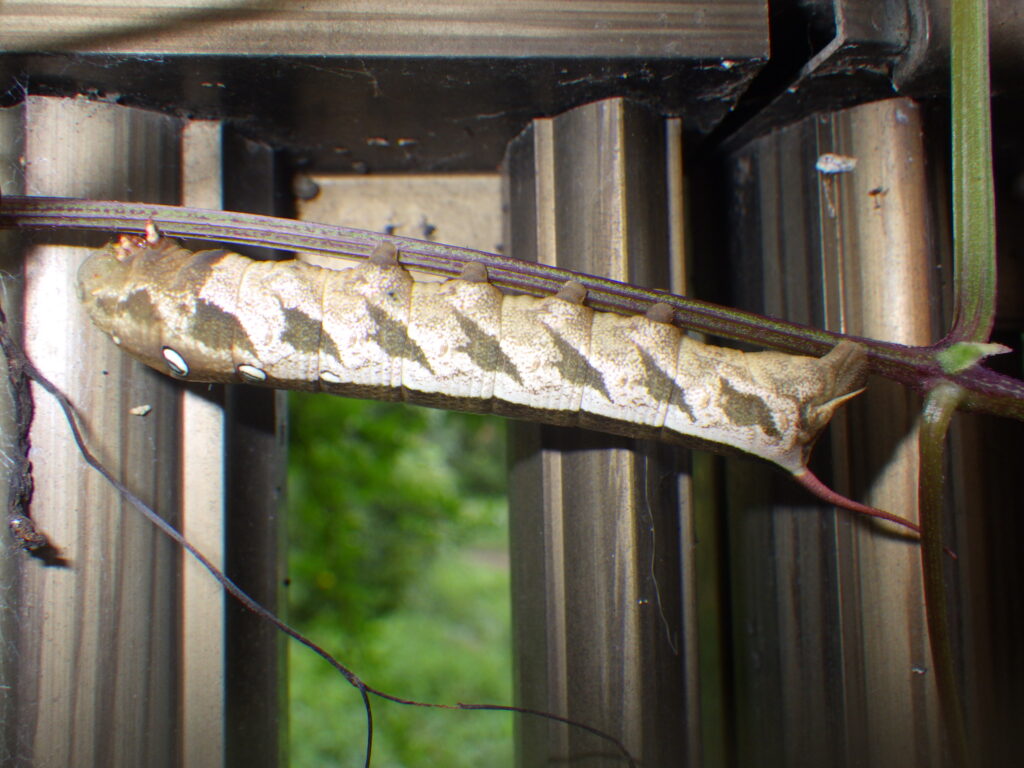
This is still in the research stage,If this is true, it could be very troublesome for humans. However, wouldn't understanding the situation from the perspective of the Japanese bush vine also be important for coexistence?
Are the fruits similar to grapes? Are they edible?
Both species produce berries. Since they belong to the grape family, this should be easy to imagine.
The fruits of Cayratia japonica are spherical, rarely somewhat rounded, and ripen to a black color (Hayashi et al., 2013). However, while the diploid variety distributed west of the Kanto region readily bears fruit, the triploid variety distributed east of the Kinki region and more common in eastern Japan does not bear fruit. Therefore, opportunities to see Cayratia japonica fruits may be rare.
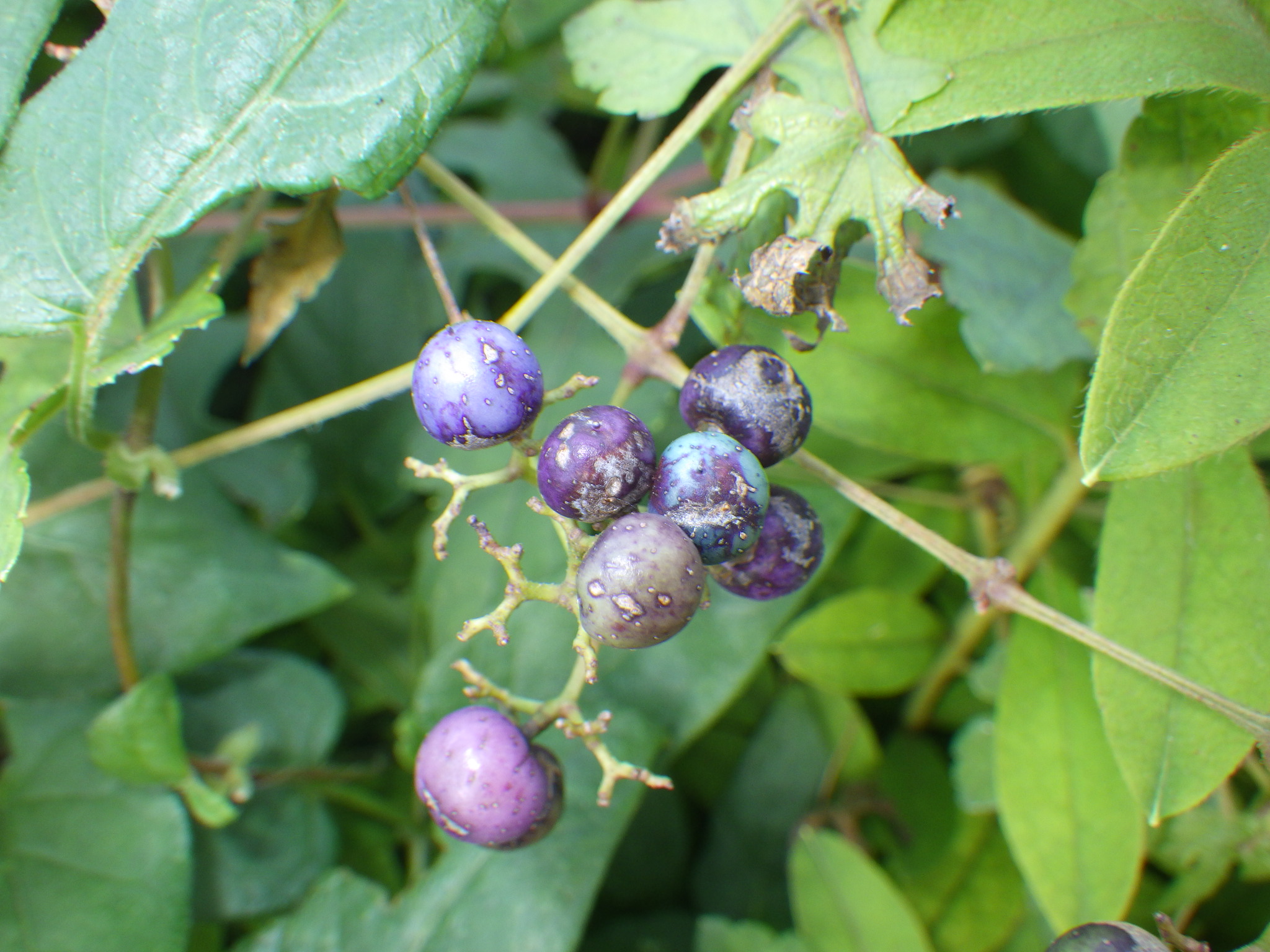
On the other hand, wild grapes can be commonly found, and their fruits are also spherical, but their color ranges from white to purple or bluish-green (Hayashi et al., 2013).
However, there are some unknowns regarding the color of wild grape fruit. These purple and bluish colors are caused by parasitic galls (insect galls) formed by the larvae of grape gall midges or grape dart wasps.There are hardly any normal fruits.There are two theories: one that it is a natural process of maturation, and another that it is a natural part of the maturation process.
Currently, no scientific research has been conducted, so it is unclear which is correct.According to someone who actually cut open the fruit and observed whether it contained larvae, there were cases where the fruit was bluish but contained no larvae, and cases where it was white but contained larvae (Hirono, 2017).
Therefore, it seems difficult to distinguish between grape galls (Grape gall midge galls) and grape wasp galls by color alone. However, since galls are said to be irregularly distorted and noticeably enlarged, it seems necessary to carefully check for differences from the surrounding fruit, not just by color.


By the way, are these fruits edible? Since they belong to the grape family, you might be expecting them to be tasty.
According to someone who has actually eaten it, the wild grape (Cayratia japonica) has been described as having "a slightly sweet taste, but it's slimy and tastes like eating the unripe, green fruit of the wild grape (Vitis coignetiae)" (Waki, 2011).
Also, many field guides mention wild grapes.It tastes awful, I can't eat it.It is said that this assessment is related to galls. However, it is unclear whether this assessment pertains to galls.
Even if it's not tasty to humans, it's a valuable food source for wild animals, and for the Japanese knotweed (Cayratia japonica), it's an important means of seed dispersal. What kinds of wild animals eat it?
The only record we could find of Cayratia japonica being eaten by birds was (Takatsuki, 2021).
On the other hand, there are records of wild grapes being eaten by birds (Takatsuki, 2021), but there are also records of mammals such as Asiatic black bears, martens, and raccoons eating the fruit (Koike and Masaki, 2008). Surprisingly, it may be a fruit that appeals to both mammals and birds. It's strange that a fruit that should taste bad to humans is so popular.
It's still unclear whether the Japanese knotweed (Cayratia japonica) truly targets only birds, but how the differences in color and taste between the two species are perceived by wild mammals and birds remains an intriguing mystery.
References
Fukuhara, Tatsuto. 2014. Huh? It's different from yesterday! Sex change in flowers. Nature Conservation 542: 22-23. ISSN: 0386-4138., https://what-we-do.nacsj.or.jp/2014/10/1290/
Hayashi, Yasaka, Kadota, Yuichi, and Hirano, Takahisa. 2013. Yamakei Handy Illustrated Guide 1: Wildflowers (Revised and Expanded New Edition). Yama-kei Publishers, Tokyo. 664pp. ISBN: 9784635070195
Hirono, Ikuo. 2017. Are the diverse colors of wild grape fruits due to galls? What color are normal fruits, anyway? Continued: A Walk Through Trees 229. A Notebook of Trees. https://kinomemocho.com/sanpo_nobudo.html
Kakutani, Takehiko. 1992. Nectar secretion of Cayratia japonica and flower-visiting behavior of honeybees. Honeybee Science 13: 27-34. ISSN: 0388-2217
Kakutani, Takehiko. 1994. Pollination ecological studies on pollinating insect communities: Community composition viewed from nectar secretion patterns and interinsect competition. [Doctoral dissertation, Kyoto University]. https://doi.org/10.11501/3096539
Kakutani, Takehiko. 2001. Kakutani Home. https://www.museum.kyoto-u.ac.jp/english/staff/kakutani/kakutanij.html
Kakutani, T., Inoue, T., & Kato, M. 1989. Nectar secretion pattern of the dish-shaped flower, Cayratia japonica (Vitaceae), and nectar utilization patterns by insect visitors. Population Ecology 31(2): 381-400. ISSN: 1438-3896, https://doi.org/10.1007/BF02513213
Kanagawa Prefecture Flora Survey Association. 2018. Kanagawa Prefecture Flora 2018 (Electronic Edition). Kanagawa Prefecture Flora Survey Association, Odawara. 1803pp. ISBN: 9784991053726
Kawabe, Honami; Furukawa, Yukiko; Kawakubo, Nobumitsu; and Tsuchida, Koji. 2015. Diversity of insects that nectar-feed on Cayratia japonica: Ecological functions of hornet visits revealed. Abstracts of the Annual Meeting of the Ecological Society of Japan 62: PA1-149. https://www.esj.ne.jp/meeting/abst/62/PA1-149.html
Koike, Shinsuke & Masaki, Takashi. 2008. A literature review of the use of woody plant fruits by three species of carnivorous plants south of Honshu. Journal of the Japanese Forestry Society 90(1): 26-35. ISSN: 1349-8509., https://doi.org/10.4005/jjfs.90.26
Takatsuki, Seiki. 2021. Seed dispersal by birds to persimmon trees on the Azabu University campus. Azabu University Journal 32: 1-9. ISSN: 1346-5880., https://az.repo.nii.ac.jp/records/5404
Waki here. October 19, 2011. Wild Cayratia japonica berries (Vitaceae family). What kind of place is Etajima...?. http://wakiwakidonn.blog97.fc2.com/blog-entry-2781.html
Source
This article is a significantly expanded version of the one included in the following book.