plant

Sponsored Link
plant

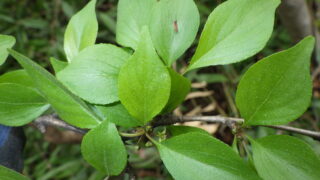
What are the differences between Rhamnus japonica, Ilex serrata, and Ilex serrata? We'll explain how to distinguish between similar species! What are the structures of their flowers and fruits?

While *Rhamnus japonica* is a relatively rare deciduous shrub in Japan, it is often compared to *Rhamnus japonica* and *Rhamnus japonica var. japonica*. The similar names and morphological features, such as the drupe fruit and the clustering of flowers and fruits in the leaf axils, make it difficult to distinguish from *Rhamnus japonica var. japonica*, even if you haven't seen it before...
plant

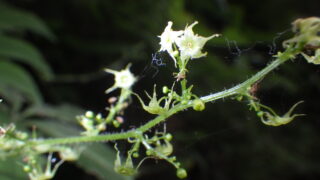
What are the differences between Solanum lyratum, Solanum sarmentosum, Solanum sarmentosum, and Solanum jasminoides? We'll explain how to distinguish between similar species! What are the structures of their flowers and fruits?

Solanum lyratum, Solanum sarmentosum, Solanum japonica, and Solanum jasminoides all belong to the Solanaceae family and are four species that share the characteristic of being "climbing plants." Their basic flower and fruit structures are the same, which is why they are often confused. However, these four species have clear differences...
plant

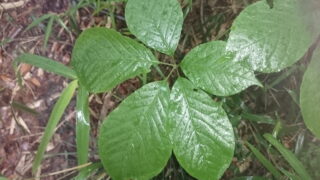
What are the differences between Gynostemma pentaphyllum, Cayratia japonica, and Hydrangea macrophylla (Amacha)? We'll explain how to distinguish between similar species! What are their uses? What is the structure of their flowers and fruits?

Amachazuru is a perennial vine that grows in mountainous areas and thickets in Japan, but it is often confused with Japanese knotweed (Yabugarashi) and amacha (sweet tea). Both Amachazuru and Yabugarashi have similar leaves (palm-foot compound leaves) and fruits (berries), and they are quite similar...
plant

What are the differences between Aralia elata, Kalopanax septemlobus, Kalopanax septemlobus, and Aralia elata? We'll explain how to distinguish between similar species! What are their uses? What is the structure of their flowers and fruits?

ウコギ・コシアブラ・ハリギリ・タカノツメはいずれもウコギ科の落葉樹であるという点が共通しており、花序・花・果実はよく似ており、若葉が食用とされる点も同じです。そのため混同することがあるかもしれません。しかし、葉が複葉か単葉かや、枝の刺を確認...
plant

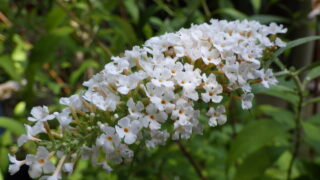
What are the differences between Buddleja japonica, Buddleja davidii, Buddleja stolonifera, and Buddleja buergeriana? We'll explain how to distinguish between similar species! Butterflies aren't the only visitors to the flowers! Are the seeds dispersed by the wind?

Buddleja japonica, Buddleja stolonifera, Buddleja gracilis, and Buddleja davidii all belong to the Buddleja genus of the Scrophulariaceae family. Their most distinctive feature is the inflorescence they produce at the top of their stems, each flower possessing a long corolla tube. Buddleja stolonifera is particularly popular in horticulture due to its strong fragrance...
plant

ヘクソカズラとハマサオトメカズラの違いは?変種・品種は?似た種類の見分け方を解説!悪臭の成分は?花は小型ハナバチ専用だった!?果実は鳥が大好き?

ヘクソカズラとハマサオトメカズラはいずれもアカネ科ヘクソカズラ属でつる性の草本です。葉などをつぶすと、強い悪臭を放つ点が有名ですが、2種の葉の全体的な形は似ており、花は全く同じです。分類が混乱していることも相まって、混同されることがあるかも...
plant

What's the difference between rosemary and Westringia (Australian rosemary)? How is it different from lavender? We'll explain how to distinguish between similar species! Do bees love the flowers? Ants are both allies and enemies to the fruit!?

Rosemary (Rosemary) and Westringia (Australian rosemary) both belong to the mint family and have similar names. They are commonly planted in Japan as ornamental plants, and their leaves and flowers look quite similar. However, rosemary is native to Europe and North Africa, while Australian rosemary...
plant

What are the differences between the Japanese linden (Tilia japonica) and the large-leaved linden (Tilia japonica)? What are the differences between the Japanese linden (Tilia japonica) and the Indian linden (Tilia japonica)? We'll explain how to distinguish between similar species! What is the secret to attracting so many bees? Is it the scent? What is the role of the bracts on the fruit?

Both the Japanese linden (Tilia japonica) and the large-leaved linden (Tilia japonica) are deciduous trees belonging to the genus Tilia in the Malvaceae family. Although they have different origins, they are both cultivated in cities throughout Japan, and their leaf shapes are very similar, so someone who has never seen them might not be able to distinguish between them. However, the size of the leaves, as well as the petioles...
plant

What are the differences between *Lampranthus erythrosora* and *Lampranthus sanguineus* (cold-hardy *Lampranthus sanguineus*)? We'll explain how to distinguish between similar species! Why are the leaves "squishy"? What insects visit the pink flowers? Do the fruits swell when humidity increases?

The ice plant *Lampranthus* and the hardy ice plant *Lampranthus 'Hanaranzan'* are native to South Africa and are two extremely popular ornamental plants in Japan. You'll see them everywhere you go. These succulents, with their plump leaves and showy pink flowers, are quite unusual for Japan...
plant

What's the difference between Galinsoga parviflora and Galinsoga stolonifera? We explain how to distinguish between similar species! Only hoverflies were visiting the flowers!? The seeds not only travel on the wind, but they also stick to surfaces!?

Both Galinsoga parviflora and Galinsoga stolonifera belong to the genus Galinsoga in the Asteraceae family. Although native to the Americas, they are now extremely common weeds in disturbed areas of Japan. The differences in the shape of their flowers are subtle from a distance, and it may be difficult to distinguish them if you only vaguely remember them. However...
Sponsored Link