plant

Sponsored Link
plant

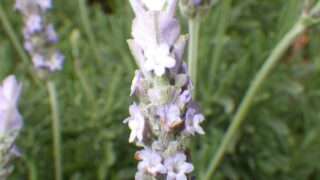
What are the differences between English lavender, French lavender, and Dentata lavender? How to distinguish between similar varieties! What are the effects of their essential oils? Why are there buds mixed in with the flowers? Were the seeds dispersed by sheep?!

Lavender is extremely popular in gardening, known for its purple flowers and renowned for its medicinal properties. However, few articles properly explain the differences between various types of lavender. The visual differences in lavender are not simply variations in "cultivar," but rather entirely different species. Here are three representative types...
plant

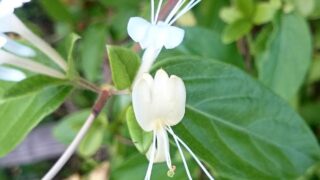
What are the differences between honeysuckle, dwarf honeysuckle, beach honeysuckle, and golden honeysuckle? We'll explain how to distinguish between similar species! Why do their flowers have different shapes? Why do some bloom in the evening?

Japanese honeysuckle (Lonicera japonica) is the most common species in Japan, frequently found both in the wild and in gardens. Several closely related species are known, and four species—Japanese honeysuckle (Lonicera japonica), Japanese honeysuckle (Lonicera japonica var.
plant

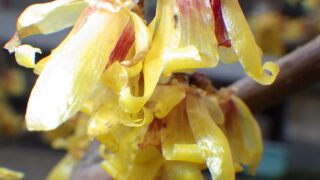
What are the differences between wintersweet (Chimonanthus praecox) and wintersweet (Chimonanthus praecox var. japonica)? Is it poisonous? Is there a reason why wintersweet flowers bloom in the middle of winter? The wintersweet's minority strategy!

Wintersweet (Chimonanthus praecox) is native to China and is used as a garden tree in Japan. Although not widely known, its seeds and leaves are poisonous, so caution is necessary. Wintersweet and Chimonanthus praecox can be distinguished by the color of their flowers. Wintersweet blooms in the middle of winter, when other plants are not in bloom...
plant

What are the differences between Portulaca grandiflora and Portulaca triangularis? How to distinguish between similar species! Where is it native? Why is it called "three o'clock grass"? There were hardly any insects visiting the flowers! Is it true that the fruit "bursts open" to scatter the seeds?

Portulaca grandiflora and Portulaca triangularis are two species of Portulaca grandiflora that produce pink flowers. Both are found in Japan as invasive species, either as cultivated plants or through escaped growth. Both species are native to the Americas. These two species differ in many ways, including the arrangement of the inflorescence, the presence or absence of ridges on the flower stalk, the size of the petals, and the shape of the stigma...
plant

What are the differences between Arisaema ringens, Arisaema serratum, and Arisaema serratum? The flowers have a terrifying life cycle: they trap fungus gnats for pollination! Are the fruits a favorite of birds?

Arisaema ringens, Arisaema serratum, and Arisaema serratum are representative species within the Arisaema genus. The Arisaema genus is extremely similar in shape, making it a difficult group to distinguish. Frankly speaking, distinguishing between species in the Arisaema genus is extremely difficult. Even in terms of classification, regional variations...
plant

What's the difference between Enokigusa and Enoki? We'll explain how to distinguish between similar species! What are Nagaba Enokigusa and Velvet Enokigusa? These unassuming flowers are pollinated in two ways!?

While *Enokigusa* (Japanese hackberry) is a common species found along roadsides and in fields in flat areas, those unfamiliar with it may easily confuse it with the Japanese hackberry (*Enoki*), as its name suggests. Although they share some similarities, such as leaf veins, serrations, and pointed tips, their classifications are fundamentally different, with a major difference being whether they are herbaceous or woody plants...
plant

What's the difference between Japanese knotweed (Cayratia japonica) and wild grape (Vitis coignetiae)? We explain how to distinguish between similar species! Why are they exterminated? Are they actually edible? Were the wasps that visit the saucer-shaped flowers hired as bodyguards?!

Japanese knotweed (Cayratia japonica) and wild grape (Vitis coignetiae) are among the most common climbing plants in the grape family. While they belong to the same family and are both climbing plants, they can be easily distinguished by the shape of their leaves and flowers. Japanese knotweed is a target for eradication due to its strong reproductive capacity, impact on the landscape, and its ability to attract bees...
plant

What are the differences between Hibiscus mutabilis (Fuyou) and Hibiscus sakishimaensis? We explain how to distinguish between similar species! Do slight differences in flower shape affect pollination strategies?

Both Hibiscus mutabilis and Hibiscus sakishimaensis belong to the Hibiscus genus of the Malvaceae family. They produce large, beautiful flowers, and when naturalized, they both grow in disturbed locations, making them difficult to distinguish. The difference can be achieved by carefully observing the leaves and stellate hairs. There are also slight differences in flowering period and flower color. Flowers...
plant

What are the differences between foxglove (Digitalis) and comfrey? We'll explain how to distinguish between similar species! Are they poisonous? Did foxglove flowers undergo unique evolution in America?

Digitalis (foxglove) and comfrey are two well-known poisonous horticultural species native to Europe. Their leaves are very similar; the upper leaves lack petioles, while the lower leaves have petioles and wings (where the leaf blade extends onto the stem). Comfrey, once edible, was often mistaken for digitalis...
plant

What are the differences between Monotropa uniflora, Monotropa uniflora var. alba, and Monotropa japonica? We explain how to distinguish between similar species! Why did they lose photosynthesis? What insects visit the flowers? Cockroaches are responsible for seed dispersal!?

Monotropa uniflora, Monotropa uniflora var. japonica, and Monotropa uniflora are three plant species that grow in the dark forest floor where photosynthesis has been lost. They lack normal leaves, instead having reduced scale-like leaves. They have only stems and flowers, and their entire bodies are white due to the absence of chlorophyll. They are known as mycoheterotrophic plants, but the distinction is not always clear...
Sponsored Link