plant

Sponsored Link
plant

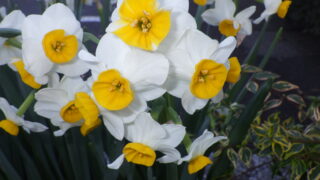
There are differences between plumeria and Indian jasmine! We'll explain how to distinguish between similar species! When did it arrive in Hawaii? Is it poisonous? Were the flower's flashy colors and scent an evolutionary adaptation to deceive moths?!

Plumeria is a popular garden plant known for its vibrant, large flowers and fragrance, symbolizing the tropics. However, it is also known as Indian jasmine. The terms "plumeria" and "Indian jasmine" may have different meanings. In Japan, "Indian jasmine" often refers to a single, common variety...
plant

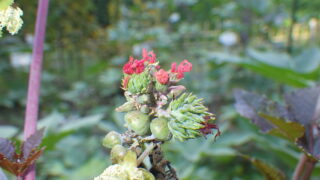
How toxic is castor bean? What are its components? What are the uses of castor oil? Why is it considered safe despite being toxic? Its flowers are pollinated by both wind and insects! Its seeds are dispersed automatically and by ants!

Castor bean is a perennial plant said to originate from northeastern Africa, cultivated worldwide for commercial and ornamental purposes, and sometimes naturalized. It's almost impossible to mistake it for anything else. Its seeds, called "himashi," are rich in oil, and the extracted "castor oil" is used in cosmetics, shampoos, soaps, and more...
plant

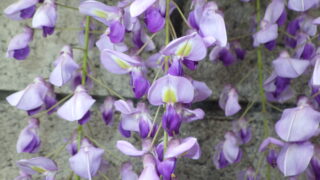
What are the differences between wisteria, mountain wisteria, and summer wisteria? We'll explain how to distinguish between similar species! Why is it so beloved by the Japanese? Were the flowers originally for bumblebees? Do wisteria pods pop and scatter?

Wisteria floribunda, mountain wisteria, and summer wisteria remain popular legumes, so much so that trellises are still provided for them. However, distinguishing between the three species can be difficult until you become familiar with them. Examining their flowering period and the direction in which their vines twine is crucial for identification. Wisteria has a long history, and is even mentioned in the oldest document in Japan, the "Kojiki," which dates back to the Nara period...
plant

What are the differences between *Gnaphalium uliginosum*, *Gnaphalium affine*, *Gnaphalium erythrorhizon*, and *Gnaphalium affine*? We'll explain how to distinguish between similar species! What are the newly named *Gnaphalium uliginosum* and *Gnaphalium purpurea*?

Gnaphalium affine, Gnaphalium affine, Gnaphalium erythrorhizon, and Gnaphalium uliginosum are perennial herbs that can be seen in many urban areas these days, but they were only confirmed in Japan during the Showa era. All of them share the common features of having spike-like inflorescences with leaf-like bracts attached to various points on the spike, making them difficult to distinguish without careful observation...
plant

What species are similar to Macleaya cordata? Is it toxic? What types of alkaloids does it contain? Is it medicinal? Did the flower's "petals" have been genetically altered to resemble "stamens"?

Macleaya cordata is a perennial herb that grows in wastelands and roadsides, and can occasionally be seen in urban areas. It belongs to the poppy family, and while no similar plants have been identified in Japan, several varieties are known, differing slightly in leaf morphology. The toxicity of Macleaya cordata is its most well-known characteristic; cutting the stem...
plant

What are the differences between Japanese holly, golden holly, bean holly, and boxwood? We'll explain how to distinguish between similar species! Why are the flowers so plain to humans but so popular with insects? Do they rely on birds for seed dispersal?

Japanese holly (Ilex crenata) is well-known for being commonly cultivated in gardens as a hedge, but it is originally a species that grows wild in Japan. While distinguishing it from other varieties is not particularly difficult due to its distinctive leaves, there are numerous cultivated varieties, which can make identification a little challenging. Here, we will discuss...
plant

What are some species similar to nasturtiums (nasturtiums)? Are they edible? What are their nutritional values? What is their history? Were the flower's depressions used as resting places for beetles?

Nasturtiums (also known as nasturtiums or trumpet japonica) are native to Peru and are cultivated in Japan primarily as ornamental plants, either annuals or perennials. They are popular for their distinctive flowers and unusual leaves. While they have many Japanese names, I personally don't recommend calling them simply "nasturtiums" as it can be confusing...
plant

What are the differences between mustard greens, rapeseed, European rapeseed, and black mustard? How do their uses differ? Why did they evolve to be spicy? Brassica plants, essential for Japanese mustard and salad oil, have increased fruit production thanks to insect visits!

Brassica napus, rapeseed, European rapeseed, and black mustard are four species of yellow flowers that bloom in spring and belong to the Brassicaceae family. Their flower shapes are almost identical, and their habitats are also nearly the same. Furthermore, there are many closely related species, making identification extremely confusing. This complexity is such that even researchers sometimes misidentify them. Recent research has revealed...
plant

What are the differences between Epimedium grandiflorum and Epimedium sempervirens? What are the different species in the Epimedium genus? Why do the flower shapes and colors differ depending on the species? What kinds of insects visit the flowers?

Both Epimedium grandiflorum and Epimedium sempervirens are wild species famous for their anchor-shaped flowers, and are also known as cultivated varieties due to their unique flower shapes. Because the differences are so subtle when focusing solely on flower shape, distinguishing them can be difficult. They rarely coexist in nature...
plant

What are the differences between Clerodendrum trichotomum, Clerodendrum sibiricum, Clerodendrum humile, and Clerodendrum sibiricum? We'll explain how to distinguish between similar species! Do the leaves really smell? Do the flowers rely on both moths and butterflies for pollination?

Clerodendrum trichotomum, named for the foul odor of its leaves, is a tree distributed in East Asia. Several varieties and closely related species are known. These can be distinguished mainly by the length of the stamens on the flowers and the amount and shape of the hairs on the leaves. While the leaves do have an odor, not everyone finds it smelly; some people may find it unpleasant...
Sponsored Link