taxonomy

Sponsored Link
plant

What are the differences between Buddleja japonica, Buddleja davidii, Buddleja stolonifera, and Buddleja buergeriana? We'll explain how to distinguish between similar species! Butterflies aren't the only visitors to the flowers! Are the seeds dispersed by the wind?

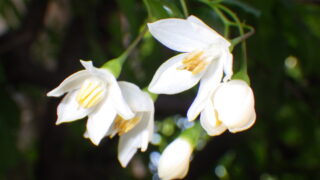
Buddleja japonica, Buddleja stolonifera, Buddleja gracilis, and Buddleja davidii all belong to the Buddleja genus of the Scrophulariaceae family. Their most distinctive feature is the inflorescence they produce at the top of their stems, each flower possessing a long corolla tube. Buddleja stolonifera is particularly popular in horticulture due to its strong fragrance...
plant

What's the difference between rosemary and Westringia (Australian rosemary)? How is it different from lavender? We'll explain how to distinguish between similar species! Do bees love the flowers? Ants are both allies and enemies to the fruit!?

Rosemary (Rosemary) and Westringia (Australian rosemary) both belong to the mint family and have similar names. They are commonly planted in Japan as ornamental plants, and their leaves and flowers look quite similar. However, rosemary is native to Europe and North Africa, while Australian rosemary...
plant

What are the differences between *Melophyllum uliginosum* and *Melophyllum okinawaense*? How do they differ from *Tricholoma cucumeroides* species? We'll explain how to distinguish between similar species! Is the pollination method unknown? Do birds like these cute fruits? Are they edible for humans?

Both *Melo serrulata* and *Melo okinawaensis* belong to the Cucurbitaceae family and are climbing annuals. Morphologically, they share similarities, including small flowers and smooth, hairless fruit surfaces. Furthermore, Google search suggestions are sometimes incorrect, making it difficult to distinguish between them without prior observation...
plant

What are the differences between dock, long-leaved dock, rough dock, and Ezo dock? How do you distinguish them from sorrel? We'll explain how to tell similar species apart! Did they rely on wind for pollination? Seed dispersal methods were more diverse than you might imagine!

Rumex japonicus, Rumex longifolius, Rumex crispus, and Rumex japonicus all belong to the genus Rumex in the family Polygonaceae. Originally, only Rumex japonicus was found in Japan, but multiple species have invaded and become extremely common weeds. They also share a common preference for disturbed soil, and are often found growing together...
plant

What species resembles the egret orchid? The flowers are visited by hawk moths! And not only that, tiny insects called thrips also play an important role in pollination! What is the "Egret Orchid Legend"?

The egret orchid (Habenaria radiata) is a perennial plant that inhabits slightly damp areas and is a popular choice for gardening. Unfortunately, due to the decline of its wetland habitat and illegal harvesting, it is listed as near-threatened on the Ministry of the Environment's Red List. There are many closely related species, and many that share the name "egret orchid," but this particular species has a flattened stem resembling a heron...
plant

What are the differences between Greater Celandine and Japanese Kerria? We'll explain how to distinguish between similar species! Are they poisonous? Why do Greater Celandine flowers bloom at an angle?

Both *Chelidonium majus* and *Cornus kousa* are wild species of the poppy family, composed of four yellow petals, so it can be difficult to distinguish between them. Their leaves can be differentiated by the presence or absence of serrations on the leaflets, and their flowers are almost identical, but there are differences in the arrangement of the inflorescence and the shape of the stamens and pistils...
plant

What are the differences between Veronica persica, Veronica polifolia, Veronica undulata, and Veronica polifolia? We'll explain how to distinguish between similar species! Has Veronica persica been displacing Veronica polifolia?

Veronica persica, Veronica polifolia, Veronica undulata, and Veronica polifolia are four blue wild species found in fields and roadsides around the world. They are representative early spring flowers in Japan, and may be among the first plants whose names you learn when you become interested in weeds. However, all of them have blue to purple flowers, and their leaves...
plant

There are differences between plumeria and Indian jasmine! We'll explain how to distinguish between similar species! When did it arrive in Hawaii? Is it poisonous? Were the flower's flashy colors and scent an evolutionary adaptation to deceive moths?!

Plumeria is a popular garden plant known for its vibrant, large flowers and fragrance, symbolizing the tropics. However, it is also known as Indian jasmine. The terms "plumeria" and "Indian jasmine" may have different meanings. In Japan, "Indian jasmine" often refers to a single, common variety...
plant

How toxic is castor bean? What are its components? What are the uses of castor oil? Why is it considered safe despite being toxic? Its flowers are pollinated by both wind and insects! Its seeds are dispersed automatically and by ants!

Castor bean is a perennial plant said to originate from northeastern Africa, cultivated worldwide for commercial and ornamental purposes, and sometimes naturalized. It's almost impossible to mistake it for anything else. Its seeds, called "himashi," are rich in oil, and the extracted "castor oil" is used in cosmetics, shampoos, soaps, and more...
plant

What are the differences between wisteria, mountain wisteria, and summer wisteria? We'll explain how to distinguish between similar species! Why is it so beloved by the Japanese? Were the flowers originally for bumblebees? Do wisteria pods pop and scatter?

Wisteria floribunda, mountain wisteria, and summer wisteria remain popular legumes, so much so that trellises are still provided for them. However, distinguishing between the three species can be difficult until you become familiar with them. Examining their flowering period and the direction in which their vines twine is crucial for identification. Wisteria has a long history, and is even mentioned in the oldest document in Japan, the "Kojiki," which dates back to the Nara period...
Sponsored Link