Living things

Sponsored Link
plant

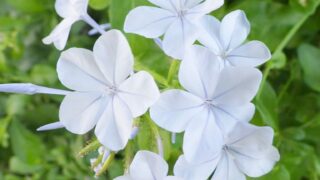
What are the differences between Plumbago auriculata and Plumbago prunifolia? We explain how to distinguish between similar species! Are there two types of stamen length? Only insects with long mouths can suck nectar from the flowers!?

Plumbago (Plumbago auriculata) and Plumbago rhododendron are two horticultural varieties of the Plumbaginaceae family that produce somewhat unusual blue flowers. In Japan, they are cultivated in gardens for ornamental purposes, and are easily confused due to their similar names, blue flowers, and similar flower shapes. However, their classification is based on their genus level...
plant

What are the differences between Japanese wax tree (Rhus sylvestris), Japanese lacquer tree (Rhus trichocarpa), and Japanese lacquer tree (Rhus trichocarpa)? We explain how to distinguish between similar species! Why do they cause rashes? Why was Japanese lacquer tree used as a raw material for Japanese candles? What birds in nature like them? Did autumn foliage play a role?

Japanese wax tree (Rhus sylvestris), Japanese lacquer tree (Rhus trichocarpa), and Japanese lacquer tree (Rhus trichocarpa) all belong to the Rhus genus and are relatively common even in urban areas. They are similar species often seen in gardens and along roadsides, characterized by their odd-pinnately compound leaves. Distinguishing between them is difficult, but careful observation of the leaves is essential. The number of leaflets and the degree of hairiness are major clues...
plant

What are the differences between *Lespedeza bicolor* and *Robinia pseudoacacia* (black locust)? We'll explain how to distinguish between these similar species! Why are they considered invasive species of concern? The two species have contrasting flowers and fruits!

Black locust and black locust are both members of the legume family, have odd-pinnately compound leaves composed of numerous leaflets, and are often confused with each other because they are used for greening and naturalize in similar environments. In Japan, both are classified as invasive alien species (formerly designated as species requiring caution) due to their potential to cause damage to ecosystems. The difference between these two species is the presence or absence of thorns...
plant

What are the differences between Trachelospermum asiaticum, Trachelospermum asiaticum, and Trachelospermum asiaticum? We'll explain how to distinguish between similar species! Is it historically true that the name originates from "Fujiwara no Teika"? What is the ecological reason why they bloom and emit a fragrance in the evening?

Trachelospermum asiaticum and Trachelospermum asiaticum are climbing plants that can be widely found in Japan, from forests to urban areas, including cultivated varieties. They can be distinguished by the hairs on the underside of their leaves and the length of their flower tubes. They have been widely known in Japan since the time of the writing of the Kojiki, and their current names are derived from "fuji" (wisteria)...
plant

What's the difference between crape myrtle and striped crape myrtle? We explain how to distinguish between similar species! Did you know that flowers use false pollen as bait to successfully pollinate?! An amazing tactic to deceive bees! Seed dispersal isn't just by wind?!

Both crape myrtle (Lagerstroemia indica) and Japanese crape myrtle (Lagerstroemia indica) are commonly planted in Japan and can be seen in many places, even in urban areas. While their smooth bark makes them easy to distinguish from other species, the two species are so similar in morphology that they are often confused...
plant

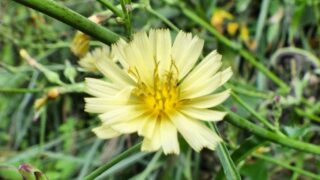
What are the differences between Bupleurum falcatum and Bupleurum chinense? We'll explain how to distinguish between similar species! Why are they used in traditional Chinese medicine? Why are they endangered? Do flies come to the flowers to lick the nectar?

Bupleurum falcatum and Bupleurum chinense are both yellow-flowered plants belonging to the Apiaceae family that grow in sunny grasslands, so it can be difficult to distinguish between them. The difference lies in whether the base of the stem leaves clasps the stem or not. While it may not be possible to distinguish them by the shape of the flowers, there are differences in the shape of the involucral bracts...
plant

What are the differences between trumpet vine and American trumpet vine? What are the differences between it and bellflower? We'll explain how to distinguish between similar species! Is it really non-toxic and actually poisonous?! Did they follow separate evolutionary paths in the Old World and the New World?!

The trumpet vine (Campsis grandiflora), American trumpet vine (Campsis radicans), and bellflower (Campsis lanceolata) are three species of climbing horticultural plants native to North America, commonly used as garden trees and for landscaping. Distinguishing between them is easy if they are flowering; if that's not possible, you'll need to examine the underside of the leaves closely, although the differences are minimal...
plant

What are the differences between *Salvia japonica*, *Salvia japonica*, *Salvia japonica*, and *Salvia japonica var. alpina*? We'll explain how to distinguish between similar species! Did the flowers fit snugly onto the bees, leading to successful pollination?

Salvia japonica, Salvia japonica, Salvia japonica in autumn, and Salvia japonica in mountain are all members of the Salvia genus, known as wildflowers of Japan, but their similar names can sometimes lead to confusion. These similarly named Salvia species can be distinguished by carefully observing the structure of their corollas, stamens, and leaves...
plant

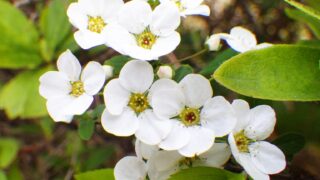
What are the differences between Spiraea thunbergii and Prunus serrulata? We'll explain how to distinguish between similar species! Is the claim that they're related to Sen no Rikyu a myth? What role do the green parts of the flowers play?

Spiraea thunbergii and Prunus serrulata are native to China, and Spiraea thunbergii in particular is commonly cultivated in tea gardens and ordinary gardens in Japan. Prunus serrulata is also cultivated, though less frequently. These two species can be reliably distinguished by the serrations on their leaves, and they can also be distinguished by their flowers...
plant

What are the differences between Adenophora triphylla, Adenophora fukushimaensis, and Campanula punctata? We explain how to distinguish between similar species! Did the blue flowers only produce nectar at night?! An unexpected adaptation that belies their appearance.

Adenophora triphylla, Adenophora fukushimaensis, and Campanula punctata are representative Japanese herbaceous plants that grow in forest edges and other areas, bearing numerous purple flowers. All belong to the Campanulaceae family, genus Adenophora, and are similar in that they grow in forests and bear downward-facing purple flowers, which can sometimes make them difficult to distinguish. However...
Sponsored Link